


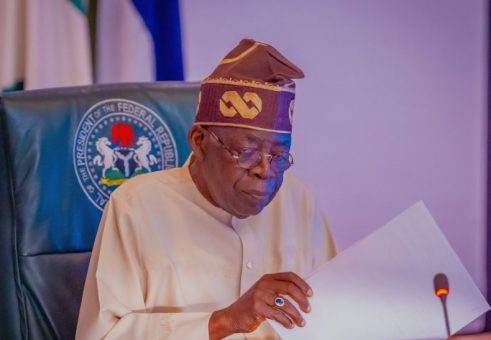
Tinubu’s Two Years In Office: Nigeria’s Path To Progress.
President Bola Tinubu’s administration has delivered a sweeping array of reforms and initiatives, positioning Nigeria for sustainable growth and development. Building on the legacies of past leaders such as Olusegun Obasanjo, Goodluck Jonathan, and Muhammadu Buhari, Tinubu’s government has introduced bold policies and transformative projects that are reshaping the nation’s economic, social, and infrastructural landscape. Here’s a look at the achievements that have defined his tenure so far, alongside the contributions of his predecessors.
Contributions of Past Leaders
Nigeria’s journey towards modernisation owes much to the foundational efforts of its past leaders. Former President Olusegun Obasanjo revolutionised communication by introducing GSM, bolstering anti-corruption efforts with the establishment of the Economic and Financial Crimes Commission (EFCC), the Independent Corrupt Practices Commission (ICPC), and the Nigerian Financial Intelligence Unit (NFIU). These institutions remain critical in the fight against corruption.


Goodluck Jonathan laid the groundwork for a more secure and efficient financial system by introducing the Bank Verification Number (BVN), National Identification Number (NIN), and a cashless policy. His administration also prioritised education for marginalised communities through the Almajiri School system, fostering inclusivity.
Muhammadu Buhari built on these efforts by enforcing BVN, NIN, and cashless policies, reviving Nigeria’s refineries, and signing the landmark Petroleum Industry Act (PIA). His commercialisation of the Nigerian National Petroleum Corporation (NNPC), alongside significant investments in rail and road infrastructure, strengthened the nation’s economic backbone. The enforcement of the Single Treasury Account further enhanced financial transparency.
Tinubu’s Two-Year Transformation
Since taking office, President Tinubu has pursued an ambitious agenda, delivering a raft of reforms that address longstanding challenges while laying the foundation for future prosperity. Below are some of the standout achievements of his administration:
Economic Reforms: Tinubu’s decision to remove fuel subsidies and float the naira has been pivotal in aligning Nigeria’s economy with market realities. These bold moves, though initially challenging, have stabilised the currency and attracted investment. Additionally, his tax reforms and the elimination of tariffs on essential goods and pharmaceuticals have eased the burden on low-income households.
Education and Youth Empowerment: The introduction of the Nigerian Education Loan Fund (NELFund) has made higher education more accessible, while free education for technical schools is equipping young Nigerians with vital skills. Programmes like the 3 Million Technical Talent (3MTT) and SkilledUp Artisan initiatives are empowering youths, fostering entrepreneurship, and driving innovation.
Infrastructure Development: Tinubu’s administration has continued to prioritise rail and road infrastructure, enhancing connectivity across the country. The rollout of Compressed Natural Gas (CNG) as an alternative fuel source has slashed fuel prices by up to 80%, offering relief to millions of Nigerians.
Governance and Financial Prudence: The granting of autonomy to local governments has strengthened grassroots governance, while the doubling of Federal Account Allocation Committee (FAAC) disbursements has empowered states to fund critical projects. Tinubu’s government has also reduced Nigeria’s debt-to-GDP ratio from 97% to 62%, paid off IMF loans, and halted the controversial Ways and Means borrowing, demonstrating fiscal discipline.
Social Welfare and Security: Increased minimum wages, enhanced pension payments, and livelihood support for poor households reflect Tinubu’s commitment to improving the lives of ordinary Nigerians. Better welfare packages for security agencies have bolstered morale, contributing to improved national security. The administration’s agricultural reforms, including better inputs for farmers, have led to bumper harvests, reducing food prices through market-driven supply strategies.
Technology and Electoral Reforms: The push for massive IT fibre-optic infrastructure is bridging the digital divide in rural areas, while the integration of NIN across databases has streamlined governance. Plans to empower the Independent National Electoral Commission (INEC) to conduct all elections in a single day signal a commitment to electoral efficiency.
Regional Development and Political Stability: The creation of Development Commissions for Nigeria’s six geopolitical zones ensures balanced growth, while Tinubu’s leadership has strengthened the All Progressives Congress (APC), making it the country’s most desirable political party.
Education and Labour Reforms: The approval of 22 new federal universities underscores Tinubu’s focus on expanding access to education. Meanwhile, the elimination of Academic Staff Union of Universities (ASUU) strikes has brought unprecedented stability to Nigeria’s higher education sector.
A Vision for the Future
President Tinubu’s administration has demonstrated a clear commitment to transformative governance, building on the achievements of his predecessors while charting a bold path forward. From economic reforms to infrastructure development and social welfare, his policies are designed to create a more inclusive, prosperous, and resilient Nigeria. As the nation looks ahead, Tinubu’s focus on innovation, youth empowerment, and regional development promises to cement his legacy as a leader dedicated to the progress of all Nigerians.
By continuing to address challenges with pragmatism and vision, Tinubu is steering Nigeria towards a brighter future, one where opportunity and prosperity are within reach for all.