


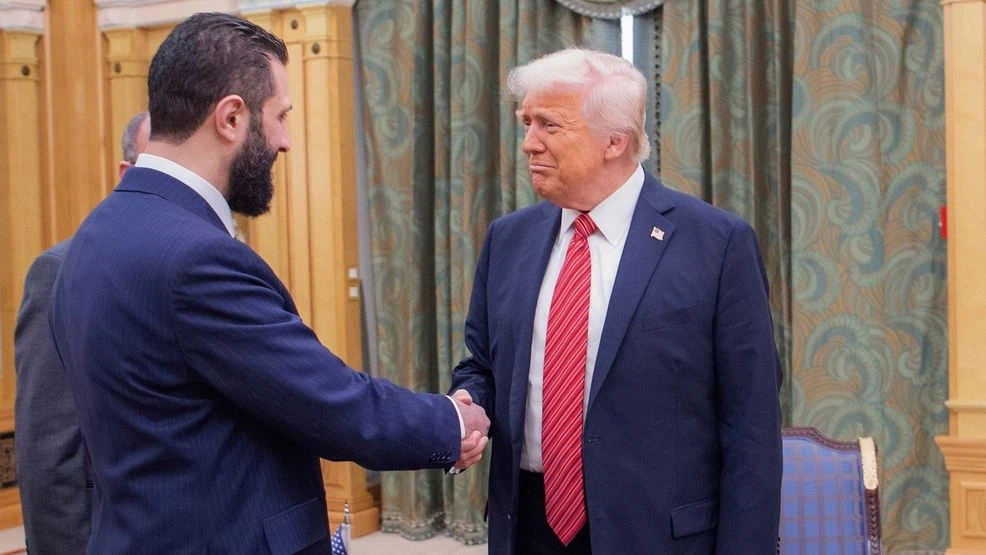
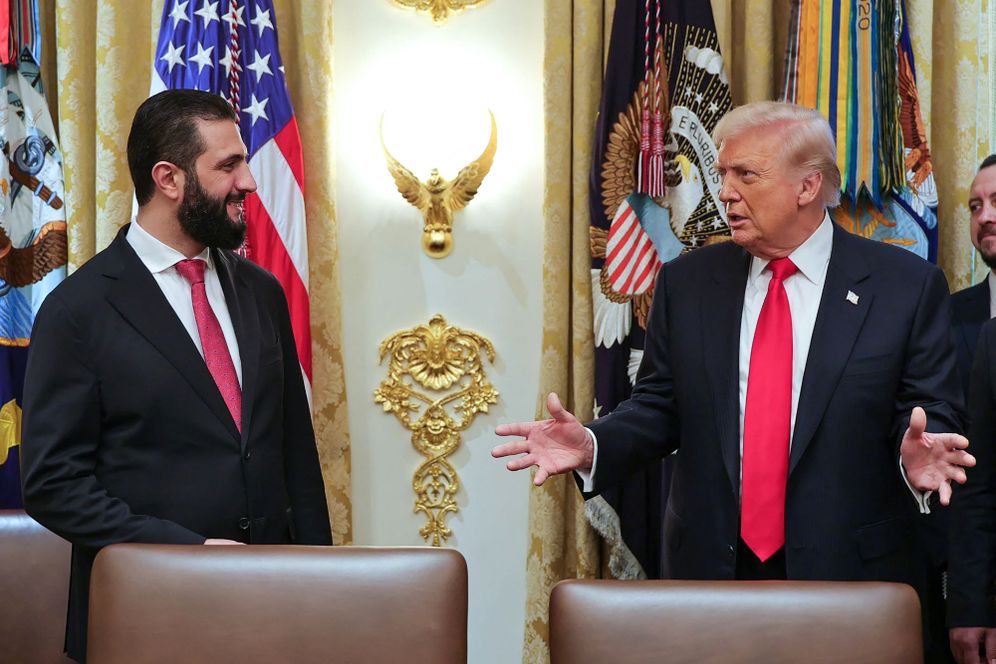
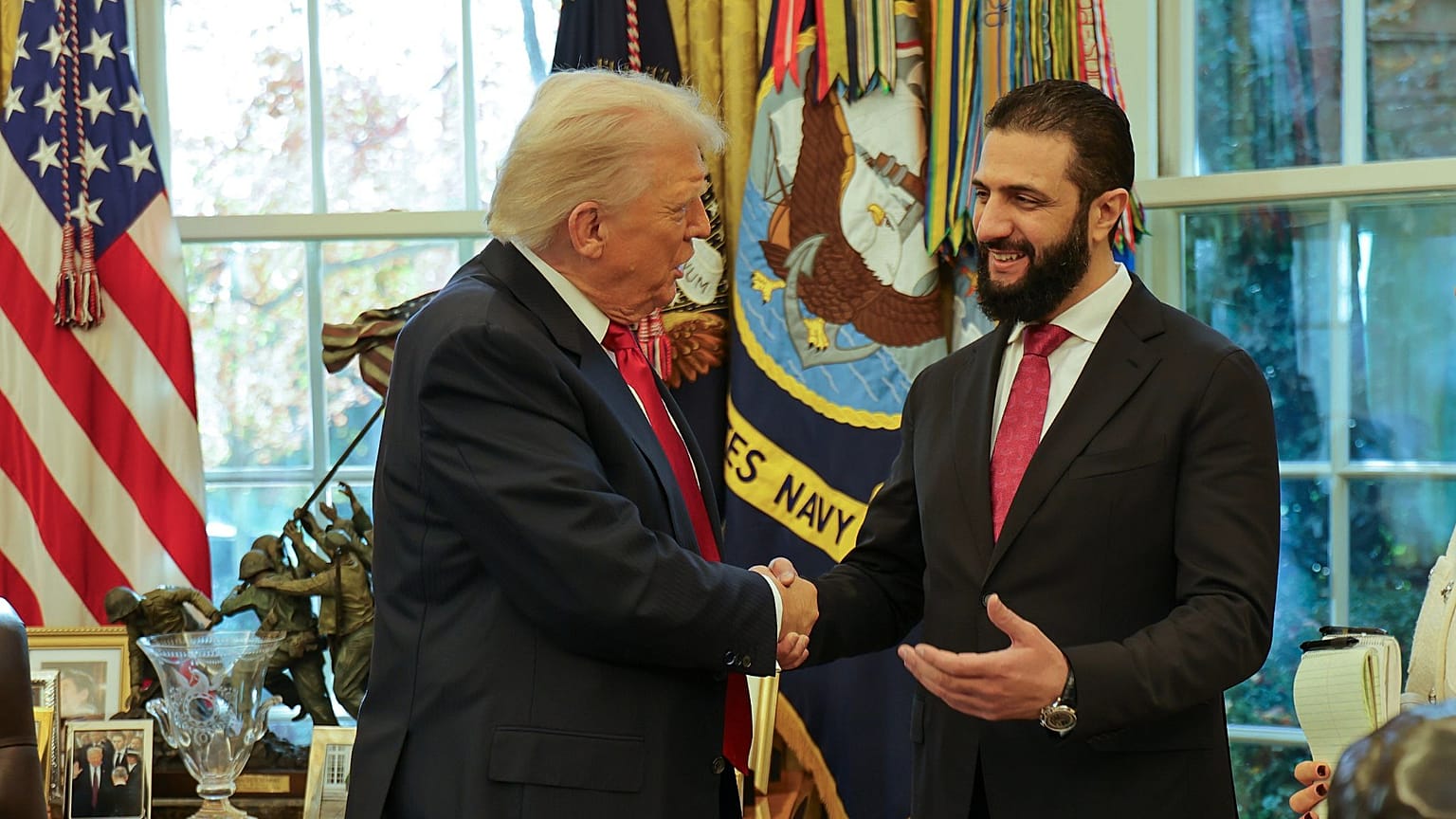
A major diplomatic shift unfolded on 10 November 2025, when Donald Trump welcomed Ahmed al‑Sharaa to the White House in Washington DC — marking the first visit by a Syrian head of state to the U.S. since the country’s independence.
In the wake of the meeting, Syria declared that it would join the global coalition to combat the Islamic State group (IS) under U.S. leadership.
Here’s a detailed unpacking of what happened, why it matters, and the lingering questions.
What Was Announced & Agreed
-
Coalition Membership
Syria announced that it would become the 90th country in the Global Coalition to Defeat ISIS.
Syrian Information Minister Hamza al‑Mustafa emphasised that the agreement is political: “no military components..… until now.”

-
Diplomatic Shift
-
Syria will be allowed to re-open its embassy in Washington.
-
Sanctions under the U.S. Caesar Syria Civilian Protection Act (2019) are being suspended for 180 days, signalling softer ties.
-
Syria and the U.S. agreed to cooperate on counter-terrorism and economic investment. Al-Sharaa told Fox News the discussion focused on turning Syria “into a geopolitical ally ….. a place where the United States can have great investments.”
-


-
Context and Caveats
-
Syria’s accession is not equivalent to joining the U.S. military mission currently known as Operation Inherent Resolve in Iraq and Syria. As al-Mustafa stressed: “A political coalition is different from Operation Inherent Resolve, which is a military operations room.”
-
No formal signed military agreement has been made public; the details remain to be formalised.
-
Why This Matters
-
Geostrategic Realignment
Syria has for years been aligned with Russia and Iran (under the Bashar al‑Assad era), and relations with the U.S. were effectively severed. This meeting signals a thaw, a reintegration of Syria into a Washington-led security architecture. -
Implications for The Fight Against IS
While IS no longer commands large territorial holdings, the group continues to carry out insurgent attacks, particularly in Syria and neighbouring Iraq.
Syria’s inclusion, even as a political partner, offers a new platform for intelligence-sharing, border control, and the reduction of foreign-fighter flows. -
Sanctions & Reconstruction Incentives
With sanctions being partially waived, the U.S. is signalling that Damascus can be brought into the post-war regional order — provided it delivers on counter-terrorism and governance reforms. This opens economic opportunities, especially for Syria, which lies in ruins after 14 years of war. -
Regional Ripple Effects
The move may influence other actors: how will the Syrian Democratic Forces (SDF) integrate into the new arrangement? What about Israel-Syria normalisation talks? Syria’s stance on Israeli-occupied territories remains a sticking point: Damascus insists on withdrawal before normalisation.

Key Risks & Unanswered Questions
-
Commitment vs Capability: Syria’s agreement is political. There is no clear timeline for operational military cooperation or troop deployments with the U.S.‐led mission.
-
Legacy of Al-Sharaa: President Ahmed al-Sharaa, once a militant leader affiliated with al-Qaeda via the group Hayat Tahrir al‑Sham (HTS), has recently been removed from U.S. terrorist lists. But his past remains contentious and could complicate U.S. domestic support for deeper cooperation.
-
Human Rights & Governance: Syria’s war has left a long trail of human-rights violations. Western partners may press for concrete reforms despite the pressing urgency of fighting IS remnant cells.
-
Opposition Reaction: Various opposition groups, Kurdish factions, and regional actors (Turkey, Israel) may view the deal with suspicion. For the SDF in particular, the integration into the Syrian state remains a fraught issue.
-
Sustainability: If Syria fails to fulfil its commitments (on counter-terrorism or structural reform), the political gains could erode quickly, especially given the volatile nature of regional alliances.
The Bottom Line
The meeting between Trump and al-Sharaa marks a symbolic turning point. Syria’s joining of the global coalition against IS — even if only as a political partner for now, is both a strategic win for Washington and an opportunity for Damascus to regain international legitimacy.
However, the true test lies ahead: Can Syria translate these diplomatic gains into sustained action against IS remnants, reform its governance, and handle the complex regional entanglements that come with being a partner of the U.S.? If it can, the move could reshape Middle-East security dynamics. If it cannot, it may prove to be a brief diplomatic flourish rather than a durable realignment.