


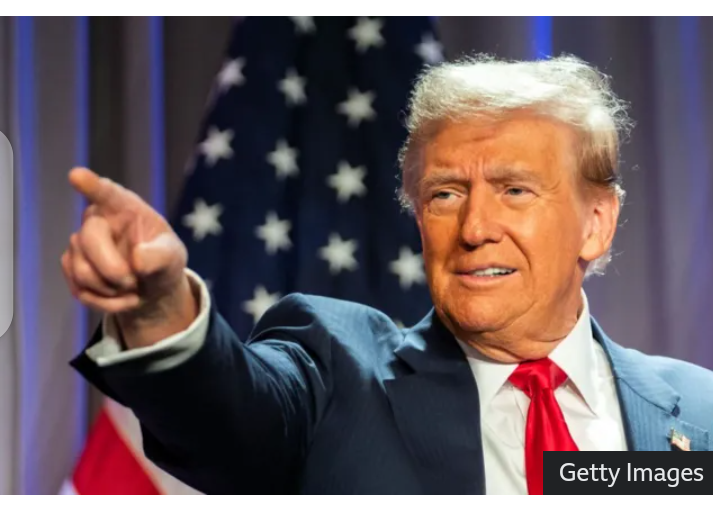
Trump Pledges To Ban Mail-In Ballots Ahead Of 2026 Midterms, Citing Fraud Concerns.
Washington, 19 August 2025 – US President Donald Trump has announced plans to eliminate mail-in ballots and electronic voting machines ahead of the 2026 midterm elections, citing concerns over electoral fraud. In a statement posted on his Truth Social platform, Trump vowed to lead a “movement” to restore “honesty” to the electoral process, claiming that mail-in voting and voting machines are “highly inaccurate” and prone to manipulation. He further stated that an executive order is being drafted to enact these changes, a move that has sparked immediate controversy and legal scrutiny.
Speaking during a White House meeting with Ukrainian President Volodymyr Zelenskyy, Trump reiterated his stance, declaring, “Mail-in ballots are corrupt. You can never have a real democracy with mail-in ballots.” He accused Democrats of relying on the method to secure electoral victories, adding, “It’s the only way they can get elected.” Trump’s remarks follow a recent meeting with Russian President Vladimir Putin, who reportedly claimed that mail-in voting undermined the integrity of the 2020 US election, a narrative Trump has echoed since his defeat that year.


The President’s pledge has drawn sharp criticism from Democrats and voting rights advocates, who argue that mail-in ballots are a secure and accessible voting method used by millions, particularly the elderly, disabled, and military personnel stationed overseas. According to the US Election Assistance Commission, nearly a third of ballots in the 2024 election—approximately 46.8 million votes—were cast by mail, a practice that surged during the 2020 pandemic and has remained popular. Critics, including Marc Elias of Democracy Docket, have labelled Trump’s proposed executive order “unconstitutional and illegal,” warning that it could disenfranchise millions and undermine free elections.
Legal experts have pointed out that the US Constitution grants states the authority to determine their election procedures, with Congress holding the power to regulate certain aspects. Any attempt by the President to unilaterally ban mail-in voting would likely face swift legal challenges. “The Constitution makes it clear that states, not the President, control the ‘times, places, and manner’ of elections,” said Northeastern University law professor Jeremy Paul. Previous attempts by Trump to alter voting rules, including a March 2025 executive order imposing voter ID requirements and restricting late mail ballots, were largely blocked by federal courts.
Trump’s claims of widespread fraud have been repeatedly debunked. Courts, election officials, and independent audits have found no evidence of significant irregularities in the 2020 or 2024 elections. Studies, including those from the Brennan Center for Justice, confirm that mail-in voting fraud is exceedingly rare, with safeguards like signature verification and barcode tracking ensuring security. Internationally, 34 countries, including Canada, Germany, and the UK, offer postal voting without notable issues, contradicting Trump’s assertion that the US is the only nation using the method.
The proposal has also raised logistical concerns. Matt Germer of the R Street Institute noted that forcing millions of voters to switch to in-person polling would require significant investment in new venues, staff training, and voter education, potentially overwhelming election infrastructure before the 2026 primaries. Barbara Smith Warner of the National Vote at Home Institute described the move as an attempt to “destabilise” elections, arguing that it erodes public trust rather than enhancing it.
Trump’s push comes amid broader Republican efforts to tighten voting regulations, including calls to redraw congressional districts in states like Texas and Indiana. Democrats have vowed to fight the proposal, with Connecticut Secretary of State Jena Griswold stating she is prepared to take legal action to protect voting rights. As the 2026 midterms approach, the debate over mail-in voting is set to intensify, with profound implications for voter access and electoral integrity.