


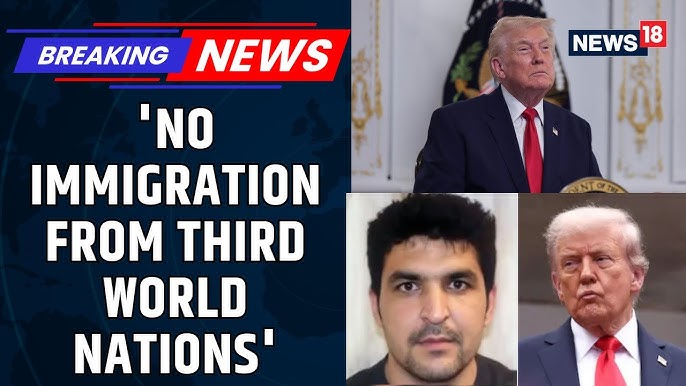
In a dramatic escalation of his administration’s immigration agenda, U.S. President, Donald J. Trump announced on November 27, 2025, that he will “permanently pause” migration from all “Third World Countries.” The declaration comes in the immediate aftermath of a fatal shooting near the White House — an attack the government says was perpetrated by an Afghan national.
What triggered the decision
The announcement follows a tragic ambush-style shooting on November 26, 2025 in Washington, D.C. Two members of the United States National Guard were targeted near the nation’s seat of power; one of them, 20‑year old Sarah Beckstrom, was killed, and the other remains critically wounded. Authorities have identified the suspect as a 29‑year-old Afghan national, who — according to government records — entered the U.S. in 2021 under a resettlement program.
In a late‑night social media post on Truth Social — his preferred platform — Trump described the shooting as “an act of evil,” and blamed lax vetting and what he described as uncontrolled migration under the prior Joe Biden administration. He wrote that the U.S. must “fully recover” from what he called “the millions of Biden illegal admissions.”
What the “pause” entails — and what remains unclear
Trump did not list specific nations when claiming he would halt migration from “Third World Countries,” nor did he define what he meant by that term. The policy language is sweeping: the freeze would reportedly apply to all cases approved under the Biden administration.

In addition to suspending new admissions, Trump pledged:
-
To end all federal benefits and subsidies for non‑citizens.
-
To “denaturalise migrants who undermine domestic tranquillity.”
-
To deport “any foreign national who is a public charge, security risk, or non‑compatible with Western civilisation.”
Officials from the U.S. Citizenship and Immigration Services (USCIS), and the Department of Homeland Security (DHS), reportedly have already initiated a review of asylum and green‑card approvals granted under the previous administration — including those from 19 countries previously flagged in a travel ban.
That said, the declaration raises immediate legal and practical questions: Trump offered no clear explanation for how the “pause” would be implemented, how long it would last, nor how it is compatible with existing immigration law and past court rulings.
Reactions and Concerns
The announcement has sparked swift and fierce criticism, both domestically and internationally. Advocacy groups warn that the sweeping language could amount to collective punishment of asylum‑seekers and migrants, regardless of their individual records. Critics argue that using one criminal incident as justification for broad immigration restrictions undermines legal principles, due process, and humanitarian commitments.
At the same time, some political allies of Trump have backed the move — framing it as a necessary measure to protect national security and re‑assert control over U.S. borders.
Internationally, the announcement has drawn concern from refugee rights organisations and agencies, including the United Nations High Commissioner for Refugees (UNHCR), which have urged the U.S. to maintain protections for asylum‑seekers and respect international law commitments.
What this could mean going forward
If implemented, the “permanent pause” would represent one of the most sweeping immigration crackdowns in recent U.S. history. The policy could halt legal migration from dozens – if not hundreds – of countries, effectively stranding families and individuals in limbo, and disrupting long‑standing diaspora and refugee flows.
Moreover, it could prompt legal challenges, as previous attempts at migration bans or sweeping deportations under the Trump administration faced heavy opposition in courts and Congress.
Whether this freeze becomes reality — and how U.S. immigration agencies respond — remains to be seen. For now, the announcement has thrust migration policy back into the center of U.S. political and moral debate, raising urgent questions about national security, human rights and America’s identity as a country of immigrants.
