


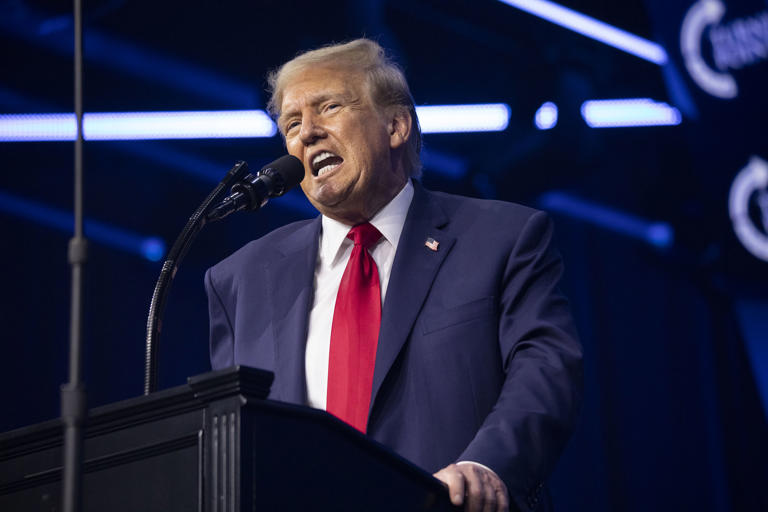
The United States is undertaking a significant overhaul of its development strategy in Africa, pivoting away from decades of aid-focused engagement toward a model centered on trade, private investment, and strategic economic partnerships.
In a detailed policy address at the Center for Strategic and International Studies, Senior Bureau Official, Nick Checker, described the shift as a “fundamental reset” in how Washington approaches development on the continent under the administration of Donald Trump.
From Aid to Outcomes
Checker said the new approach marks a decisive break from what he characterised as an outdated aid model that prioritised spending levels and program expansion over measurable results.
“For decades, our approach was defined by how much assistance we delivered,” he said. “That era is over.”
According to U.S. figures cited in the speech, Washington has provided more than $200 billion in foreign assistance to Africa since 1991. While acknowledging that such funding has contributed to humanitarian gains, Checker argued it has failed to produce sustained economic transformation.


He pointed to persistent structural challenges across the continent, including limited industrialisation, narrow export bases, infrastructure deficits, and reliance on external funding for public services.
The official also criticised what he described as systemic inefficiencies in aid delivery, claiming that a large portion of funding is absorbed by intermediary organisations rather than reaching intended beneficiaries.
Criticism of Past Model
Checker argued that the traditional aid framework has, in some cases, fostered dependency and weakened accountability. He cited South Sudan as an example, noting that despite receiving more than $9.5 billion in U.S. assistance since 2011, the country continues to face rising humanitarian needs and corruption challenges.
He also highlighted what he described as limited diplomatic alignment, stating that sub-Saharan African countries voted with the United States only 29 percent of the time on key United Nations resolutions in 2023.
“These outcomes reflect a system that has not advanced either African prosperity or American strategic interests,” he said.
Commercial Diplomacy at the Core
At the center of the new strategy is a concept the administration calls “commercial diplomacy,” which integrates diplomatic engagement with economic objectives.
Under this framework, U.S. ambassadors will be evaluated based on their ability to promote American business interests and facilitate commercial deals. Diplomatic missions will increasingly focus on connecting U.S. companies with African markets and advancing investment opportunities.
The strategy is structured around six key priorities, including:
- Promoting market-oriented reforms such as transparent regulations and competitive tendering processes
- Supporting commercially viable infrastructure projects rather than aid-driven initiatives
- Increasing direct engagement between U.S. companies and African policymakers
- Expanding awareness of African investment opportunities among American firms
- Accelerating financing tools and improving interagency coordination
- Aligning government resources with strategic economic objectives
Checker said early results are already emerging, with “tens of billions of dollars” in deals supported and a projected 23 percent increase in U.S. exports to sub-Saharan Africa this year.
Focus on Strategic Sectors
The new policy places strong emphasis on sectors deemed critical to U.S. economic and national security interests, particularly minerals and energy.
Africa holds vast reserves of key resources such as cobalt, copper, graphite, and rare earth elements—materials essential for advanced manufacturing and technology industries.
Checker announced efforts to deepen partnerships in these sectors, including a strategic agreement with the Democratic Republic of the Congo aimed at strengthening supply chains while promoting local value addition.
He said the goal is to move beyond extractive models toward investment frameworks that support job creation, skills development, and industrial growth within African economies.
Linking Economic Growth and Stability
The strategy also ties economic development more closely to regional stability. Checker emphasized that sustainable peace is more likely when underpinned by shared economic interests.
He pointed to ongoing U.S. engagement in Central Africa, including initiatives supporting economic integration between the Democratic Republic of the Congo and Rwanda, as an example of this approach.
Redefining Foreign Assistance
While reaffirming that foreign aid will continue, Checker said it will be fundamentally restructured.
Future assistance will be:
- Targeted and aligned with strategic priorities
- Conditional on reforms and measurable performance
- Time-bound rather than open-ended
- Focused on enabling private sector growth
Aid will also be used more directly to support U.S. commercial objectives, such as making investment projects more competitive and financing infrastructure tied to American firms.
“We will no longer fund programs indefinitely without outcomes,” Checker said.
Africa’s Strategic Importance
The policy shift reflects growing recognition in Washington of Africa’s long-term economic significance. With a projected population of 2.5 billion by 2050 and an estimated $16 trillion in purchasing power, Africa is increasingly viewed as a major future driver of global growth.
Despite this, U.S. exports to sub-Saharan Africa currently account for less than one percent of total American trade—a gap officials say the new strategy aims to close.
Checker said African leaders themselves are calling for a move away from aid dependency toward investment-driven growth, emphasizing demand for jobs, infrastructure, and competitive markets.
A New Direction
In closing, Checker framed the initiative as a shift toward “self-reliance and mutual benefit,” rather than traditional donor-recipient relationships.
“Our goal is not to sustain aid dependence in Africa,” he said. “It is to make it unnecessary—while advancing both American interests and African prosperity.”
The announcement signals a broader recalibration of U.S.-Africa relations, with economic engagement, strategic competition, and private sector partnerships expected to play a more prominent role in the years ahead.