


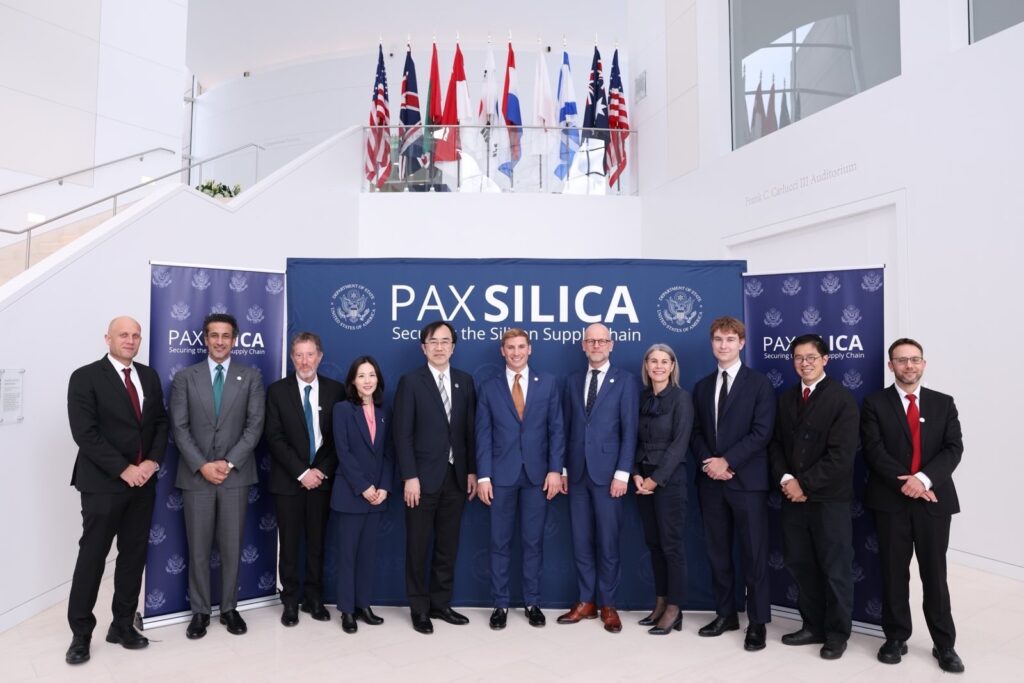
On March 26, 2026, the U.S. Department of State announced a major initiative—the Pax Silica Fund—aimed at strengthening global semiconductor supply chains through targeted investment in critical minerals, infrastructure, and advanced manufacturing. With an initial proposed allocation of $250 million in foreign assistance funding, the initiative reflects a strategic shift in how the United States approaches economic security, technological leadership, and international partnerships.
Strategic Context
Importance of Semiconductor Supply Chains
Semiconductors are foundational to modern technologies, including:
- Artificial intelligence systems
- Telecommunications infrastructure
- Defense systems
- Consumer electronics
Recent global disruptions—such as pandemic-related shortages and geopolitical tensions—have exposed vulnerabilities in semiconductor supply chains, especially in:
- Critical minerals sourcing (e.g., silicon, rare earth elements)
- Processing and refining capacity
- Manufacturing concentration in limited geographic regions
The Pax Silica Fund directly addresses these systemic risks.
Overview of the Pax Silica Fund
Core Objectives
The fund is designed to:
- Support critical minerals extraction and processing
- Develop secure infrastructure for semiconductor production
- Expand manufacturing capacity among trusted partners
- Strengthen end-to-end supply chain resilience
Funding Structure
- Initial U.S. commitment: $250 million (subject to Congressional approval)
- Catalytic model: Public funds used to attract significantly larger private investment
- Target investors: Sovereign wealth funds and institutional investors managing over $1 trillion in assets
Economic and Policy Framework
“Trade Not Aid” Doctrine
The initiative aligns with Secretary Marco Rubio’s policy principle of “Trade Not Aid”, which emphasizes:
- Moving beyond traditional aid models
- Promoting investment-driven development
- Creating mutually beneficial commercial opportunities


This reflects a broader America First assistance strategy, prioritizing:
- Economic returns
- Strategic alliances
- Domestic industrial benefits
Leveraging Foreign Assistance
Unlike traditional grants, the Pax Silica Fund:
- Uses public funding as a risk-sharing mechanism
- Encourages co-investment from allies and private capital
- Focuses on long-term economic sustainability
Public-Private Partnership Model
Role of Pax Silica
Pax Silica serves as a coordinating platform that:
- Connects governments, private firms, and investors
- Aligns capital across multiple layers of the supply chain
- Facilitates large-scale, cross-border industrial projects
Private Sector Engagement
The initiative emphasizes:
- Collaboration with leading technology and manufacturing firms
- Engagement with institutional investors and sovereign wealth funds
- Development of trusted investment ecosystems
Geopolitical Implications
Supply Chain Security
The fund is part of a broader effort to:
- Reduce reliance on geopolitically sensitive regions
- Diversify sourcing and manufacturing locations
- Strengthen partnerships with trusted nations
Strategic Competition
This initiative can also be viewed in the context of global competition for technological leadership, particularly in:
- Semiconductor manufacturing
- Advanced materials
- Emerging technologies
By mobilizing capital at scale, the U.S. aims to:
- Maintain a competitive edge
- Counter rival industrial strategies
- Reinforce alliances through economic integration
Expected Economic Impact
For the United States
- Increased opportunities for U.S. companies abroad
- Strengthening of domestic semiconductor ecosystems
- Job creation in high-tech and manufacturing sectors
For Partner Countries
- Access to capital and technology transfer
- Development of local industrial capacity
- Integration into global supply chains
Risks and Challenges
Despite its promise, the Pax Silica Fund faces several challenges:
Congressional Approval
- Funding depends on legislative support
- Political dynamics could affect implementation
Execution Complexity
- Coordinating multi-country investments
- Managing public-private partnerships
- Ensuring transparency and accountability
Market Risks
- Volatility in commodity prices
- Rapid technological changes
- Competition from other global initiatives
Conclusion
The launch of the Pax Silica Fund marks a significant evolution in U.S. economic statecraft. By combining foreign assistance with investment-driven strategies, the U.S. Department of State is positioning itself to address critical vulnerabilities in semiconductor supply chains while advancing broader geopolitical and economic objectives.
If successfully implemented, the initiative could:
- Reshape global supply chains
- Mobilize unprecedented levels of private capital
- Strengthen alliances through shared economic interests
Ultimately, the Pax Silica Fund represents a hybrid model of diplomacy, investment, and industrial policy, signaling a new era in how nations compete and collaborate in strategic sectors.
