


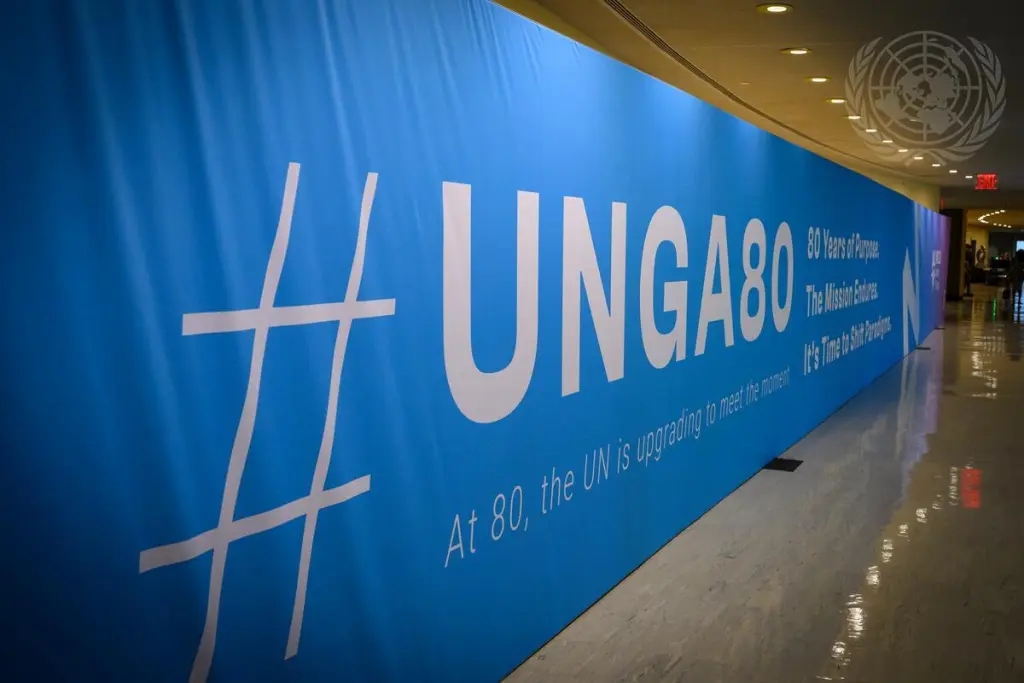
At an informal meeting on the UN80 Initiative, the United States reiterated its strong support for the humanitarian reform efforts under the UN80 framework, while urging greater clarity, specificity, and measurable outcomes in implementation. John Phillips, Humanitarian Advisor at the United States Mission to the United Nations, delivered the remarks.
The U.S. delegation affirmed backing for both the broader UN80 reforms and the complementary Humanitarian Reset processes, emphasizing the critical importance of improving efficiency, coordination, and responsiveness in global humanitarian action. However, Phillips cautioned against what the United States views as unnecessary branding of these reforms as a “New Humanitarian Compact,” stating that such terminology risks creating confusion about the nature and scope of the reforms.
“This language serves only to distort and confuse as to the nature of the reform,” Phillips said, recommending that the UN abandon the branding effort for a subset of reforms.
Demand for Measurable and Tangible Outcomes
The U.S. delegation expressed concern over briefing materials that described several “tangible actions” which, upon review, lacked measurable or concrete details. Phillips underscored the need for information that includes clear timelines, responsible entities, and estimated cost savings.
He emphasized that future updates should provide measurable indicators of progress and be delivered with greater frequency to Member States.


Integrated Humanitarian Supply Chains
Phillips highlighted U.S. support for the development of integrated global- and crisis-level humanitarian supply chains. The United States is closely monitoring the ongoing pilot implementations in five crisis contexts and requested further details on implementation timelines and evaluation methods.
“If formal evaluation reports are produced, we will expect copies to be shared with Member States,” he noted.
Humanitarian Data Collaborative
The Humanitarian Data Collaborative was identified as a vital and overdue reform. The United States hopes the initiative will leverage lessons learned from past data-sharing arrangements and requested a dedicated briefing at the end of June to review the project’s next phase. The briefing should include details on collective financing strategies that reduce duplication and promote more efficient humanitarian responses.
UN80 Collaborative Humanitarian Diplomacy Initiative
Phillips indicated that the current presentation of the UN80 Collaborative Humanitarian Diplomacy Initiative is too vague to assess its impact. The United States seeks clarity on how revised coordination processes will produce tangible benefits for populations affected by crises and how these reforms differ from those already undertaken under the Humanitarian Reset.
Alignment of Roles and Responsibilities
The U.S. delegation also called for concrete details regarding the alignment of roles and responsibilities across UN agencies, funds, and programs. Phillips emphasized that general statements of intent are insufficient and requested specific, measurable explanations for any ongoing or phased-out functions, along with justification for retaining certain activities.
“Telling Member States that agencies, funds, and programs will ‘continue to do’ this alignment is not enough,” Phillips said, stressing the need for actionable and accountable reform plans.
The United States concluded by reaffirming its support for the UN80 humanitarian agenda while insisting on greater specificity, accountability, and transparency in reform implementation. These measures, the delegation noted, are critical to ensuring that the reforms translate into meaningful improvements for people affected by humanitarian crises worldwide.