

US Doubles Reward To $50M For Capture Of Venezuela’s Nicolás Maduro.
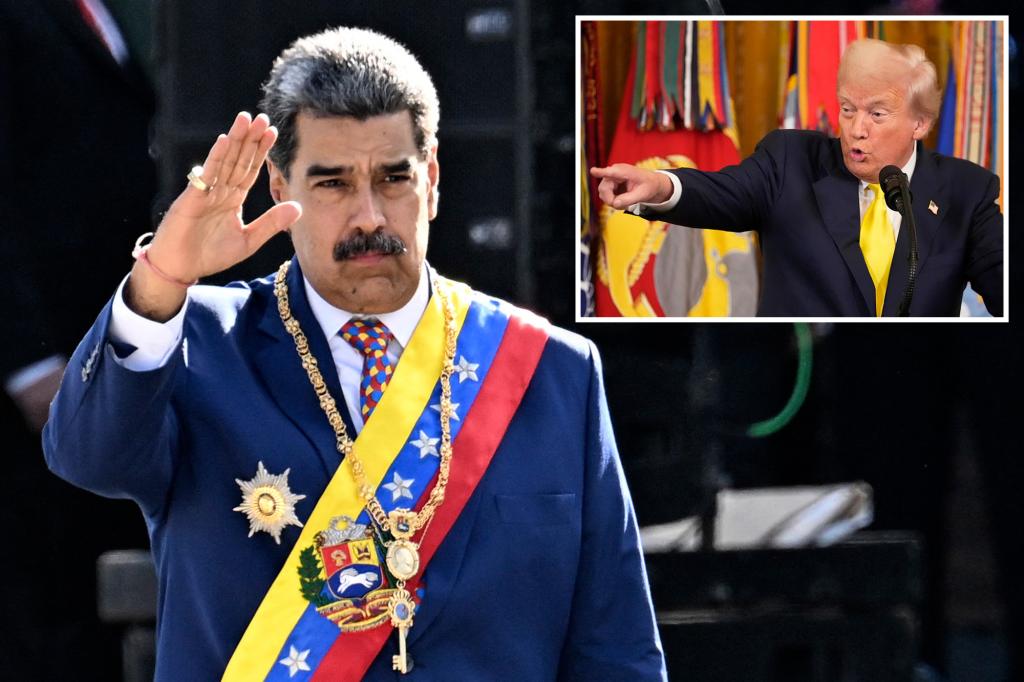
Washington, DC – The United States has escalated its pursuit of Venezuelan President Nicolás Maduro, doubling the reward for information leading to his arrest to $50 million (£37.2 million), up from $25 million set in January 2025. The announcement, made by US Attorney General Pam Bondi on 7 August 2025, accuses Maduro of being a major narco-trafficker, allegedly collaborating with criminal syndicates to flood the US with fentanyl-laced cocaine.
In a video statement posted on X, Bondi described Maduro as “one of the world’s largest narco-traffickers and a threat to our national security.” She alleged that the 62-year-old leader, who has been in power since 2013, has ties to Venezuela’s Tren de Aragua gang, the Cartel of the Suns, and Mexico’s notorious Sinaloa Cartel. The US Department of Justice claims to have seized over $700 million in assets linked to Maduro, including two private jets and nine vehicles, and alleges that nearly seven tonnes of cocaine seized by the Drug Enforcement Administration (DEA) are directly tied to him.

The reward, offered under the Narcotics Rewards Program, is part of a broader effort to hold Maduro accountable for alleged drug trafficking and narco-terrorism. Maduro was indicted in a Manhattan federal court in 2020 during the first Trump administration, facing charges of narco-terrorism and conspiracy to import cocaine. The initial $15 million bounty was raised to $25 million by the Biden administration, matching the reward once offered for Osama bin Laden after the 9/11 attacks.
Bondi emphasised that under President Donald Trump’s leadership, “Maduro will not escape justice, and he will be held accountable for his despicable crimes.” The US has also designated the Cartel of the Suns as a Specially Designated Global Terrorist organisation in July 2025, accusing it of trafficking drugs into the United States for over a decade under Maduro’s influence.
Venezuelan Foreign Minister Yvan Gil dismissed the announcement as a “pathetic” and “ridiculous smokescreen,” accusing Bondi of orchestrating a “crude political propaganda operation” to distract from domestic controversies, including references to the Jeffrey Epstein case. Gil insisted that Venezuela’s “dignity is not for sale” and rejected the US claims as baseless.
The increased bounty follows heightened tensions between Washington and Caracas, with the US refusing to recognise Maduro’s re-election in July 2024, which it deemed fraudulent. Despite international condemnation, Maduro remains in power, bolstered by local allies. Recent diplomatic moves, including a deal to free 10 Americans jailed in Caracas in exchange for deportations to El Salvador, and the lifting of sanctions to allow Chevron to resume oil drilling in Venezuela, highlight the complex US-Venezuela relationship.
The $50 million reward marks a significant escalation in the US campaign to pressure Maduro, with authorities urging the public to provide tips via a DEA hotline or US embassies, assuring confidentiality for informants. As the situation develops, the international community watches closely to see how this bold move will impact Venezuela’s political and criminal landscape.
