


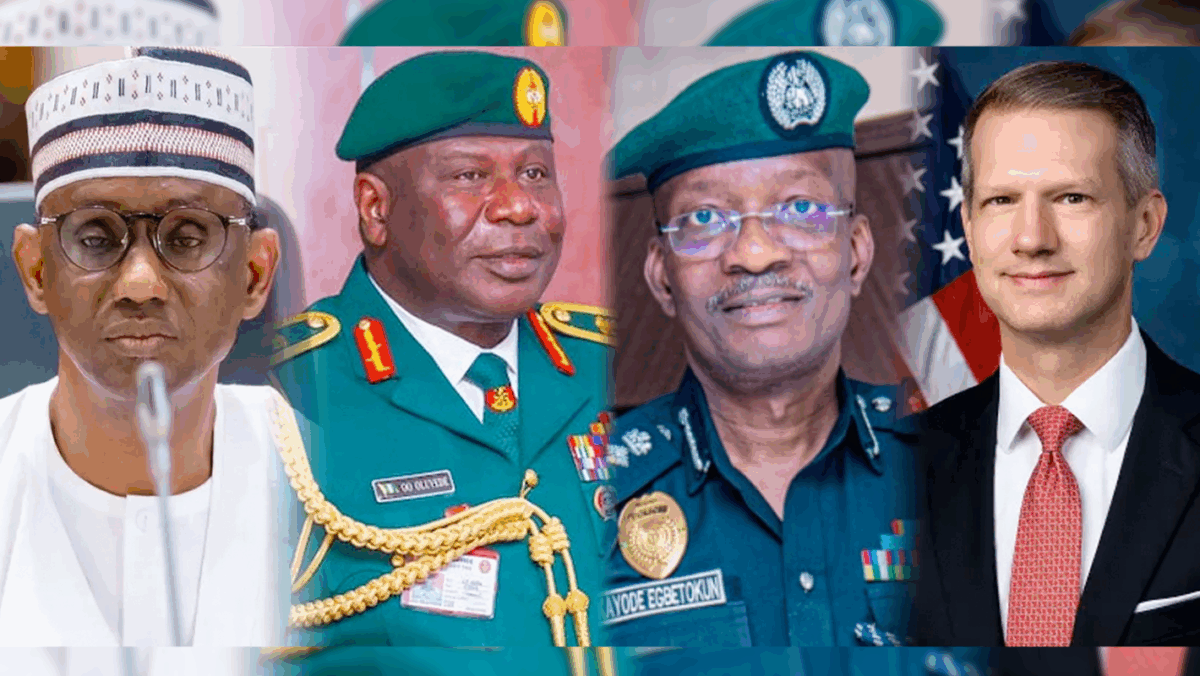
In a high-profile meeting in the U.S. capital, Riley Moore, a member of the U.S. House of Representatives, hosted a delegation of ten senior members of Nigerian government, led by National Security Adviser, Nuhu Ribadu, to discuss rising violence and religious persecution in Nigeria.
The congressman, a long-standing critic of the Nigerian government’s handling of Christian persecution, delivered a stark warning: President Donald Trump “does not make idle threats.”
Key Figures at the Meeting
The Nigerian delegation assigned by President Bola Tinubu was composed of some top security and diplomatic officials, including:
-
Nuhu Ribadu – National Security Adviser (NSA) and head of the delegation

-
Bianca Ojukwu – Minister of State for Foreign Affairs
-
Kayode Egbetokun – Inspector General of Police (IGP)
-
Lateef Fagbemi – Attorney General of the Federation
-
Olufemi Oluyede – Chief of Defence Staff

These officials, along with other senior aides and embassy representatives, traveled to Washington to engage directly with U.S. lawmakers on security, counterterrorism, and human rights issues.
The Meeting Agenda
In a statement, Moore described the session as “a frank, honest, and productive discussion about the ongoing persecution of Christians and ongoing terrorist threats in Nigeria” and highlighted the importance of strengthened cooperation and coordination between the United States and Nigeria to end the bloodshed.”
During the meeting, Nigerian officials outlined government’s challenges to Riley Moore:
-
Counterterrorism operations
-
Security assistance and protection of vulnerable communities
-
Ongoing issues involving widespread violence across Nigeria
Speaking, Moore underscored that the U.S. “stands ready to coordinate and cooperate with Nigeria, and that, as President Trump made abundantly clear, the United States will not tolerate continued violence against Christians or other forms of religious persecution.”
Trump’s “Guns-a-Blazing” Warning
The meeting took a dramatic turn when Moore referenced Trump’s controversial prior statements about Nigeria. Trump had threatened to intervene in the country “guns-a-blazing” if the violence persisted. Moore reiterated that these were serious warnings, not idle rhetoric, sending a clear message to the Nigerian delegation about U.S. expectations.
Moore’s Record on Christian Persecution
Moore has been one of the most vocal U.S. politicians insisting on the recognition of Christian persecution in Nigeria. On November 7, he introduced a resolution in the House of Representatives condemning the ongoing persecution of Christians in Nigeria and supporting President Trump’s plan to designate Nigeria as a Country of Particular Concern. This meeting is widely seen as a continuation of Moore’s advocacy on the issue.
Nigeria’s Position
Nigerian government, however, has consistently rejected claims of targeted Christian killings, maintaining that insecurity affects all Nigerians regardless of religion or ethnicity. The recent engagement with Moore signals President Tinubu administration’s willingness to discuss security and human rights concerns with U.S. lawmakers but also highlights the tension between U.S. pressure and Nigeria’s official stance on the issue.
Implications of the Meeting
The discussions carry significant diplomatic weight:
-
Increased Pressure on Nigerian Government – The U.S. warning underscores that continued violence could trigger further political or economic consequences.
-
Potential for Security Cooperation – Concrete coordination and intelligence-sharing could follow if Nigeria demonstrates measurable action against violence.
-
Domestic Political Sensitivity – Nigerian leaders may face scrutiny at home over high-profile engagement with U.S. lawmakers on such sensitive issues.
Conclusion
The meeting between Ribadu-led delegation and U.S. Congressman Riley Moore in Washington represents a pivotal moment in Nigeria-U.S relations. While Nigeria maintains its stance denying targeted Christian persecution, Moore’s message was unmistakable: the U.S., under Trump’s influence, demands action and is prepared to hold Nigeria accountable.
The declaration that Trump “does not make idle threats” leaves little room for ambiguity, signaling that the world is watching Nigeria’s response closely.