


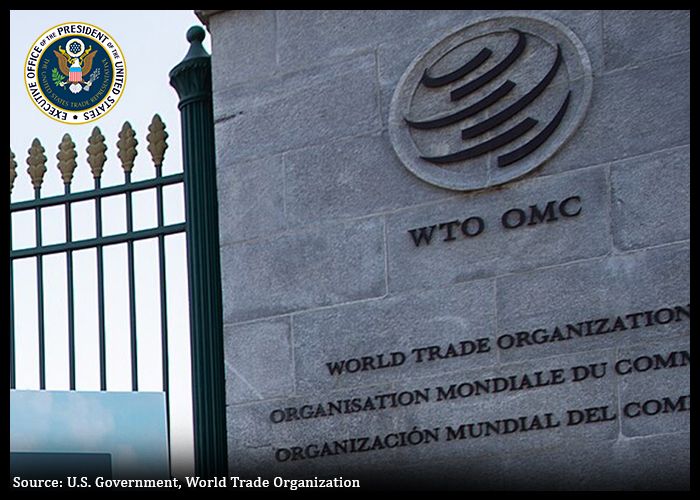
The Office of the United States Trade Representative (USTR), has released a significant policy report outlining the United States’ vision for reforming the World Trade Organization (WTO). The timing of the report is strategic, coming just before the WTO’s Fourteenth Ministerial Conference (WTO Fourteenth Ministerial Conference, or MC14), scheduled to take place in Yaoundé, Cameroon.
This report builds upon an earlier U.S. discussion paper issued in December 2025 and is intended to stimulate meaningful dialogue among WTO members during and after the ministerial meeting.
Context and Purpose of the Report
The WTO has faced increasing criticism in recent years for its inability to effectively address modern trade challenges, enforce rules, and adapt to shifting global economic dynamics.
Against this backdrop, the U.S. report aims to:
- Reassert leadership in shaping WTO reform
- Encourage member-driven reform discussions
- Address systemic inefficiencies and outdated frameworks
- Align the WTO with evolving priorities such as reciprocity and economic balance
According to Ambassador Jamieson Greer, the WTO must evolve or risk becoming irrelevant in a rapidly changing global trading system.

Key Reform Areas Highlighted
The USTR report identifies several core areas requiring reform. Each reflects longstanding U.S. concerns about fairness, transparency, and institutional effectiveness.
a. Transparency and Notification Compliance
The United States emphasizes that many WTO members fail to meet their transparency obligations, particularly in notifying subsidies, trade measures, and regulatory changes.
- Calls for stricter enforcement of notification requirements
- Proposes penalties or incentives to improve compliance
- Argues that transparency is foundational for trust and rule enforcement
b. Special and Differential Treatment (S&DT), Eligibility
A major concern for the U.S. is the self-declaration system that allows countries to claim “developing country” status.
- The U.S. argues this system is outdated and overly permissive
- Proposes objective criteria for determining eligibility
- Aims to ensure that advanced economies do not receive preferential treatment meant for less-developed countries
This issue is particularly contentious, as many emerging economies resist changes to S&DT provisions.
c. Plurilateral Negotiations
The report supports expanding the use of plurilateral agreements—deals involving subsets of WTO members rather than full consensus.
- Seen as a pragmatic way to advance rulemaking
- Allows willing members to move forward without being blocked by others
- Encourages flexibility in addressing new trade issues (e.g., digital trade, environmental goods)
d. Most-Favored-Nation (MFN), Principle
The U.S. questions the rigid application of the MFN principle, which requires equal treatment among all WTO members.
- Suggests reconsidering how MFN applies in modern trade contexts
- Raises concerns that strict MFN may hinder innovation in trade agreements
- Opens discussion on balancing fairness with flexibility
e. Role of the WTO Secretariat
The report proposes reassessing the role of the WTO Secretariat.
- Advocates for a more active and analytical role
- Suggests enhancing its capacity to monitor compliance and support negotiations
- Seeks to ensure the Secretariat remains neutral while being more effective
f. Essential Security Exception
The U.S. underscores the importance of preserving national sovereignty in trade matters related to security.
- Reaffirms that members should retain broad discretion over security-related trade measures
- Reflects ongoing debates over the interpretation of security exceptions in WTO disputes
Strategic Implications
The report reflects a broader shift in U.S. trade policy toward:
- Reciprocity and balance rather than unilateral liberalization
- Greater skepticism of multilateral consensus-based systems
- Increased reliance on flexible, coalition-based approaches
It also signals that the United States intends to remain a central actor in shaping global trade rules, even as it pushes for significant institutional change.
Anticipated Reactions and Challenges
The USTR’s proposals are likely to generate mixed reactions:
- Developing countries may resist changes to S&DT provisions
- Major economies may differ on transparency enforcement and Secretariat powers
- Consensus-based decision-making at the WTO may slow progress
However, the report could also catalyse renewed engagement, especially among members who share concerns about the WTO’s current effectiveness.
Conclusion
The March 2026 USTR report represents a comprehensive and assertive blueprint for WTO reform. By addressing structural weaknesses and proposing concrete changes, the United States aims to reinvigorate the multilateral trading system.
As discussions unfold at MC14 in Yaoundé, the extent to which these proposals gain traction will be a key indicator of the WTO’s ability to adapt—and remain relevant—in the evolving global economy.
