


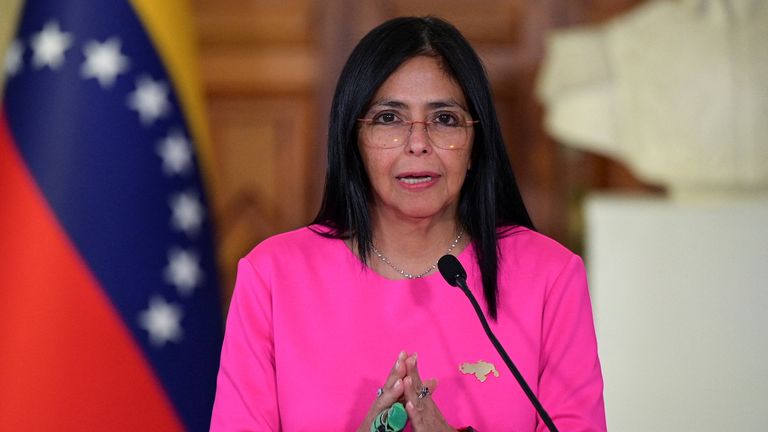
In a stark escalation of one of the most dramatic confrontations in recent Latin American history, Venezuela’s interim government has issued sweeping orders directing security forces to pursue and arrest anyone accused of supporting or promoting the U.S. attack that led to the capture and removal of former President, Nicolás Maduro.
The decree — enacted under a state of emergency that took effect in the wake of the U.S. military operation — empowers police across the country to conduct a nationwide search and capture campaign targeting individuals suspected of aiding the United States’ armed action.
Authorities say the measure is intended to preserve national sovereignty and safeguard internal security amid the crisis.
Emergency Powers and Crackdown on Dissent
According to the text of the emergency decree, security forces are required to “immediately begin the national search and capture of everyone involved in the promotion or support for the armed attack by the United States.” It has been in force since January 3 but was published in full on January 5.

The broad language of the decree has raised alarm among human rights observers, who warn it could be used to suppress political dissent, criminalise opposition views, or justify arbitrary detentions of activists, journalists, and critics.
Legal experts note that states of emergency in Venezuela under past governments have often coincided with expanded powers for security agencies and curtailed civil liberties.
Maduro’s Arrest and U.S. Military Action
The decree follows an unprecedented U.S. military operation in Caracas earlier this week that resulted in the capture of Nicolás Maduro and his wife, Cilia Flores.
They were swiftly transferred to New York, where Maduro made a first court appearance, pleading not guilty to U.S. federal charges including narco-terrorism, drug trafficking, and weapons offenses.
U.S. authorities contend Maduro oversaw a criminal network responsible for shipping cocaine into the United States and orchestrating violence against opponents. His lawyers are expected to challenge the legality of his capture, asserting that he enjoyed immunity as a sovereign head of state — a claim the U.S. government rejects.
In Washington, President Donald Trump has defended the operation and stated that the United States would “run” Venezuela temporarily and ensure its oil resources are brought back into global markets, a stance that has drawn both domestic support and international criticism.
Crackdowns and Media Repression
Reports from Caracas indicate a tense internal climate. Venezuelan authorities have detained journalists and seized communication devices from media crews, actions critics describe as efforts to control information and repress independent reporting amid the unfolding crisis.
Meanwhile, Maduro loyalists have protested in the streets of key cities, with eyewitness accounts describing armed supporters of the former president mobilising after his arrest — underscoring the deep divisions within Venezuelan society and the potential for escalating violence.
International Reaction and Legal Questions
International responses have been sharply divided. Some nations and global bodies have questioned the legality of the U.S. raid under international law, while others have expressed concern over Venezuela’s internal instability as authorities clamp down on perceived collaborators.
The United Nations reportedly held an emergency session to address the crisis and its implications for regional security.
Legal scholars say the extraordinary situation raises complex questions about sovereignty, self-defense, and the jurisdictional reach of U.S. law enforcement against a sitting — albeit deposed — foreign leader.
The coming weeks are likely to see heightened diplomatic, judicial, and political tensions as both Venezuela and the United States navigate the fallout.
