


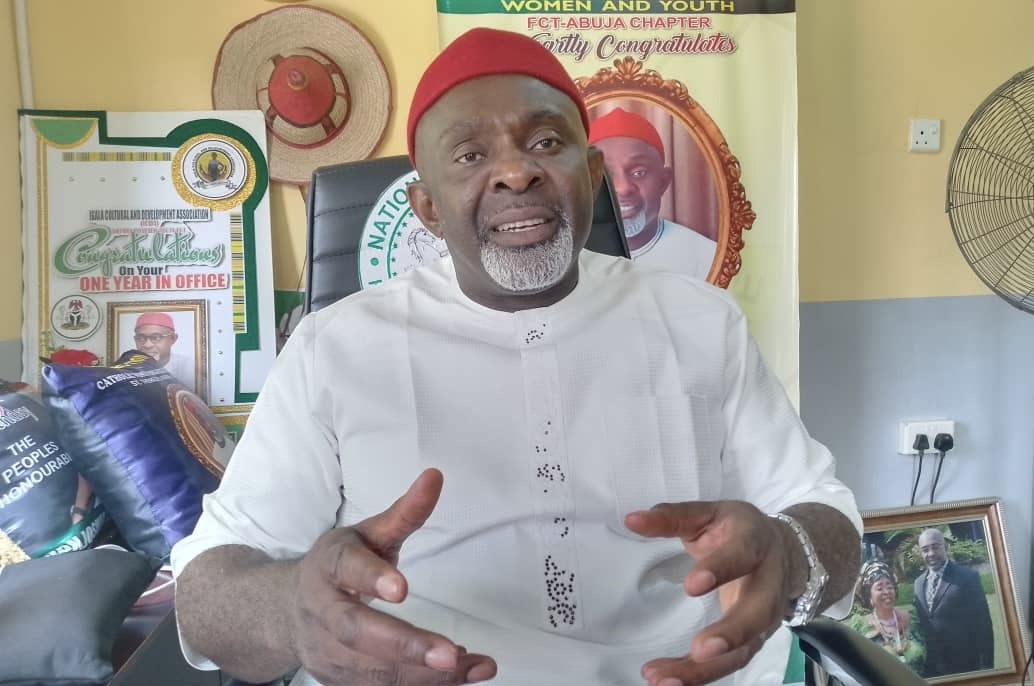
Background & Key Assertion
The issue centres on the long-standing practice of federal lawmakers nominating “constituency projects” or “zonal intervention projects” (ZIPs/CDPs), as part of the national budget — ostensibly to deliver infrastructure and social services to their federal constituencies.
Rep. Obika has publicly argued that many lawmakers are no longer focused on their core legislative responsibilities, but rather appear more engrossed in controlling and utilising these constituency project funds. Consequently, he has called for the scrapping of constituency projects on the basis that they undermine the legislature’s proper role.
Evidence & Supporting Data
Rep. Obika deductions on relevant facts and figures:
-
Civil society group BudgIT found that in the 2025 budget, the National Assembly inserted 11,122 projects worth ₦6.93 trillion for ZIPs and CDPs.
-
Editorial commentary in the The Guardian called constituency projects a “conduit pipe for siphoning off the national treasury,” citing that “from 2003 to date, a staggering sum of N2 trillion has been spent, but little to show.”

-
Rep. Obika is among lawmakers who have registered very low legislative output: for example, a review of the FCT’s three federal legislators found that between June 2023 and May 2024, the lawmakers have only sponsored one bill between them.
-
Separately, lawmakers themselves are complaining of unequal funding, delays in contractor payments, non-implementation of budgeted projects, which has affected their political standing.

Arguments Made by Rep. Obika
-
The legislative arm should prioritise its law-making and oversight functions, rather than becoming managers or patrons of development projects which are ordinarily executive functions.
-
Constituency projects compromise legislative independence: when lawmakers are involved in selecting and pushing projects, they may lose the capacity or incentive to robustly oversee the executive agencies that carry out those projects.
-
Given cost, scale, and mis-execution of many of these projects, the funds could perhaps be better used via improved local government structures or state-level programmes with stronger accountability.
-
He suggests that legislative focus has shifted away from debating and passing laws towards lobbying for or administering projects — hence “lawmakers no longer interested in legislation”.
Implications & Risks
-
Role distortion: If indeed many federal lawmakers spend more effort on securing or overseeing constituency projects than on passing laws, this may erode the institutional capacity of the National Assembly as a legislature.
-
Accountability gap: With vast sums channelled into ZIPs/CDPs and weak oversight, there is elevated risk of mis-appropriation, duplication, abandoned projects, and weak value for money — public trust is at stake.
-
Overlap and duplication: The executive branch and agencies may also execute projects in the same areas, leading to duplication of efforts, unclear responsibilities, waste.
-
Legislative neglect: Overemphasis on constituency delivery may mean fewer bills, less policy innovation, weaker legal frameworks — long-term governance suffers.
-
Political incentive distortion: Lawmakers may focus on visible, short-term “projects” for electoral gain rather than deeper structural reforms or laws.
Counterpoints & Considerations
-
Proponents of constituency projects argue that they bring democracy and development closer to the grassroots: the representatives know their local context and can drive needed interventions.
-
Some argue that even if the legislature is involved in selecting almost “executive” projects, the practical reality of Nigeria’s federal system means constituents expect tangible outcomes rather than only laws.
-
It’s not clear from public data that all lawmakers are uniformly neglecting legislation — the low output cited for FCT representatives is striking, but a broader comparative dataset across states would strengthen the argument.
-
If constituency projects were to be scrapped, there must be a clear alternative mechanism to channel development funding to constituencies or communities — simply ending them without replacement could leave voids.
What’s Reasonably Recommended
From the above, several actions could strengthen the system:
-
Audit & transparency: Undertake a full audit of ZIP/CDP funds — how many projects completed, cost-overruns, beneficiaries, why delays/abandonments.
-
Clarify roles: Legislators should primarily legislate and oversee; the execution of development projects perhaps should be reassigned to the executive or state/local governments with oversight by the legislature.
-
Strengthen oversight mechanisms: Empower committees of the National Assembly, independent monitoring bodies, civil society to track project execution, publication of project lists, timelines, outcomes.
-
Re-design the funds flow: Consider redirecting funds from thousands of small constituency projects into fewer, larger, better-monitored programmes with higher impact and clearer accountability.
-
Boost legislative output: Encourage lawmakers to sponsor and progress more bills, hold the executive to account, conduct hearings—restore the legislature’s core mandate.
-
Communication with constituents: Lawmakers must explain to their constituents the difference between legislation, oversight and project delivery — to align expectations.
Conclusion
Rep. Obika’s call to scrap constituency projects is a bold critique of the current legislative–development dynamics in our dear national federal system. His central claim that many lawmakers are distracted from legislation and instead are focused on constituency-project patronage — traces to verifiable signals: high volumes of ZIP/CDP spending, relatively low legislative output in some cases, and reports of project non-implementation.
However, scrapping these projects outrightly is not without risk, especially given the developmental deficits in many constituencies and the expectations of voters. The more enduring solution lies in structural reform: redefining the roles of legislators versus executors, improving transparency and oversight, and ensuring that funds flow to genuine outcomes rather than projects for their own sake.
If Nigeria is to strengthen its legislative institutions and ensure that public funds deliver value, the conversation about ZIP/CDPs must shift from “should we have them” to “how do we make them work — or replace them with better-designed mechanisms”.