

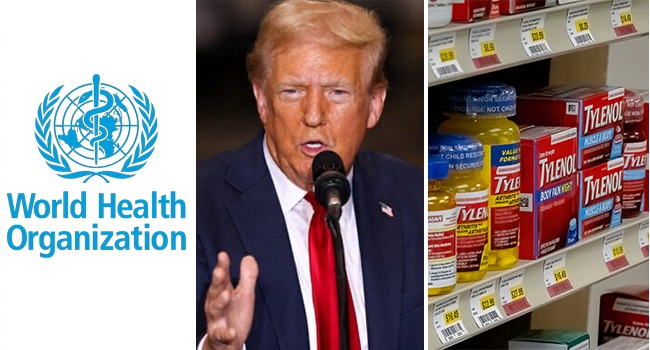
The World Health Organization has firmly stated that neither Tylenol nor vaccines cause autism, contradicting US President Donald Trump’s claims.
Trump suggested that pregnant women should avoid Tylenol due to an unproven link to autism and urged changes to standard vaccine schedules for babies.
WHO spokesman Tarik Jasarevic emphasized that vaccines do not cause autism, highlighting that the global immunization schedule has saved at least 154 million lives over the past 50 years. “These things should not really be questioned,” he added, stressing the importance of adhering to evidence-based medical guidance.
Jasarevic acknowledged some observational studies have suggested a possible association between prenatal exposure to acetaminophen, Tylenol’s primary ingredient, and autism. However, he noted that the evidence remains inconsistent, and multiple studies have found no such relationship.

Medical experts agree that acetaminophen is one of the safest painkillers for pregnant women. The Society for Maternal Fetal Medicine recommends Tylenol as an option to treat fever and pain during pregnancy. Researchers emphasize that fevers, especially in the first trimester, can increase the risk of miscarriages, preterm birth, and other problems.
Trump’s claims have sparked concern among scientists, who warn that altering vaccination schedules without evidence-based guidance can increase the risk of outbreaks and life-threatening infectious diseases. Each missed vaccine dose increases the chances of contracting a life-threatening disease.
The WHO’s stance is clear: vaccines are safe, and there’s no link between Tylenol and autism. As the global community works to understand the causes of autism and support those affected, it’s crucial to rely on scientific evidence and expert guidance.
