


President Bola Ahmed Tinubu has said that Africa’s vast $120 billion worth of hydrocarbon resources are not yielding benefits for the continent because of low refining capacity and poor energy infrastructure.
He made this known at the 19th edition of the OTL Africa Energy Week in Lagos, where he called for urgent action to ensure that Africa gains more from its oil and gas wealth.
Represented by the Minister of State for Petroleum Resources (Oil), Heineken Lokpobiri, the President explained that despite the continent’s enormous energy reserves, most of its crude oil is still exported for refining abroad. He noted that this limits value retention and jobs within Africa. “Africa has a proven $120 billion worth of hydrocarbon resources. However, we have limited refinery capacity and distribution networks. As a result, a larger portion of this wealth is exported to countries outside Africa,” he said.
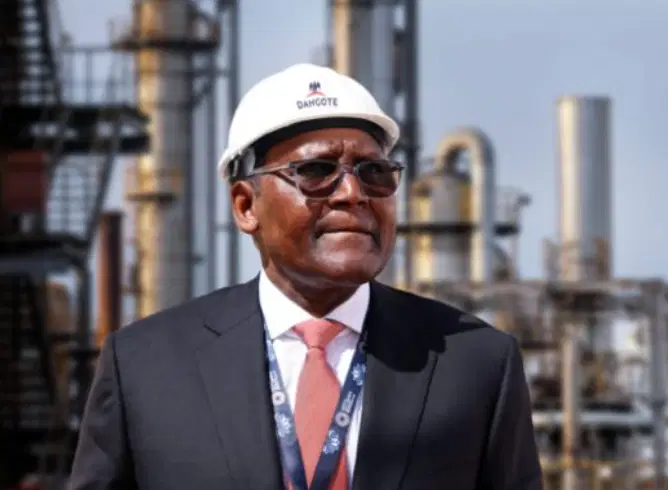
Tinubu stressed that Nigeria is determined to change this trend by encouraging investments that will make the country a refining hub for the continent. He stated that the government supports local projects like the Dangote Refinery, which plans to expand from 650,000 barrels per day to 1.4 million barrels per day, describing it as a major step toward energy independence.

According to him, the global energy market demands fresh investments of over $540 billion annually in upstream oil and gas to prevent a major energy crisis by 2050. He urged both local and international investors to channel resources into Africa’s energy value chain rather than exporting raw materials and importing refined products.
The President also highlighted that sustainable growth in Africa’s downstream and midstream oil sectors will depend on private sector participation. He said deregulation and privatisation remain key to ensuring energy availability, affordability, and accessibility across the continent.
Tinubu reaffirmed his administration’s resolve to create a stable investment climate that will attract new investors and boost domestic refining. “We want to retain the greater portion of our hydrocarbon wealth in Africa. That is why we continue to support policies and projects that strengthen our refining and energy infrastructure,” he added.
