

In today’s fractured advertising landscape, marketers constantly seek channels that cut through noise and stick in people’s minds. While digital ads dominate spend and targeting sophistication, an older medium — transit media — is experiencing a renaissance thanks to its unique ability to capture attention and deliver superior recall.
What Is Transit Media?
Transit media is a form of out-of-home (OOH), advertising that places branded messages on and around public transportation — such as buses, trains, subways, taxis, tricycles (keke napped), and transit shelters — and increasingly on digital screens in stations and onboard vehicles.
Unlike digital ads, which appear on screens as users scroll or search, transit media exists in the physical world where audiences encounter it during their daily routines — commuting, waiting, or moving through urban spaces.
1. Transit Media Naturally Builds Memory Through Repetition
A core reason transit media drives higher recall stems from frequency and routine:
-
Daily commuters traverse the same routes repeatedly, exposing them to the same ads day after day. This builds familiarity — a key psychological factor in memory retention.

-
Marketing research shows that audiences typically require multiple exposures (often 7–13 or more), before a message sticks. Transit environments naturally provide those repeat impressions without extra spend.

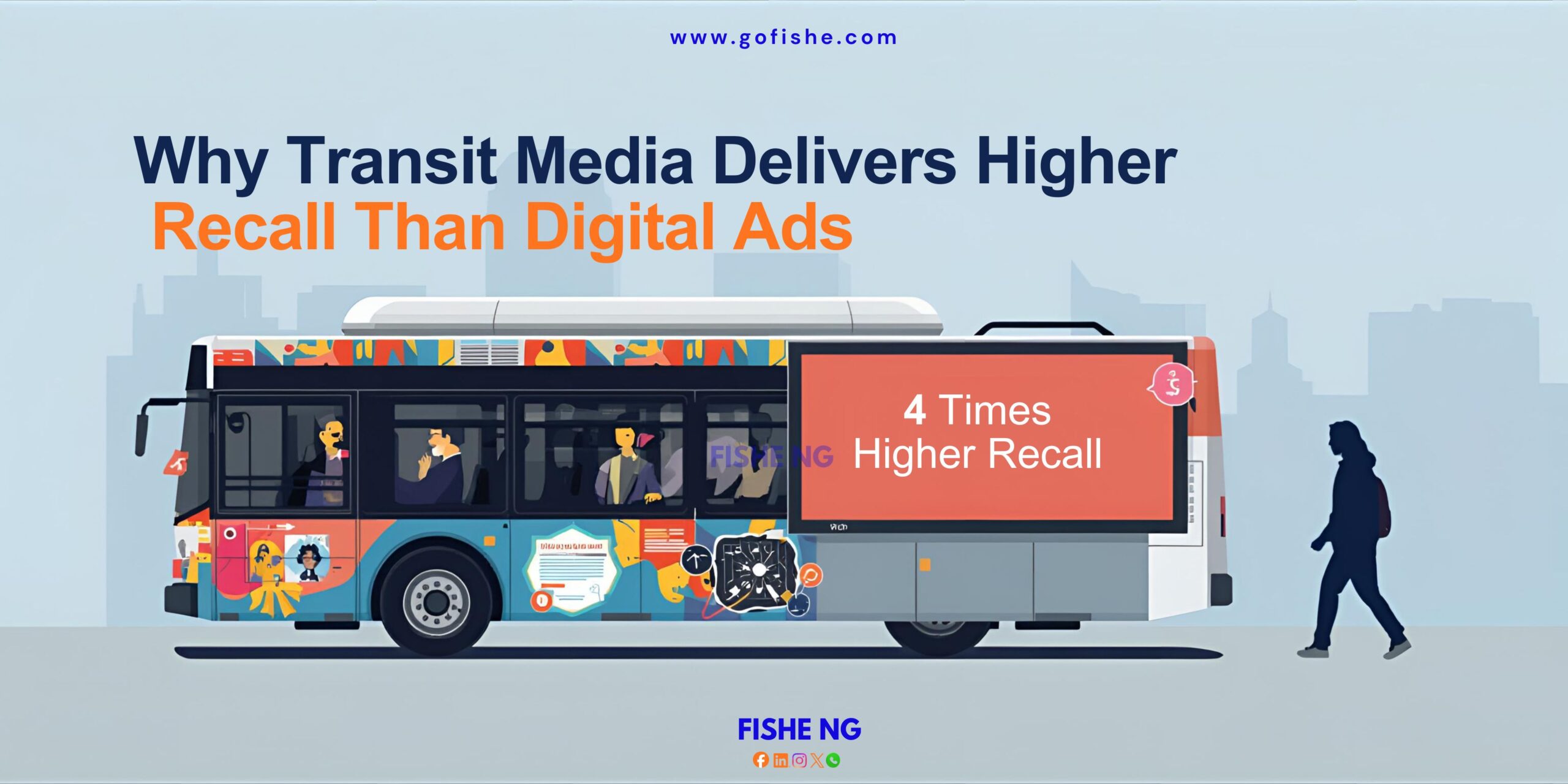

In contrast, digital ads often deliver single or fleeting impressions. Users scroll past them quickly, skip them, or block them — making sustained retention difficult. A recent study found that the average viewer can recall only about 1.5 digital brands, with most ads forgotten or labeled generically.
2. Transit Environments Create Captive, Attentive Audiences
Transit media earns attention in ways digital often can’t:
-
Commuters waiting at bus stops or in stations have downtime — eyeing surrounding visuals because they have few competing stimuli.
-
Vehicles moving through traffic or stopping at lights offer repeated visibility to pedestrians and motorists alike.
-
Unlike digital ads, which can be skipped, ignored, or blocked, physical transit ads are embedded in real spaces — they can’t be turned off or scrolled away.
These dynamics keep transit ad content top of mind long after the initial viewing.
3. Physical, Large-Format Creative Is More Memorable
Transit ads often use bold visuals, strong colours, and simplified messaging due to the environment (people see them at a glance). These traits enhance memory encoding — how well the brain stores and retrieves information.
Creative that’s visible — across an entire bus wrap or train carriage — can become iconic, linking a brand to a street, route, or moment.
Digital ads, by contrast, are confined to limited screen space and compete against endless other visuals on feeds and search results.
4. High Recall Is Backed by Evidence
Studies consistently show that transit and place-based media deliver strong recall:
-
A recent study of Out-of-Home ad found 82% of transit media viewers recalled ads within a month and many took action afterward.
-
Research from commuter environments shows major proportions of riders can remember transit ads — figures often exceeding typical screen ad recall.
These recall rates often outperform digital click-through memory measures, especially for brand awareness objectives.
5. Transit Media Complements Digital for Maximum Effect
It’s important to understand that transit media and digital advertising don’t have to be adversarial — they’re complementary:
-
Transit builds unmissable, repeated exposure and physical presence in the world.
-
Digital excels in precision targeting, real-time bidding, and measurable action.
Used together, transit can plant the seed, and digital can re-engage audiences online — a combination that often boosts both recall and conversion.
Why Choosing the Right Agency Matters
Broadcasting messages is one thing; planning and executing them effectively is another. That’s where an experienced agency like Fishe Media comes in.
Fishe Media — is a full-service advertising agency that blends creativity, strategy, and media buying across both traditional and digital channels — ensuring efficient use of budgets and cohesive campaign execution.
Agency Strengths: What Fishe Brings to Transit Campaigns
Integrated Media Planning
Fishe Media doesn’t silo transit or digital; it plans and buys media holistically — meaning transit placements are synchronised with broader brand objectives such as TV, social, search, and outdoor.
That integrated approach ensures transit impressions feed into overall brand visibility and not just stand alone as isolated billboards.
Strong Creative and Messaging Strategy
Memorable transit requires simple, bold, and impactful creative. Fishe Media provides strategic copy, design, and visual storytelling — crucial for transit where audiences engage in split seconds.
Media Buying Expertise
Great placements matter. Fishe’s media buyers negotiate placements and pricing across mediums, maximising reach while controlling cost — a key advantage when transit campaigns are part of tight budgets.
Conclusion — Transit Media’s Place in Modern Advertising
Transit media isn’t a relic. In 2026, as attention ecosystems fragment and digital fatigue rises, physical advertising — especially transit — remains a powerful tool for memorable brand exposure.
Its strength lies in:
- Frequency and repetition that digital can seldom match.
- Captive audiences and real-world attention.
- Large-format, high-visibility creative.
When these strengths are paired with a smart agency like Fishe Media, brands get the dual advantage of creative, strategic planning and efficient media buying that leverages transit media as part of a broader, data-driven marketing mix.