


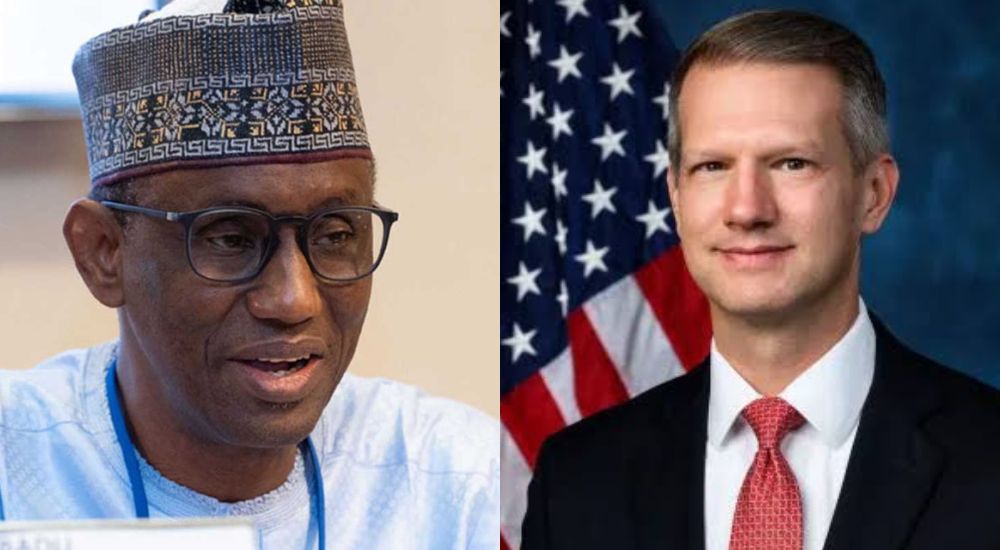
U.S. Congressman, Riley M. Moore, has outlined two specific conditions that the Nigerian government must meet before any military partnership with the United States to tackle the country’s persistent security challenges can move forward.
In an interview with Fox News, the Republican lawmaker emphasized that the first requirement is the release of Sunday Jackson, a young man sentenced to death for killing a Fulani herdsman in what he claimed was self-defense after the herdsman allegedly invaded his farm.
“The young man must be released before the U.S. would consider partnering with Nigeria to tackle the decade-long security crisis,” Moore said.
The second condition, according to Moore, is for the Nigerian government to present a credible plan to disarm Fulani herdsmen who have been implicated in widespread unrest in the Middle Belt region.
“It sounds like they (Nigerian) are open to partner with the United States to stop these killings. They met with myself and the administration as well. We made some progress in getting them to place of partnership with us to stop these killings, but there is a lot of things they need to do,” Moore explained.
“One of the first steps is releasing Sunday Jackson. Another is coming up with a plan to work with us to disarm the radical Fulani militants in the Middle Belt of the country.”
Background: Rising U.S. Concern Over Violence in Nigeria
The U.S. has grown increasingly concerned about targeted attacks against Christian communities and general insecurity in Nigeria, particularly from extremist groups like Boko Haram, ISWAP, and militant Fulani factions. Moore, who met recently with a high-level Nigerian delegation led by National Security Adviser Nuhu Ribadu, stressed that deeper cooperation would require tangible action by the Nigerian government.

This includes protection of vulnerable populations and demonstrable steps to curb violence, echoing his previous calls for moral and strategic accountability.
Why These Conditions Matter
Moore’s approach underscores the combination of moral imperative and strategic leverage guiding U.S. foreign policy toward Nigeria:
-
By linking military partnership to humanitarian and legal action—such as the release of Jackson—the U.S. can signal that human rights and rule of law are priorities.
-
By insisting on a credible plan to disarm militant herdsmen, the U.S. is directly addressing the root causes of Middle Belt violence, aiming to create conditions for more sustainable security cooperation.
Implications for my Country, Nigeria
For Nigeria, meeting Moore’s conditions could pave the way for enhanced U.S. support, including intelligence sharing, security assistance, and potential arms sales. At the same time, navigating domestic political sensitivities—especially around the controversial release of Sunday Jackson—may prove challenging for President Tinubu’s led administration.
Conclusion
Riley Moore’s demands set a clear framework: release Sunday Jackson and develop a credible plan to disarm Fulani herdsmen. Meeting these conditions is essential for the U.S. to deepen its military partnership and tackle the decade-long security crisis in Nigeria.
Failure to act, Moore warns, could result in a reassessment of U.S. engagement, emphasizing that cooperation will be contingent on demonstrable action rather than promises.
May Nigeria succeed.
