


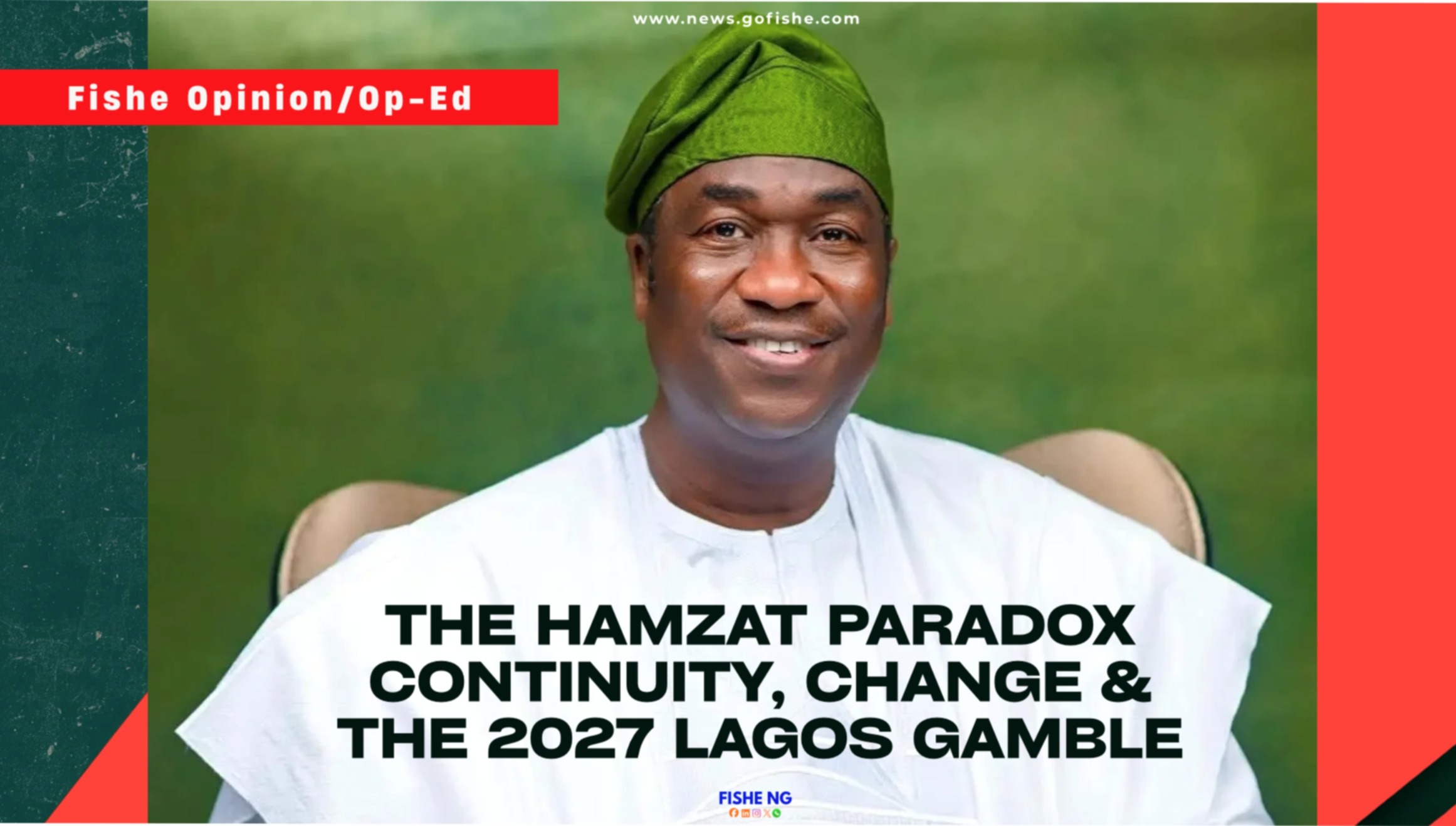
Dr. Obafemi Hamzat’s journey in Lagos politics is a fascinating blend of tradition and the need for flexibility. As the current deputy governor alongside Governor Babajide Sanwo-Olu, he’s gained a significant platform that boosts his visibility and lends him administrative credibility.
However, the road to the governorship election in 2027 is lined with both structural hurdles and public perceptions that he must navigate carefully.
Incumbency Advantage vs. Personality Politics
Lagos politics is a fascinating mix of party loyalty, how well leaders perform, and their personal charm. Dr. Hamzat has the backing of the All Progressives Congress (APC), but it seems like the party’s hold on Lagos is more of an assumption these days rather than something actively fought for.
Voters are starting to look at individual achievements rather than just sticking to party lines. In this context, Dr. Hamzat’s more reserved, technocratic approach might not play in his favour; Lagosians tend to favour leaders who can balance charisma with competence.

The Gendered Dynamic of a Female Running Mate
Choosing a female running mate is a clever political move, but it comes with its own set of challenges. On one side, it shows a commitment to inclusivity, which can resonate with the younger and female voters in urban Lagos, and it aligns with the global push for gender-balanced leadership. However, the reality of Nigerian politics is still very much rooted in a patriarchal mindset, both in how people perceive it and how grassroots campaigns are organised.
While Dr. Hamzat’s choice of a female running mate might inspire educated urban voters, it could also risk pushing away some of the more conservative factions within Lagos’s traditional political landscape.
The key to making this strategy work will be in how her role is presented—not just as a figurehead, but as someone who can genuinely influence policy, particularly in areas where women feel their voices are often overlooked. Ask me how?
Electoral Fatigue and the “Third Term” Perception
While Dr. Hamzat may not be officially running for a third term, the continuity from Governor Sanwo-Olu’s administration could easily paint him as just another part of the existing system. The voters in Lagos, especially the younger crowd, are becoming more doubtful of slow progress.
Any shortcomings—like traffic jams, housing shortages, power outages, or environmental concerns—might be blamed on the current administration. This makes it crucial for Dr. Hamzat to highlight the positives of continuity while also showing where fresh ideas and changes are necessary. — Ask me how?
Opposition Strategy and Lagos’s Political Sophistication
Opponents are likely to spin stories about stagnation, elitism, or a lack of attention to grassroots issues. If a credible opposition candidate emerges, one who can connect with Lagos’s vast middle-class suburbs and the politically active youth, it might make Dr. Hamzat’s support as an incumbent less certain.
In this scenario, his female running mate could play a crucial role, especially if her background resonates with groups that have traditionally been overlooked in Lagos politics. — Ask me how?
Media, Social Capital, and the Digital Imperative
In Eko, it seems that success is becoming more and more tied to how well one can control their narrative on social media. Dr. Hamzat’s somewhat understated public image might leave him open to being portrayed online as someone who is technocratic but out of touch.
Bringing in a female running mate with a vibrant digital presence could help bridge this gap, as long as her activism and outreach come across as genuine rather than just for show.
Conclusion:
Dr. Obafemi Hamzat’s chances for 2027 are definitely on the table, but nothing is set in stone. He has some solid advantages—like party support, being in the public eye, and his technical know-how—but he really needs to weave these into a compelling story that highlights innovation and inclusivity.
Having a female running mate can be a great asset, but only if she’s more than just a figurehead; she needs to represent real, relatable values that can help balance out Hamzat’s perceived shortcomings. If they don’t get this right, it might come off as just a trendy facade instead of a genuine shift in governance.
Ultimately, Dr. Hamzat’s campaign will hinge less on “who he is” and more on “how he responds” to a Lagos electorate that’s growing tired of slow progress but wary of sudden changes—it’s a delicate balancing act of skill, public perception, and the nuances of gender representation.
