

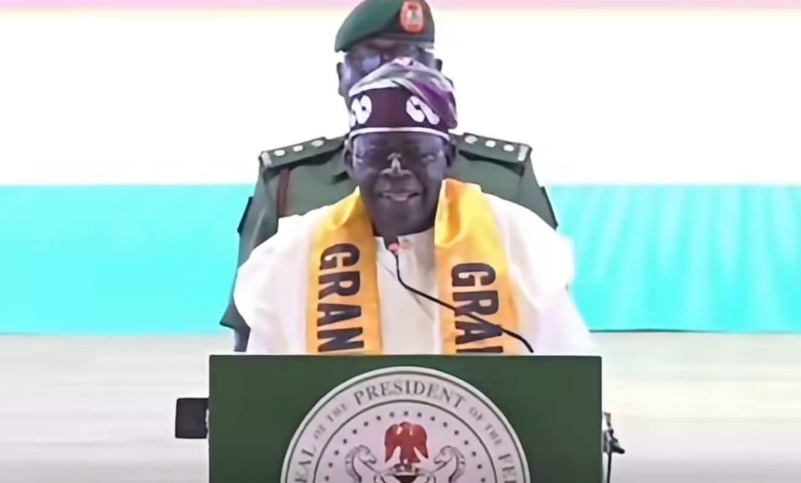
President Bola Ahmed Tinubu has called on Nigerian journalists and media organisations to maintain the highest standards of professionalism, emphasizing the importance of truth, accuracy, and public responsibility over sensationalism and the chase for online clicks.
During the inaugural State House Media Dinner at the Presidential Villa in Abuja on Thursday, July 2, 2026, the President highlighted the media’s crucial role as a cornerstone of democracy. He urged media professionals to stand firm against the rising tide of misinformation, disinformation, fake news, and digitally altered content.
While speaking to State House correspondents, Tinubu reiterated his enduring commitment to press freedom, underscoring that democracy cannot flourish without a free and dynamic media. However, he also pointed out that the rights to free expression and press freedom should always be exercised with a sense of responsibility.
Freedom Must Be Matched With Responsibility
The President emphasized that his administration is dedicated to ensuring that journalists have the freedom, access, and resources they need to fulfill their constitutional duties.

He referred to himself as “an apostle of a free press,” reflecting on his long-standing advocacy for media freedom throughout his political journey.
He pointed out that while freedom of speech and press are cornerstones of democracy, journalists also have a duty to make sure their reporting is accurate, balanced, and aware of its potential effects on national stability.
He cautioned that with rights come responsibilities, highlighting that journalism should be anchored in ethics, accountability, and a commitment to verified facts instead of mere speculation.
Media and Government: Democratic Partners and Adversaries
Tinubu recognised that the relationship between the government and the media can often be a bit rocky, but he emphasized that this tension is a vital aspect of any thriving democracy.
He pointed out that the role of the government is to govern and serve the public, while the media’s job is to challenge authority, examine public officials, and keep those in power accountable.
The President noted that this institutional friction shouldn’t be seen as hostility; rather, it should be viewed as an essential part of the democratic process.
He elaborated that although the government and the media might seem like opponents in their distinct roles, they are actually partners in the broader mission of nation-building and strengthening democracy.
Warning Against Sensationalism and Clickbait
A key point in the President’s address revolved around what he termed the rising trend of sensational reporting.
Using contrasting newspaper headlines about Nigeria’s economy as a case in point, Tinubu raised the question of whether certain media outlets are genuinely providing the necessary context and analysis, or if they are simply chasing after eye-catching headlines that grab public attention.
He urged journalists to consciously decide between practicing responsible journalism and opting for sensationalism.
“The media must prioritise substance over sensation. The media must value credibility over clickbait,” he stated. The President voiced his worries that the relentless drive for online engagement—through likes, shares, and viral content—is increasingly overshadowing the core principles of journalism.
He cautioned that the public relies on professional journalists not just to report on events, but to differentiate between facts and rumors, evidence and speculation, as well as truth and falsehood.
Concern Over Misinformation and Deepfakes
Tinubu has been paying close attention to the risks that come with misinformation and the rise of new digital technologies.
He pointed out the growing issue of fake news, disinformation, and the threats posed by AI-generated voice and facial cloning, along with deepfake videos, labeling them as significant dangers to our national security and public trust.
The President urged journalists to be cautious and avoid becoming conduits for unverified or false information that could erode public confidence and disrupt national stability.
He emphasized that in a time when nearly every smartphone user can share information at the click of a button, the role of trained journalists has never been more crucial.
According to him, professional journalism should always set the standard for accuracy, credibility, and factual reporting.
Press Freedom Does Not Include Defamation
In a strong reaffirmation of his administration’s dedication to upholding constitutional freedoms, Tinubu made it clear that while freedom of expression is vital, it doesn’t cover the spread of intentional falsehoods or defamation.
He pointed out that Nigeria’s legal framework, which includes the Cybercrimes Act and other related laws, offers essential protections against harmful falsehoods, cyberstalking, identity theft, and various other abuses that have become all too common in our digital world.
According to him, these laws are not meant to stifle press freedom; rather, they aim to safeguard citizens and maintain the integrity of Nigeria’s information landscape.
Constitutional Guarantees Remain Intact
The President reiterated his administration’s dedication to Sections 22 and 39 of the Constitution, which ensure freedom of expression and place the onus on the media to keep the government in check.
He also emphasized the ongoing significance of the Freedom of Information Act in fostering transparency, openness, and public access to government information.
Tinubu assured journalists that his government is steadfast in safeguarding these constitutional rights while promoting responsible journalism.
Defending His Administration’s Record
Beyond just media matters, the President took the opportunity to shine a light on what he called the significant accomplishments of his administration.
He mentioned that Nigeria’s economy is beginning to bounce back after some tough but essential reforms carried out by the government.
According to Tinubu, public revenues have seen a notable boost, state governments are now getting larger allocations, investor confidence is slowly making a comeback, foreign reserves are on the rise, and the oil and gas sector is experiencing a fresh wave of investment.
He also highlighted encouraging trends in the stock market, along with fiscal and tax reforms, and investments in infrastructure as proof that the country’s economic trajectory is looking up.
While he recognised that there are still hurdles to overcome, Tinubu insisted that the groundwork for sustainable economic growth has been solidly laid.
Security Improvements
Beyond just media matters, the President took the opportunity to shine a light on what he called the significant accomplishments of his administration.
He mentioned that Nigeria’s economy is beginning to bounce back after some tough but essential reforms carried out by the government.
According to the President, public revenues have seen a notable boost, state governments are now getting larger allocations, investor confidence is slowly making a comeback, foreign reserves are on the rise, and the oil and gas sector is experiencing a fresh wave of investment.
He also highlighted encouraging trends in the stock market, along with fiscal and tax reforms, and investments in infrastructure as proof that the country’s economic trajectory is looking up. While he recognised that there are still hurdles to overcome, Tinubu insisted that the groundwork for sustainable economic growth has been solidly laid.
Call for Constructive Engagement
Tinubu wrapped up his remarks by emphasizing the need for a stronger partnership between the government and the media, grounded in professionalism, mutual respect, and a shared dedication to national progress.
He encouraged journalists to keep holding the government accountable while upholding values like fairness, integrity, and accurate reporting.
The President called for a move away from unnecessary hostility and sensationalism, advocating instead for constructive dialogue, truth, and responsible journalism.
He highlighted that a thriving democracy relies on government accountability, professional media, and citizens receiving accurate, balanced, and trustworthy information.
Describing the media as an essential ally in national development, Tinubu expressed his hope that the State House Media Dinner would evolve into a lasting tradition that enhances the relationship between the government and journalists, while also bolstering Nigeria’s democratic institutions.
He wrapped up by expressing gratitude to the members of the State House Press Corps for their commitment, hard work, and contributions to Nigeria’s democracy.
