


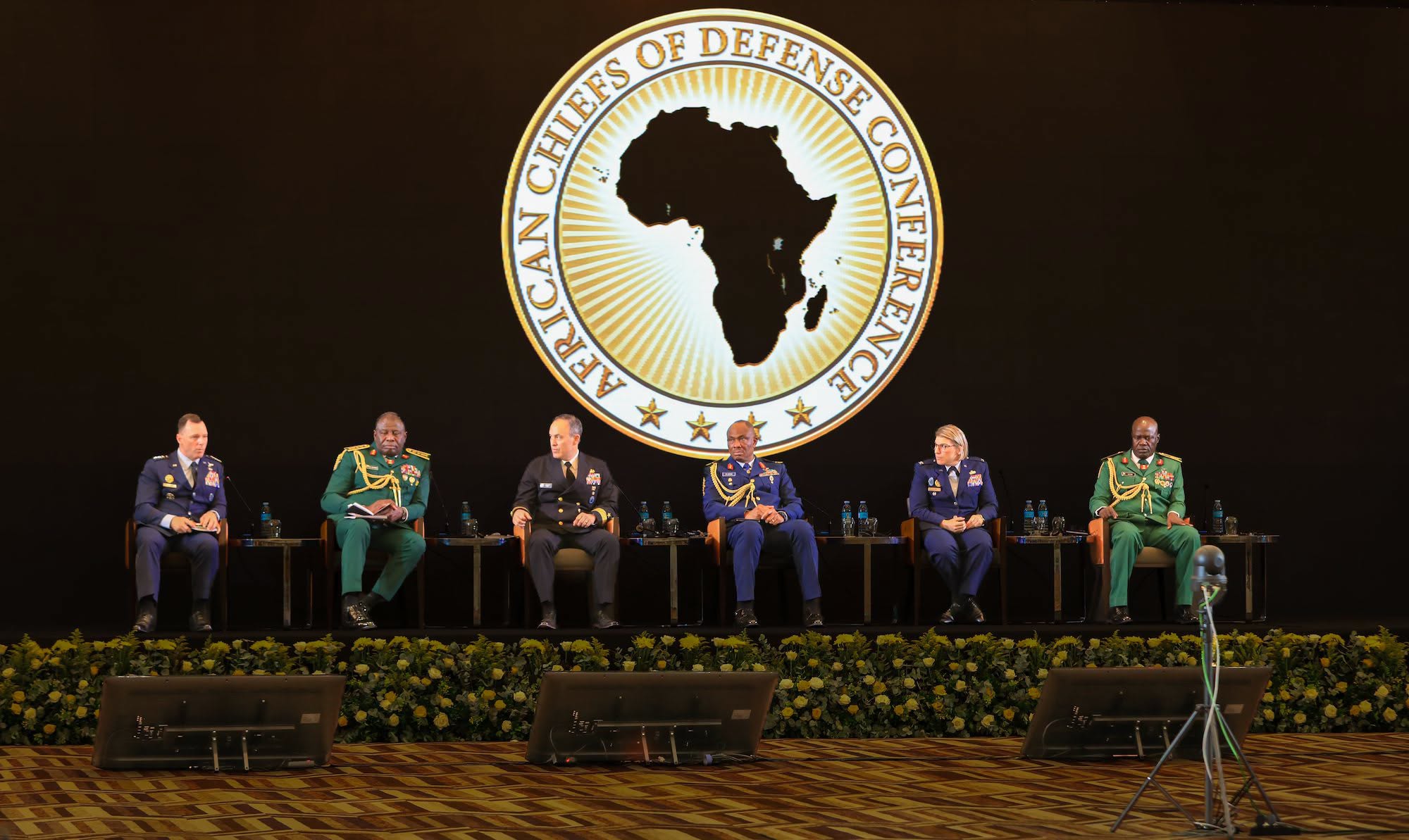
The 2026 African Chiefs of Defense Conference (ACHOD), celebrating its tenth anniversary, wrapped up in Luanda with a fresh focus on African-led security cooperation, intelligence sharing, technological advancements, and the growing understanding that economic development and security are two sides of the same coin when it comes to achieving long-term stability.
During a digital press briefing organised by the U.S. Department of State’s Africa Regional Media Hub, General Dagvin R.M. Anderson, the Commander of U.S. Africa Command (AFRICOM), highlighted what he sees as a major shift in the conference’s approach—from merely discussing security threats to actively seeking practical solutions, building institutional partnerships, and fostering sustainable regional cooperation.
Hosted by Angola, the conference gathered military leaders from 35 African nations, along with representatives from the United States and Brazil. It also included participants from the U.S. National Guard State Partnership Program, senior officials from various U.S. government agencies, African defense industries, and international commercial partners.
General Anderson commended Angola’s military leadership, especially General Altino and the organising team, for successfully hosting what he described as one of the most comprehensive editions of the conference to date.

Moving Beyond Dialogue Toward Practical Outcomes
The 2026 conference took a refreshing turn compared to its predecessors, shifting its focus from merely pinpointing challenges to actively crafting practical solutions.
Keynote speeches were delivered by the Chairman and Vice Chairman of the U.S. Joint Chiefs of Staff, while Dr. Feijó from Angola presented an insightful look at the increasingly vital link between economic development and national security.
AFRICOM also broadened its horizons by inviting a diverse group of participants beyond just military representatives. This included folks from the U.S. Department of Commerce, the U.S. International Development Finance Corporation, the Department of State, Pentagon policy experts, private tech companies, and African defense firms.
Anderson pointed out that this expanded participation highlights a growing recognition that achieving sustainable security goes beyond military might alone.
In fact, long-term stability hinges on fostering economic opportunities, promoting investment, enhancing governance, and driving innovation that tackles local issues head-on.
Security and Economic Development Now Viewed as Interdependent
One of the key takeaways from the conference was the clear understanding that security and economic prosperity go hand in hand.
General Anderson emphasized that when security is stable, it fosters the confidence needed for investment. On the flip side, economic growth plays a crucial role in minimising instability by creating job opportunities and bolstering institutions.
To push this idea forward, the discussions delved into how governments can enhance investment climates by lowering perceived commercial risks, fortifying legal frameworks, and improving institutional governance.
The involvement of the U.S. Department of Commerce and the Development Finance Corporation highlighted this broader strategic perspective, showing that defense partnerships are increasingly incorporating economic players alongside the traditional security institutions.
African Innovation Takes Center Stage
One of the standout features of this year’s conference was the spotlight on African defense technology and homegrown innovation. Instead of just zeroing in on high-tech military gear, the conversations explored how off-the-shelf technologies and locally crafted solutions can enhance security capabilities without breaking the bank.
General Anderson pointed to Nigeria’s Terra Industries as a prime example of African ingenuity making a real impact on continental security.

The company’s leaders took part in conference panels, sharing insights on the creation of unmanned aerial systems tailored specifically for African conditions—an approach that Anderson believes could be more effective than relying on systems designed for entirely different environments.
Participants also stressed that innovation isn’t just about hardware.
Anderson made a compelling case that effective security relies just as much on software, communication networks, intelligence systems, training, and the overall culture within organizations.
Four Strategic Themes Dominated Discussions
The discussions at the conference focused on four key strategic areas:
Global Commons and Transnational Threats
Military leaders took a close look at security challenges that are becoming more and more global in nature, such as terrorism, drug trafficking, organized crime, illegal fishing, and threats to maritime safety.
Everyone involved recognised that these issues can’t be tackled effectively by countries going it alone.
What’s really needed is a focus on sharing intelligence, coordinating surveillance efforts, and fostering regional cooperation, all of which are crucial for ensuring security across the continent.
Information and Strategic Communication
Another panel delved into the rising significance of the information landscape, especially highlighting how crucial it is for governments to tackle misinformation while still being open about military operations and security efforts.
Officials emphasized that building public trust has turned into a vital element of national security.
Economic Opportunity and Stability
The conversations really drove home the point that when people are prosperous, they’re less likely to fall into conflict and extremism.
Economic resilience isn’t just a goal for development; it’s also a crucial part of keeping a nation safe.
Innovation and Future Capability
Participants explored how new technologies like budget-friendly drones, commercial satellite services, artificial intelligence, and autonomous systems can offer affordable solutions for African militaries that are working with tight budgets.
Intelligence Sharing Emerging as AFRICOM’s Central Partnership Model
During the briefing, General Anderson made it clear that one of AFRICOM’s key contributions to enhancing security in Africa is intelligence sharing.
Instead of pushing for large military deployments, Anderson highlighted a partnership approach that focuses on intelligence, surveillance, reconnaissance (ISR), information integration, and specialised skills. This model empowers African forces to carry out operations on their own.
He pointed to a notable example involving a multinational effort aimed at intercepting a massive cocaine shipment from South America.
Anderson explained that through the intelligence shared by AFRICOM and U.S. interagency partners, several African nations were able to track the vessel’s movements.
This led to a Spanish naval ship successfully intercepting around 31 tons of cocaine—the largest maritime drug bust ever recorded. This operation showcased how effective international intelligence collaboration can be in dismantling transnational criminal networks that span across various regions.
Horn of Africa Remains a Strategic Priority
When discussing East Africa, Anderson highlighted the Horn of Africa as a region of immense strategic significance and intricate security challenges.
He pointed out several interconnected crises that call for a unified response from the region, including:
- We’re witnessing a dire humanitarian crisis in Sudan.
- The situation in Somalia remains unstable, and maritime security issues continue to plague the Red Sea and Gulf of Aden.
- There’s also a troubling rise in terrorist activities linked to al-Shabaab and ISIS affiliates.
- On top of that, regional tensions are impacting Ethiopia, Eritrea, and their neighboring countries.
Anderson recognised the ongoing support from AFRICOM but emphasized time and again that lasting solutions need to come from African governments and regional organisations.

He pointed out that while the United States can offer intelligence capabilities, surveillance tools, and specialised military help, it’s crucial for the region to take ownership of these efforts.
Somalia Operations Intensify Against ISIS Leadership
Questions about the noticeable uptick in U.S. airstrikes in Somalia during 2026 led Anderson to clarify that this increase is more about enhanced operational opportunities than a major change in strategy.
He pointed out that Somali partner forces, especially in Puntland, have effectively driven ISIS leadership into more remote and isolated mountainous areas.
With local forces keeping up the pressure on the ground, AFRICOM has been able to step in with intelligence, logistics, surveillance, precision targeting, and some air support aimed at specific terrorist positions.
Anderson stressed that these operations are the result of collaborative efforts, not just unilateral actions by the U.S. military.
He also highlighted the ongoing cooperation against al-Shabaab, which includes sharing intelligence and providing targeted support.
Nigeria Presented as a Model for Future Partnerships
During the briefing, Anderson consistently highlighted Nigeria as a prime example of the kind of partnership AFRICOM envisions for the future.
He pointed out that Nigeria boasts one of the most capable militaries in Africa, backed by a robust economy and a well-educated populace.
Instead of taking the lead in operations, AFRICOM has chosen to focus on providing specialised intelligence and resources that enhance the effectiveness of Nigerian military efforts.
Anderson mentioned that this collaboration recently played a key role in successfully targeting ISIS’s second-in-command in the Lake Chad Basin area of Nigeria.
He emphasized that taking out senior terrorist leaders has disrupted ISIS’s global communications, recruitment efforts, and media operations, all while bolstering security in the region.
After the operation, Anderson observed that Nigeria has been actively carrying out its own counterterrorism missions and has seen a rise in defections and surrenders among ISIS-affiliated fighters—changes he believes are due in part to the combination of military pressure and effective information campaigns.
Responding to Concerns Over Foreign Influence
A number of journalists raised concerns about how AFRICOM plans to steer clear of being seen as an outside influence while it broadens its security cooperation throughout Africa.
In response, Anderson made it clear that African governments need to be at the forefront of all security efforts.
He pointed out that the main goal of the conference is to foster open discussions among African defense leaders, rather than to push external solutions onto them.
Anderson noted that the United States aims to provide only the capabilities that African partners specifically ask for and that they can’t easily develop on their own. This includes things like strategic intelligence, specialised surveillance, counterterrorism know-how, and cutting-edge technological support.
He stressed that while global powers will always have their own national interests, successful partnerships should also yield shared security and economic advantages for African nations.
Affordable Technology Offers New Opportunities
Understanding the budget challenges that many African militaries are grappling with, the conference discussions really honed in on how to modernise effectively without breaking the bank.
General Anderson pointed out that advancements in technology are making it possible for countries to access capabilities that were once only available to the wealthier nations, and at a much lower cost.
With the rise of commercial drones, affordable satellite imagery, advanced communication systems, and software-driven intelligence tools, there are now plenty of ways to gain operational advantages without needing hefty defense budgets.
That said, he did emphasize that just having the technology isn’t enough.
For modernisation to truly succeed, there also needs to be a focus on investing in training, adapting organisational structures, enhancing communication infrastructure, and providing professional military education.

Face-to-Face Engagement Remains Irreplaceable
Even with all the talk about technology, intelligence, and innovation, Anderson pointed out something even more crucial that came out of the conference.
He emphasized that the real highlight was the chance for military leaders to connect face-to-face.
Throughout the event, defense chiefs kept reiterating that personal relationships are key to fostering trust, enhancing communication, and paving the way for future collaboration in operations.
For Anderson, these human connections are the bedrock for effective intelligence sharing, regional coordination, and ultimately, collective security.
Looking Ahead
The 2026 African Chiefs of Defense Conference marked a significant shift in how AFRICOM approaches its engagement strategy.
Instead of focusing primarily on military presence, the conversations leaned more towards fostering African-led solutions through partnerships in intelligence, technological advancements, economic collaboration, and strengthening institutional capacities.
The conference highlighted a growing awareness that today’s security issues—like terrorism, maritime crime, transnational trafficking, misinformation, and regional instability—can’t be tackled by military might alone.
Participants proposed a more comprehensive vision where security, governance, economic growth, innovation, and regional collaboration work together to create lasting stability.
As Africa faces increasingly interconnected security threats, the Luanda conference signaled a strategic pivot towards partnerships aimed not just at crisis response but also at building resilient institutions that can handle future challenges on their own.
