

Close Menu
Fishe News
  • Home
  • Entertainment
  • National
  • International
  • Tech
  • Politics
  • Sports
  • PMNI
  • More
    • Business
    • Culture
    • Education
    • History
    • Health
  • Featured
    • Fishe Travel
    • Fishe Media
    • Fishe TV
Facebook X (Twitter) Instagram
Trending
  • The United States 175,000-Visa Revocation Question
  • U.S. Response To The 2026 Ebola Outbreak
  • Bolt Business Records Strong Growth In Nigeria Amid Rising Demand For Corporate Mobility Solutions
  • U.S. Unveils Bold New Vision For Africa’s Trade, AI, Security And Infrastructure At Landmark Addis Symposium
  • Radisson Hotel Group, Accenture Reimagine The Future Of Hotel Discovery In The Age Of AI
  • Beyond The Headlines: What Nigeria’s Recognition As An AI Leader Really Means
  • Tinubu’s Military Expansion: A Bold Blueprint For A Safer Nigeria
  • EXCLUSIVE ANALYSIS: Why Trump’s Letter To Tinubu Signals A Major Shift In US Security Policy Toward Nigeria
X (Twitter) Instagram
Fishe NewsFishe News
Subscribe
Tuesday, August 18
  • Home
  • Entertainment
  • National
  • International
  • Tech
  • Politics
  • Sports
  • PMNI
  • More
    • Business
    • Culture
    • Education
    • History
    • Health
  • Featured
    • Fishe Travel
    • Fishe Media
    • Fishe TV
Fishe News
Home»National

Prof. Kila Advocates Power Decentralisation Over Rotational Presidency For Nigeria’s Development

Editor FrancisBy Editor FrancisJune 23, 2024 National No Comments3 Mins Read
Share Facebook Twitter LinkedIn Email WhatsApp

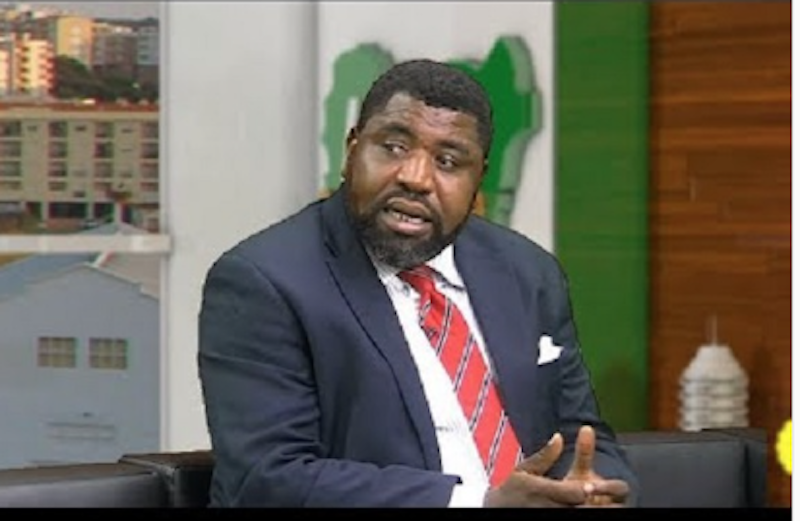
 Professor Anthony Kila, a distinguished expert in Strategy and development and Director-General/Founder of the Commonwealth Institute for Advanced and Professional Studies (CIAPS), has revealed  that decentralising power from the federal center to the states or regions is key to overcoming many of Nigeria’s challenges.

In an interview with the News Agency of Nigeria (NAN) in Lagos, Prof. Kila argued that decentralisation would drive the country’s development more effectively than the proposed rotational presidency, which he referred to as a “turn-by-turn” presidency.

According to Kila, the intense competition among regions and states to produce the president stems from the excessive concentration of power at the centre. By decentralising power, states and regions would be empowered to foster development independently, reducing the clamour for the presidency.

“Every region and even state is desperate to produce the president because the centre is too strong and attractive,” Kila noted. “Decentralisation would discourage these agitations as it empowers local units to deliver development.”



Kila criticised the concept of a rotational presidency, warning that it could lead to generational apathy and hinder nation-building efforts. He emphasised the need for strong states and regions, suggesting that when local entities are empowered, the central government becomes less of a focal point.

“What we need is stronger states or regions. When these local entities are strong and the centre is weak, people will no longer fixate on the central government,” he explained.

Kila also called for a diversification of aspirations among Nigerians, urging a cultural shift where professions outside politics are valued and pursued with equal vigour.

“We need to let children grow up aspiring to be journalists, judges, painters, teachers, and manufacturers, making these professions as important as the presidency,” he said. “This would reduce the attraction of becoming a politician or president.”

He further stated that a rotational presidency, despite being well-intentioned, could have dangerous consequences and foster generational inequality.

“Those advocating for a rotational presidency have sadly concluded that it’s impossible to build a nation where everyone is one, regardless of tribe or ethnic background,” Kila observed. “This idea mistakenly assumes that the country’s problems can be solved by a ‘turn-by-turn’ presidency.”

He lamented that the political class has failed to build a unified nation since independence in 1960, arguing that a rotational presidency would only exacerbate ethnic divisions and undermine competence.

Kila illustrated the impracticality of a rotational presidency with a hypothetical scenario: “Nigeria has six zones. If each zone has a single six-year term, a child born today would have to wait 36 years to see someone from their zone become president again. This contradicts the democratic principles of equality and merit.”

He concluded by emphasizing the importance of democracy being rooted in equality, merit, and fairness, warning that prioritizing ethnicity and religion over these principles would undermine democracy’s essence.

This discussion follows the recent introduction of a bill by 35 members of the House of Representatives, proposing a single six-year term for the President and state governors.

Share. Facebook Twitter LinkedIn WhatsApp
Editor Francis
  • Website

Keep Reading

U.S. Unveils Bold New Vision For Africa’s Trade, AI, Security And Infrastructure At Landmark Addis Symposium

Beyond The Headlines: What Nigeria’s Recognition As An AI Leader Really Means

Tinubu’s Military Expansion: A Bold Blueprint For A Safer Nigeria

EXCLUSIVE ANALYSIS: Why Trump’s Letter To Tinubu Signals A Major Shift In US Security Policy Toward Nigeria

Bridging The Digital Divide: Inside FG’s Laptop And Smartphone Loan Scheme

AFRICOM, West African Military Chaplains Deepen Regional Cooperation At Landmark Religious Affairs Symposium In Ghana

Add A Comment

Comments are closed.

Here is spotlighting many benefits of journeying with either Lagos State’s Blueline or Redline rails for a hassle-free day, week, month and year. Thank God for the Igbega Eko. Together we rise.
https://youtu.be/V67GV8wgyjw

Latest Posts

  • The United States 175,000-Visa Revocation Question
  • U.S. Response To The 2026 Ebola Outbreak
  • Bolt Business Records Strong Growth In Nigeria Amid Rising Demand For Corporate Mobility Solutions
  • U.S. Unveils Bold New Vision For Africa’s Trade, AI, Security And Infrastructure At Landmark Addis Symposium
  • Radisson Hotel Group, Accenture Reimagine The Future Of Hotel Discovery In The Age Of AI
Featured
About Fishe

FISHE was founded with the goal of helping clients thrive in today’s highly competitive marketing environment. While other companies rush to abandon traditional marketing in favour of digital techniques, we’ve bolstered our offline marketing capabilities while also equipping our team with seasoned professional knowledge to support our clients’ digital needs.

Through creative designs, we enhance our clients’ products and services the right way that would attract their target audience, thus, making the perception of their company a reality.

  • LTV 8, Agidingbi Road, Alausa, Ikeja, Lagos.
  • +234 806 003 7277
  • info@gofishe.com
FISHE, Your Best Plug For Bus Stop Shelter Ad

LATEST POSTS

The United States 175,000-Visa Revocation Question

August 12, 2026

U.S. Response To The 2026 Ebola Outbreak

August 11, 2026

Bolt Business Records Strong Growth In Nigeria Amid Rising Demand For Corporate Mobility Solutions

August 4, 2026

U.S. Unveils Bold New Vision For Africa’s Trade, AI, Security And Infrastructure At Landmark Addis Symposium

July 31, 2026

Radisson Hotel Group, Accenture Reimagine The Future Of Hotel Discovery In The Age Of AI

July 29, 2026
Featured

Subscribe to Updates

Get the latest news from FISHE about politics, economy, health and business, etc

Facebook X (Twitter) Instagram Pinterest
© 2026

Type above and press Enter to search. Press Esc to cancel.