

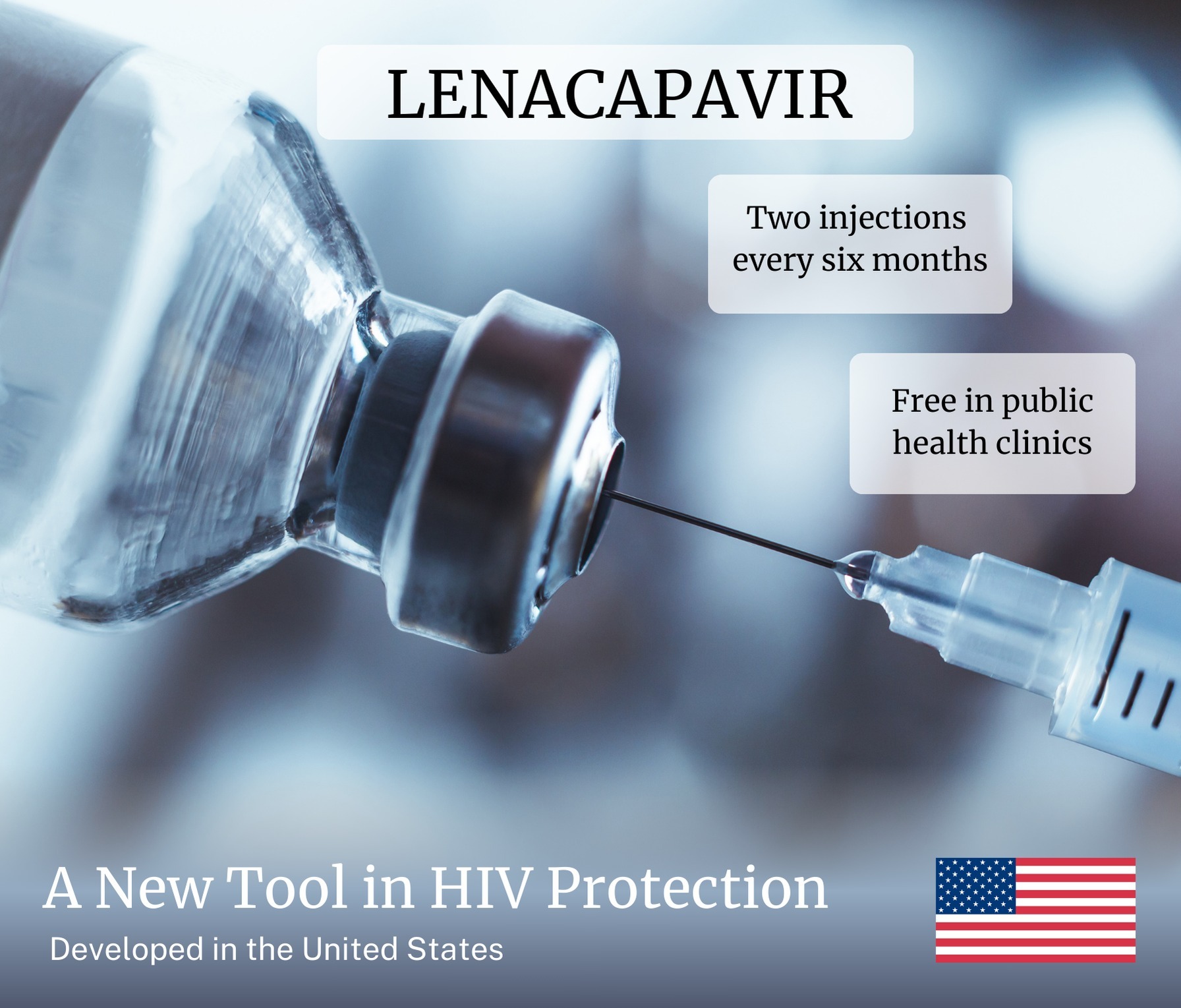
On April 14, 2026, the U.S. Department of State announced a significant expansion of its global health initiative aimed at combating HIV/AIDS. This effort is centered on increasing access to lenacapavir (LEN), a groundbreaking HIV prevention drug, through a strengthened partnership with Gilead Sciences and The Global Fund.
The initiative reflects ongoing international efforts to reduce HIV transmission rates, particularly mother-to-child transmission, in high-burden countries.
Overview of Lenacapavir (LEN)
Lenacapavir is a novel HIV prevention medication with several distinguishing characteristics:
- Administration: It is administered as a twice-yearly injectable, making it more convenient compared to daily oral preventive medications.
- Effectiveness: Clinical trials have demonstrated 99.9% effectiveness in preventing HIV infection.
- Innovation: LEN represents a major advancement in HIV prevention due to its long-acting formulation and high efficacy.
This drug is particularly promising for populations that face challenges adhering to daily medication regimens.
Expansion of the Partnership
The newly announced expansion builds upon earlier investments and commitments:
- The U.S. government aims to reach an additional 1 million people in high-burden countries with LEN.
- Combined with previous commitments, the initiative now targets 3 million people by 2028.
- The program focuses on delivering a two-dose annual regimen.
This expansion highlights a strategic scaling of resources to maximize global health impact.

Strategic Implementation Approach
The program will prioritize countries based on two main criteria:
HIV Burden
Countries with higher rates of HIV infection will be prioritized to ensure that resources are directed where they are most needed.
Health Infrastructure
The ability of a country to effectively distribute and administer LEN will influence selection.
Strong healthcare systems are essential for:
- Storage and transportation of the drug
- Patient outreach and education
- Monitoring and follow-up care
Supporting Initiatives
In addition to drug distribution, the partnership includes complementary efforts:
- Promotion of uptake: Encouraging communities to adopt HIV prevention measures
- Health system strengthening: Improving healthcare delivery frameworks
- Collaboration with national governments: Ensuring alignment with local policies and needs
These measures aim to create a sustainable and effective implementation environment.
Focus on Mother-to-Child Transmission
A central objective of the initiative is to eliminate mother-to-child transmission of HIV, a major public health challenge in many regions.
By providing effective prevention tools like LEN to women of childbearing age, the program seeks to:
- Reduce new pediatric HIV infections
- Improve maternal health outcomes
- Advance global HIV eradication goals
Policy Context and Leadership
The initiative aligns with the broader global health strategy of the United States Government under the leadership of Donald Trump.
It is part of the America First Global Health Strategy, which emphasizes:
- U.S. leadership in global health innovation
- Strategic international partnerships
- Targeted investments with measurable outcomes
The program also builds on the legacy of efforts such as PEPFAR, which has played a critical role in global HIV/AIDS response.
Significance and Expected Impact
The expansion of access to LEN is expected to have far-reaching impacts:
- Reduction in HIV transmission rates
- Improved prevention options for vulnerable populations
- Acceleration toward global HIV elimination goals
Reaching 3 million people by 2028 represents a major milestone in the fight against HIV/AIDS.
Conclusion
The expanded partnership between the U.S. Department of State, Gilead Sciences, and The Global Fund marks a significant advancement in global HIV prevention efforts. By leveraging innovative medical technology, strategic partnerships, and targeted implementation, the initiative aims to substantially reduce HIV transmission—especially among mothers and children.
This effort underscores the importance of sustained international collaboration and investment in healthcare innovation to address global public health challenges.
