


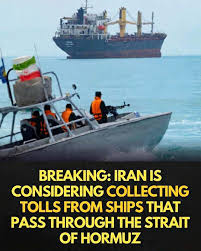
The Strait of Hormuz—one of the world’s most critical maritime chokepoints—has recently become the center of a major geopolitical and economic development. Iran, amid escalating conflict with the United States and Israel, has eased transit restrictions for certain vessels while reportedly charging up to $2 million per passage.
This dual policy reflects a strategic recalibration aimed at balancing military control, economic leverage, and international pressure.
Strategic Importance of the Strait of Hormuz
The Strait of Hormuz is a narrow waterway linking the Persian Gulf to global oceans. It is vital for global energy markets:
- Handles ~20% of global oil and gas supply
- Serves as the primary export route for major producers like Saudi Arabia, Iraq, UAE, and Qatar
- Essential for Asian and European energy security
Disruptions in this corridor have historically triggered oil price spikes and global economic instability.
Background: The 2026 Hormuz Crisis
The current situation stems from the 2026 Iran war, which led to:
- Iranian retaliation after U.S.–Israeli strikes
- Closure or severe restriction of the strait
- Attacks on commercial vessels and mining of sea routes
- Sharp decline in shipping traffic and surge in oil prices
By early March 2026, maritime transit had nearly halted, with hundreds of vessels stranded and global supply chains disrupted.

Easing of Transit Rules
Iran has recently signaled a partial reopening of the strait under strict conditions:
- Only “non-hostile” vessels are allowed passage
- Ships must coordinate with Iranian authorities
- Vessels linked to adversaries (e.g., U.S. or Israel), are excluded
This shift represents a move from total restriction to controlled access, enabling limited resumption of maritime activity while maintaining political leverage.
Introduction of $2 Million Transit Charges
A key development is Iran’s reported imposition of transit fees of up to $2 million per vessel:
- Fees are applied selectively and on an ad hoc basis
- Payments function as an informal toll system rather than a codified law
- Some vessels have reportedly complied to ensure safe passage
This effectively transforms the strait into a revenue-generating chokepoint, similar in concept to the Suez Canal, though under contested legal circumstances.
Conflicting Narratives and Denials
While multiple reports indicate the existence of these fees:
- Iran has officially denied charging such amounts in some diplomatic statements
-
The lack of transparency suggests:
- Possible informal or covert arrangements
- Strategic ambiguity to avoid legal backlash
Thus, the $2 million charge remains credible but not universally confirmed policy.
Economic Implications
Impact on Global Energy Markets
- Increased transportation costs for oil and gas
- Potential rise in global fuel prices
- Diversion of shipments to alternative routes (e.g., Red Sea pipelines)
Shipping Industry Effects
- Higher insurance premiums and risk costs
- Selective access creates uneven trade conditions
- Smaller economies may struggle to afford passage fees
Revenue for Iran
- Potential to generate billions in transit income
- Helps offset economic sanctions and war-related costs
Geopolitical Implications
Assertion of Sovereignty
Iran is leveraging its geographic position to:
- Reinforce control over a global trade artery
- Counter Western sanctions through economic pressure
Escalation Risks
- Selective passage could provoke naval confrontations
- International coalitions are already considering military intervention to secure the strait
Legal Concerns
- Restricting transit may violate the UN Convention on the Law of the Sea, which guarantees passage through international straits
Regional and Global Reactions
- Some countries (e.g., India, China), have reportedly negotiated limited access
- Others face blocked shipments or delays
-
Global institutions warn of:
- Energy shortages
- Supply chain disruptions
- Broader economic instability
Conclusion
Iran’s decision to ease transit restrictions while imposing steep passage fees represents a calculated strategy blending military control with economic opportunism. By allowing only “non-hostile” ships and charging up to $2 million per transit, Tehran is:
- Reasserting dominance over a critical global chokepoint
- Monetising geopolitical tension
- Pressuring adversaries while accommodating select partners
However, the policy introduces significant risks, including legal disputes, military escalation, and prolonged instability in global energy markets. The situation remains fluid, and its long-term impact will depend on the trajectory of the broader Iran conflict and international diplomatic responses.
