


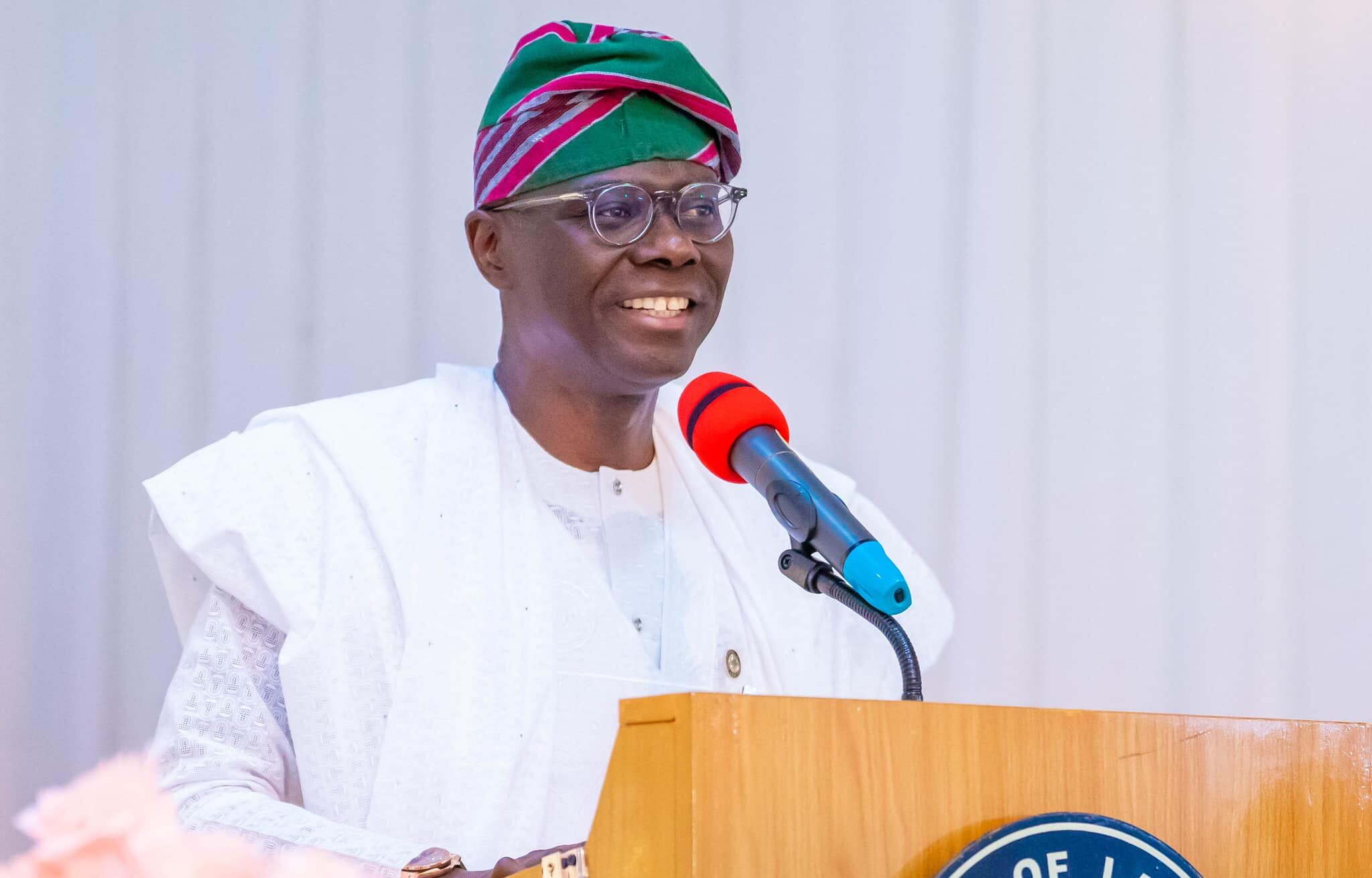
On May 1, 2026, during the International Workers’ Day celebrations, the Governor of Lagos State, Babajide Sanwo-Olu, approved a ₦50,000 wage award for all public sector workers in the state.
The announcement, delivered at the Mobolaji Johnson Stadium, formed part of a broader policy direction aimed at improving workers’ welfare, addressing economic hardship, and reinforcing labour-government relations in Nigeria’s commercial hub.
Event Overview: 2026 May Day Celebration
The 2026 May Day event in Lagos was marked by a large turnout of workers, union leaders, and residents, reflecting strong labour participation. The Governor was represented by his deputy, Kadri Obafemi Hamzat.
The atmosphere combined celebration with advocacy, as workers sang solidarity songs and expressed collective demands under the theme: “Insecurity, Poverty: Bane of Decent Work.”

Sanwo-Olu described Lagos workers as the “living infrastructure” of the state, emphasizing their central role in economic growth and governance.
Details of the ₦50,000 Wage Award
Scope and Implementation
- A ₦50,000 additional payment will be made to all public sector workers
- Applies across all grades and cadres
- Payable with May 2026 salaries
Duration and Review
- The wage award is initially for May 2026
- The Governor confirmed that a review will follow, leaving room for possible extension
Policy Intent
The payment is designed as a temporary economic relief measure to cushion:
- Rising inflation
- Increased fuel prices
- General cost-of-living pressures
Economic and Policy Context
Wage Leadership in Nigeria
Governor Sanwo-Olu highlighted Lagos State’s proactive wage policy, noting:
- Federal minimum wage: ₦70,000
- Lagos State minimum wage: ₦85,000
This positions Lagos as a leader in subnational wage reform, reflecting its higher cost of living.
Cost-of-Living Interventions
The ₦50,000 wage award is part of a broader economic relief framework, including:
a. Transport Infrastructure
- Expansion of rail systems under the Lagos Rail Mass Transit
- Blue Line has carried over five million passengers
- Red Line recently received 24 new train cars
- Over ₦102 billion allocated for continued rail expansion, including the Green Line
These efforts aim to reduce commuting costs and travel time for workers.
b. Healthcare Reforms
Through the Lagos State Health Management Authority, the government introduced:
- Flexible health insurance payment plans
- The Ilera Eko Easy Pay system
The goal is to ensure that workers can access healthcare without financial strain.
c. Housing Initiatives
- Nearly 11,000 housing units delivered
- Over 14,000 units projected by end of 2026
- Introduction of Rent-To-Own schemes
This reflects a policy commitment to making home ownership accessible for workers.
d. Pension and Retirement Welfare
Sanwo-Olu reaffirmed:
- Commitment to timely pension payments
- Expansion of healthcare access for retirees
- A broader vision of dignified retirement for public servants
Worker Motivation and Recognition
The administration has also implemented symbolic and material incentives:
- Distribution of official vehicles to directors (Grade Level 17 and others), across civil service sectors
- Continued recognition of senior public servants’ contributions
These measures aim to boost morale and institutional efficiency.
Security and Productivity Link
The Governor emphasized that security is directly tied to economic productivity.
Ongoing interventions include:
- Enhanced surveillance systems
- Strengthened community policing
- Collaboration with federal security agencies
He noted:
“A city where people do not feel safe cannot be a city where people work productively.”
Labour Relations and Governance Approach
While acknowledging past tensions, the Governor reaffirmed:
- Commitment to continuous dialogue with labour unions
- Openness to negotiation and engagement
He stressed that the “negotiating table is always set”, signaling a willingness to maintain industrial harmony.
Broader Significance of the Wage Award
Immediate Impact
- Provides short-term financial relief
- Boosts worker morale amid economic strain
- Reinforces trust in government responsiveness
Structural Implications
- Complements long-term reforms in transport, housing, and healthcare
- Reflects a multi-sector approach to worker welfare
- Positions Lagos as a model for subnational labour policy in Nigeria
Limitations
- The payment is temporary
- Inflationary pressures may persist beyond the intervention
- Sustainability depends on state revenue and fiscal discipline
Conclusion
The ₦50,000 wage award approved by Babajide Sanwo-Olu is more than a standalone financial gesture—it is part of a broader, integrated policy framework aimed at improving the quality of life for Lagos State workers.
By combining direct financial support with investments in transport, healthcare, housing, and security, the Lagos State Government is pursuing a holistic approach to labour welfare.
As the administration enters its final full year in office, the emphasis, as the Governor noted, will be on delivery and measurable outcomes, reinforcing the idea that:
“The measure of these eight years will not be what we announced. It will be what we finished.”
Ultimately, the success of this initiative will depend on policy continuity, economic stability, and sustained engagement with workers, who remain the driving force behind Lagos State’s growth.
