
Close Menu
Fishe News
  • Home
  • Entertainment
  • National
  • International
  • Tech
  • Politics
  • Sports
  • PMNI
  • More
    • Business
    • Culture
    • Education
    • History
    • Health
  • Featured
    • Fishe Travel
    • Fishe Media
    • Fishe TV
Facebook X (Twitter) Instagram
Trending
  • Guest Column: The $67 Million Disco — Why Nigeria Is Mispricing Its Power Sector — Adebayo Adesanya
  • Appointment Of Thomas “Tommy” Pigott As U.S. State Department Spokesperson
  • JUST-IN: Dangote Refinery Raises Petrol Price To ₦1,275/Litre Amid Rising Crude Costs
  • Protecting Children In The Digital Age
  • Beyond The Present Impasse: A Calibrated, Five-Pillar Strategic Roadmap For Restoring The Credibility, Cohesion, and Popular Legitimacy Of The Economic Community Of West African States — Tolulope A. Adegoke, PhD
  • “Obasanjo Reignites Debate On NNPC Refineries, Says They May Never Work Again”
  • “Airlines Threaten Shutdown As Jet Fuel Prices Soar Above ₦3,000”
  • Sustaining Momentum: Evaluating Progress In The DRC–Rwanda Peace Process
X (Twitter) Instagram
Fishe NewsFishe News
Subscribe
Wednesday, April 29
  • Home
  • Entertainment
  • National
  • International
  • Tech
  • Politics
  • Sports
  • PMNI
  • More
    • Business
    • Culture
    • Education
    • History
    • Health
  • Featured
    • Fishe Travel
    • Fishe Media
    • Fishe TV
Fishe News
Home»Politics

U.S.–Iran Peace Talks In Pakistan Collapse After April 11–12, 2026 Negotiations

Failed Negotiations Highlight Deep Divisions Between the United States and Iran Despite Pakistan-Led Mediation in Islamabad
Adejuyigbe AdegokeBy Adejuyigbe AdegokeApril 12, 2026 Politics No Comments4 Mins Read
Share Facebook Twitter LinkedIn Email WhatsApp

The long-standing tensions between the United States and Iran reached a critical point on April 11–12, 2026, prompting urgent diplomatic efforts to prevent further escalation. Against the backdrop of a fragile ceasefire following weeks of military confrontation, both nations agreed to engage in high-level peace negotiations hosted in Islamabad, Pakistan.

These talks were widely viewed as a significant opportunity to de-escalate hostilities, address key areas of dispute—including nuclear development, regional security, and control of strategic waterways—and lay the groundwork for a lasting peace agreement. However, despite intensive discussions lasting nearly a full day, the negotiations ultimately failed to produce a consensus.

This report examines the context, proceedings, and outcomes of the Islamabad talks, highlighting the major points of disagreement that led to the breakdown in negotiations, as well as the broader implications for regional stability and global security.

The negotiations took place during an intense phase of the 2026 Iran–U.S. conflict, which involved:
  • A six-week war affecting multiple regions in the Middle East
  • Escalations linked to the Strait of Hormuz, a critical global oil route
  • Spillover tensions involving Israel, Lebanon (Hezbollah), and Gulf states
Prior to the talks:
  • A two-week ceasefire had been brokered by Pakistan to halt immediate fighting
  • Pakistan positioned itself as a neutral mediator, pushing for diplomacy over further escalation

The Islamabad Talks

  • Held in Islamabad, Pakistan (April 11–12, 2026)
  • First direct high-level talks between the U.S. and Iran in decades
  • Lasted approximately 21 hours
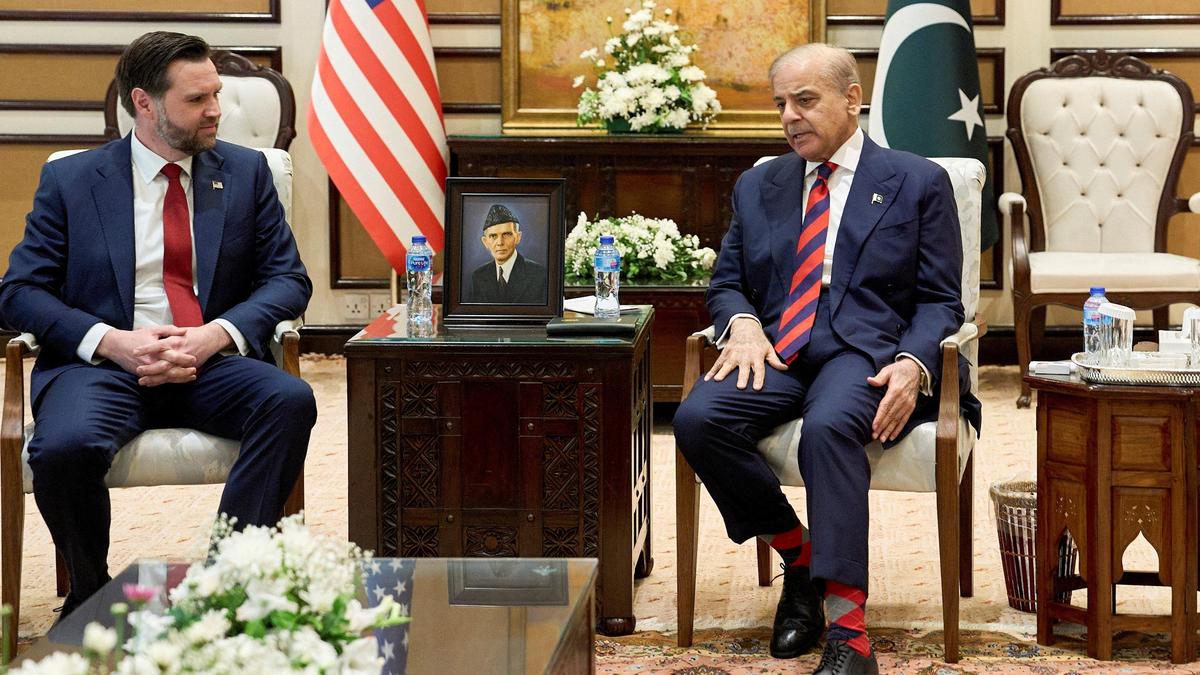
  • Mediated by Pakistan, with top-level delegations:
    • U.S.: Led by Vice President, JD Vance
    • Iran: Led by senior political and diplomatic officials

Objectives

  • Extend or solidify the ceasefire
  • Negotiate a long-term peace agreement
  • Address:
    • Nuclear program concerns
    • Maritime security (Hormuz)
    • Regional conflicts

Key Reasons for Failure

The talks collapsed due to deep disagreements on core issues:



a. Nuclear Program
  • The U.S. demanded Iran abandon nuclear weapons ambitions
  • Iran refused to limit its nuclear program, insisting on its rights

This was one of the primary deal-breakers

b. Strait of Hormuz Control
  • Iran demanded greater control or sovereignty over the strategic waterway
  • The U.S. opposed any move that could threaten global oil shipping

This created major geopolitical tension

c. Military and Regional Issues

Iran demanded:

  • A ceasefire in Lebanon
  • Limits on Israeli military actions
  • No restrictions on its missile program

The U.S. maintained a more cautious and security-focused stance

d. Reparations and Sanctions
  • Iran requested:
    • Financial compensation
    • Unfreezing of assets
  • The U.S. was reluctant to agree
e. Mutual Distrust
  • Both sides blamed each other for unreasonable demands
  • Iran indicated it did not expect a deal in the first meeting

Outcome of the Talks

  • No agreement reached after 21 hours
  • U.S. delegation left Pakistan without a deal
  • Ceasefire remains fragile and uncertain
Statements after the talks:
  • U.S.: Iran refused to accept key terms
  • Iran: U.S. demands were excessive

Immediate Global Impact

a. Economic Effects
  • Gulf stock markets declined sharply after news of failure
  • Investors feared renewed conflict
  • Oil markets showed instability
b. Security Concerns
  • Risk of:
    • Ceasefire collapse
    • Renewed military escalation
  • Strategic waterways like Hormuz remain sensitive
c. Diplomatic Fallout
  • Despite failure:
    • Talks were described as “constructive but inconclusive”
    • Possibility of future negotiations remains

Role of Pakistan

Pakistan played a critical diplomatic role:

  • Hosted the talks
  • Brokered the initial ceasefire
  • Acted as a neutral intermediary between rivals
Although the talks failed, Pakistan:
  • Prevented immediate escalation
  • Kept diplomatic channels open

Broader Significance

The failure highlights:

  • The complexity of U.S.–Iran relations
  • The difficulty of resolving:
    • Nuclear disputes
    • Regional proxy conflicts
    • Strategic control of energy routes
It also underscores:
  • The fragility of ceasefires without political agreement
  • The continuing risk of a wider Middle East conflict

Conclusion

The Pakistan-hosted peace talks marked a historic diplomatic effort, but ultimately failed due to irreconcilable differences over nuclear policy, regional influence, and security demands.

While the negotiations did not produce a deal, they:
  • Opened direct dialogue after decades
  • Reduced immediate tensions temporarily

However, without compromise, the region remains on the edge of renewed instability.

#Francis #Iran #Journalism #Peace Adegoke Adejuyigbe Analyst Collapse Economist Fishe NG geopolitics Media Agency News Agency Pakistan PR Agency Strait of Hormuz Strategic Contents U.S
Share. Facebook Twitter LinkedIn WhatsApp
Adejuyigbe Adegoke
  • Website
  • Facebook
  • X (Twitter)
  • Instagram
  • LinkedIn

Publisher.

Keep Reading

Guest Column: The $67 Million Disco — Why Nigeria Is Mispricing Its Power Sector — Adebayo Adesanya

Appointment Of Thomas “Tommy” Pigott As U.S. State Department Spokesperson

JUST-IN: Dangote Refinery Raises Petrol Price To ₦1,275/Litre Amid Rising Crude Costs

Protecting Children In The Digital Age

Beyond The Present Impasse: A Calibrated, Five-Pillar Strategic Roadmap For Restoring The Credibility, Cohesion, and Popular Legitimacy Of The Economic Community Of West African States — Tolulope A. Adegoke, PhD

“Obasanjo Reignites Debate On NNPC Refineries, Says They May Never Work Again”

Add A Comment

Comments are closed.

Here is spotlighting many benefits of journeying with either Lagos State’s Blueline or Redline rails for a hassle-free day, week, month and year. Thank God for the Igbega Eko. Together we rise.
https://youtu.be/V67GV8wgyjw

Latest Posts

  • Guest Column: The $67 Million Disco — Why Nigeria Is Mispricing Its Power Sector — Adebayo Adesanya
  • Appointment Of Thomas “Tommy” Pigott As U.S. State Department Spokesperson
  • JUST-IN: Dangote Refinery Raises Petrol Price To ₦1,275/Litre Amid Rising Crude Costs
  • Protecting Children In The Digital Age
  • Beyond The Present Impasse: A Calibrated, Five-Pillar Strategic Roadmap For Restoring The Credibility, Cohesion, and Popular Legitimacy Of The Economic Community Of West African States — Tolulope A. Adegoke, PhD
Featured
About Fishe

FISHE was founded with the goal of helping clients thrive in today’s highly competitive marketing environment. While other companies rush to abandon traditional marketing in favour of digital techniques, we’ve bolstered our offline marketing capabilities while also equipping our team with seasoned professional knowledge to support our clients’ digital needs.

Through creative designs, we enhance our clients’ products and services the right way that would attract their target audience, thus, making the perception of their company a reality.

  • LTV 8, Agidingbi Road, Alausa, Ikeja, Lagos.
  • +234 806 003 7277
  • info@gofishe.com
FISHE, Your Best Plug For Bus Stop Shelter Ad

LATEST POSTS

Guest Column: The $67 Million Disco — Why Nigeria Is Mispricing Its Power Sector — Adebayo Adesanya

April 29, 2026

Appointment Of Thomas “Tommy” Pigott As U.S. State Department Spokesperson

April 29, 2026

JUST-IN: Dangote Refinery Raises Petrol Price To ₦1,275/Litre Amid Rising Crude Costs

April 29, 2026

Protecting Children In The Digital Age

April 27, 2026

Beyond The Present Impasse: A Calibrated, Five-Pillar Strategic Roadmap For Restoring The Credibility, Cohesion, and Popular Legitimacy Of The Economic Community Of West African States — Tolulope A. Adegoke, PhD

April 27, 2026
Featured

Subscribe to Updates

Get the latest news from FISHE about politics, economy, health and business, etc

Facebook X (Twitter) Instagram Pinterest
© 2026

Type above and press Enter to search. Press Esc to cancel.