

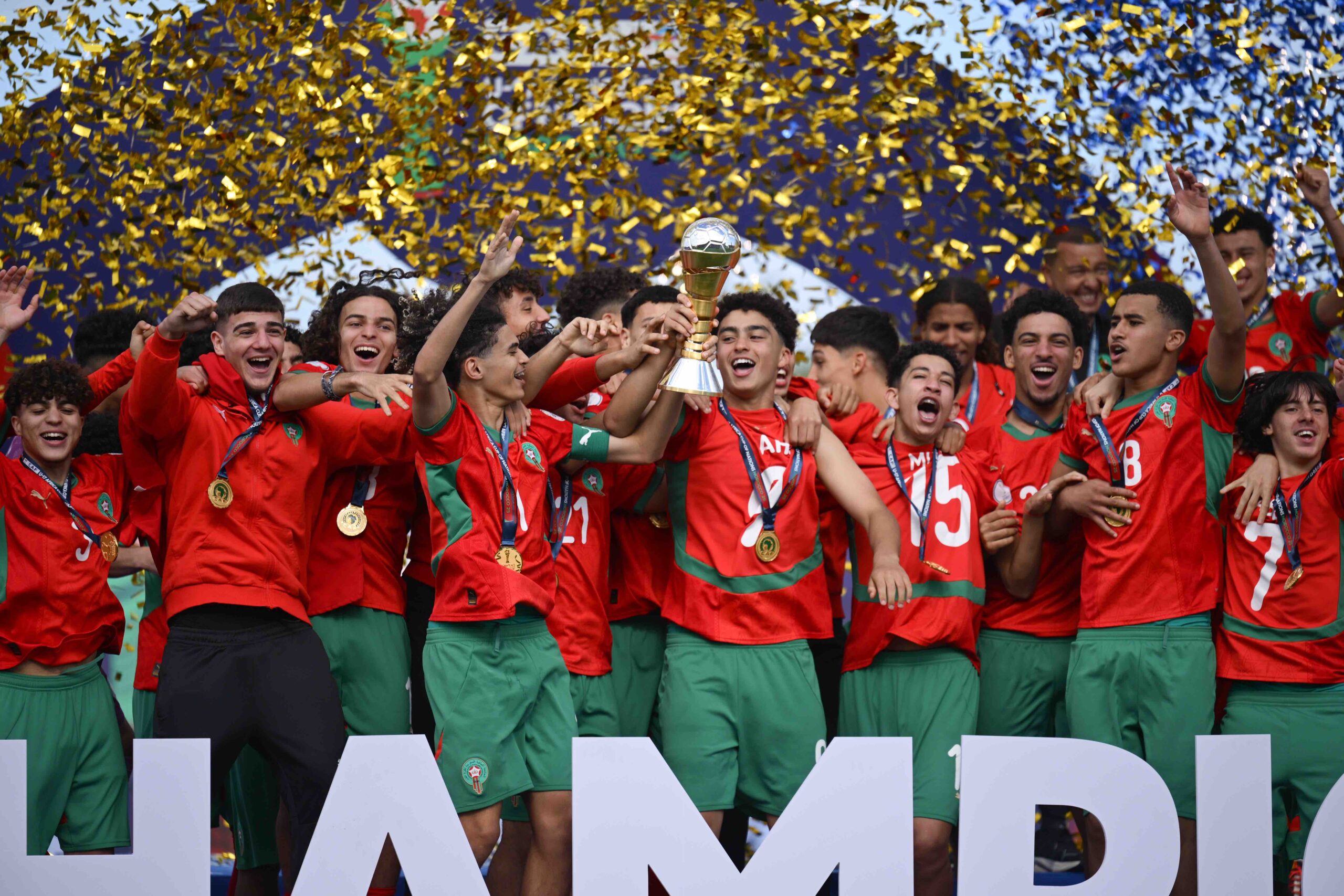
The Confederation of African Football (CAF), has officially confirmed the 16 national teams that will compete at the 2026 Under-17 Africa Cup of Nations (AFCON), in Morocco.
The final list was published on CAF’s official platforms on Sunday, following Algeria’s decisive qualification. Algeria secured the last ticket with a 1–0 victory over Egypt at the Martyrs of Benina Stadium.
Tournament Overview
- Host Nation: Morocco
- Dates: April 25 – May 15, 2026
- Teams: 16
- Purpose: Qualification tournament for the 2026 FIFA U-17 World Cup
The competition will serve as Africa’s pathway to the expanded global tournament set to take place in Qatar in November 2026, which will feature 48 teams.
Qualification Stakes:
The top 10 teams at the U-17 AFCON will qualify for the World Cup, raising the competitive intensity across all groups.

Full List Of Qualified Teams
The confirmed participants span all CAF regional zones:
- Algeria
- Angola
- Cameroon
- Côte d’Ivoire
- DR Congo
- Egypt
- Ethiopia
- Ghana
- Guinea-Bissau
- Mali
- Morocco (hosts)
- Mozambique
- Senegal
- South Africa
- Tanzania
- Uganda
Qualification Structure Explained
CAF’s qualification process is built around six regional zones, ensuring continental balance:
- UNAF (North Africa)
- WAFU Zone A (West Africa A)
- WAFU Zone B (West Africa B)
- UNIFFAC (Central Africa)
- CECAFA (East/Central-East Africa)
- COSAFA (Southern Africa)
Each zone organizes its own mini-tournament, typically involving:
- Group stages
- Knockout rounds (semi-finals/finals)
From these competitions, teams earn qualification slots to the continental finals.
Key Qualification Highlight
The final slot was secured by Algeria, whose narrow win over Egypt underscored the competitiveness of the North African qualifiers.
Nigeria’s Absence
Notably, Nigeria will miss the U-17 AFCON for the second consecutive edition, a significant development in African youth football.
The Golden Eaglets were eliminated after a 2–0 semi-final defeat to Ghana during the WAFU Zone B qualifiers in September 2025.
This result:
- Ended Nigeria’s qualification hopes
- Highlighted increasing competition within West African youth football
Analysis & Key Insights
1. Strong Regional Diversity
All CAF zones are represented, ensuring:
- Tactical variety
- Broader talent exposure across Africa
2. West Africa’s Continued Influence
Countries like Senegal, Mali, and Ghana maintain the region’s reputation as a youth football powerhouse.
3. Host Advantage
Morocco enters as a major contender, benefiting from:
- Home support
- Strong football infrastructure
4. Increased Global Stakes
With 10 World Cup slots available, more teams than ever have a realistic chance of reaching the global stage in Qatar.
Teams to Watch
- Morocco – Home advantage and strong youth setup
- Senegal – Consistent youth success
- Mali – Proven global performers
- Cameroon – Physical and dynamic
- South Africa – Rapidly improving youth system
Conclusion
The 2026 U-17 AFCON in Morocco promises to be one of the most competitive editions yet, featuring a diverse and highly talented pool of 16 teams.
With:
- Expanded World Cup qualification slots
- Rising competition across all zones
- Emerging football talents across the continent
…the tournament is set to play a crucial role in shaping the next generation of African football stars.
