


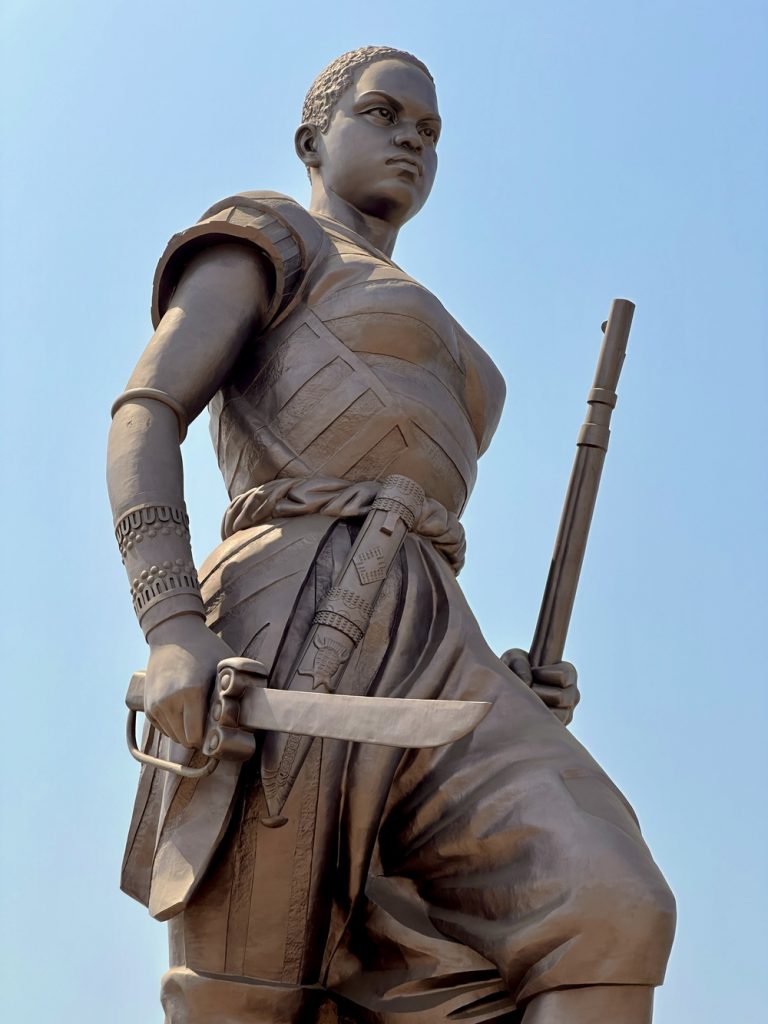
The global success of Black Panther introduced many audiences to the fictional Dora Milaje, an elite group of highly trained female warriors sworn to protect their king. While these characters are fictional, they draw direct inspiration from a real and formidable military force: the Amazons of Dahomey.
These women were not myth but a powerful all-female regiment that served the Kingdom of Dahomey, located in present-day Benin. At a time when female warriors were rare across most societies, Dahomey stood out as a unique example of gender roles shaped by military necessity and political strategy.
The Kingdom of Dahomey: A Military Power
The Kingdom of Dahomey emerged in the 17th century in West Africa and became one of the region’s most powerful states. Its capital, Abomey, served as the political and military center of the empire.
Dahomey’s strength was built on military expansion, strategic organisation, and participation in regional and transatlantic trade networks, including the slave trade. Warfare was central to the kingdom’s identity, and it required a highly disciplined and effective army.

Origins of the Female Warrior Corps
The exact origins of the Dahomey Amazons remain debated among historians and oral traditions.
One widely accepted legend credits, Queen Hangbe, as the founder of the female military corps. Another account attributes their beginnings to King Houegbadja (reigned from around 1645), who initially organised a group of female elephant hunters known as the Gbeto.
These hunters were skilled, fearless, and accustomed to dangerous environments—qualities that made them ideal candidates for military service. Over time, this group evolved into a formalised fighting force.
Transformation Under King Ghezo
The Amazons reached their peak under King Ghezo (reigned 1818–1858), who significantly restructured the kingdom’s military.
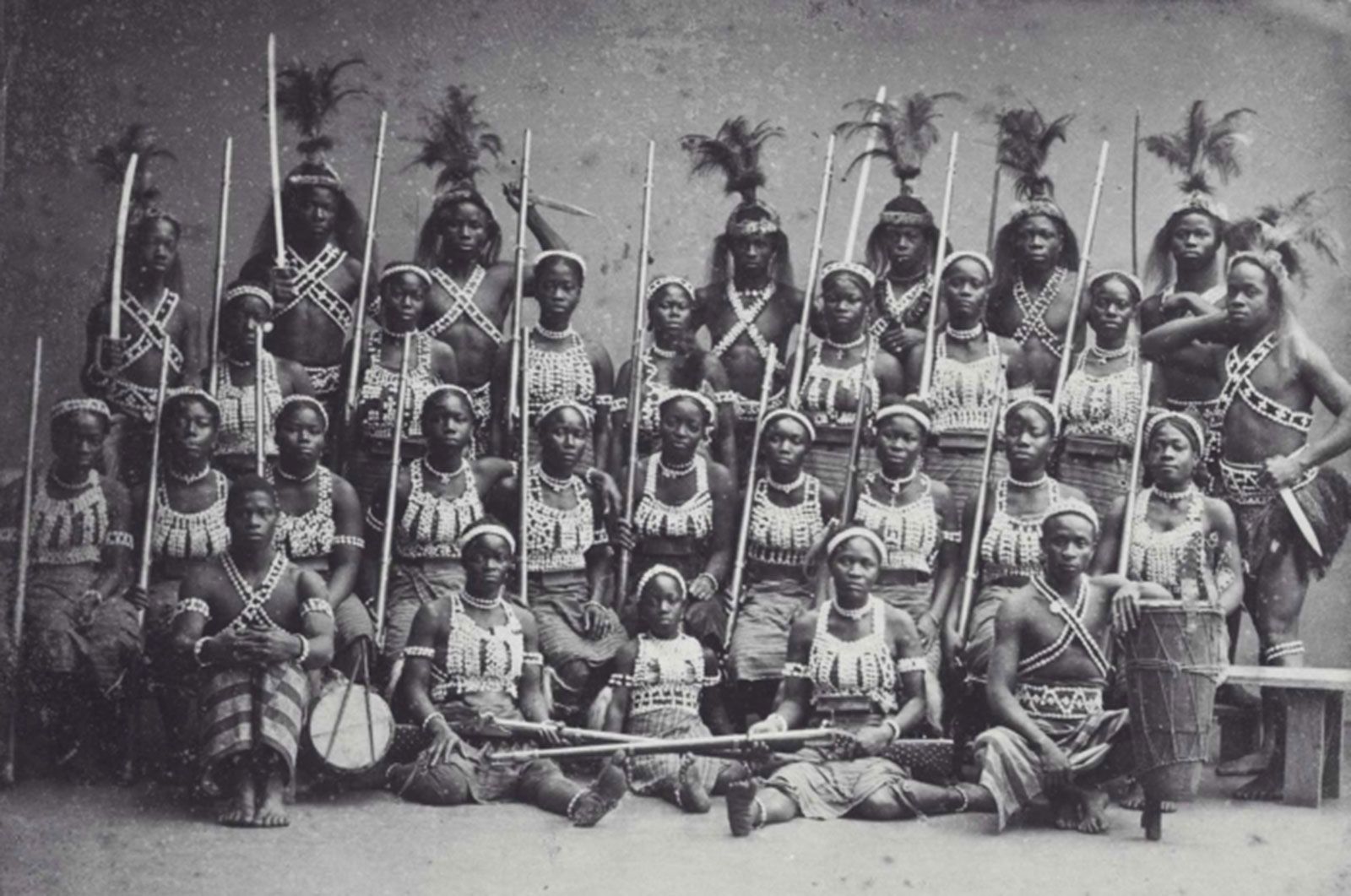
Ghezo expanded the role of women in warfare for several reasons, including a shortage of male soldiers caused in part by the transatlantic slave trade.
Under his leadership:
-
The Amazons became a core component of the army
-
They made up an estimated 30–40% of Dahomey’s total military force
-
Their numbers reached into the thousands
They were known locally as Mino, meaning “our mothers,” or Ahosi, meaning “the king’s wives.” Despite the latter title, this designation symbolised their loyalty and elite status rather than traditional marriage.
Training, Discipline, and Structure
The Amazons were known for their extreme discipline, rigorous training, and fearlessness in battle.
Their preparation included:
-
Intense physical conditioning
-
Weapons training (including muskets, machetes, and later artillery)
-
Survival and endurance exercises
-
Strict codes of loyalty and obedience
They lived within the royal palace complex, separated from the rest of society, and held a privileged yet highly controlled status.
The corps was organised into specialised units, including:
-
Infantry – the main fighting force
-
Huntresses (Gbeto) – skilled in tracking and ambush
-
Reapers – known for close combat using blades
-
Gunners (Agbalya) – operated artillery, including European-imported weapons such as Krupp guns
Role in Warfare and Expansion
The Amazons played a decisive role in Dahomey’s military campaigns. They were often deployed at the front lines and became known for their bravery and ruthlessness.
Their responsibilities included:
-
Leading assaults against enemy territories
-
Capturing prisoners of war
-
Expanding Dahomey’s influence across neighbouring regions
Captured individuals were frequently sold into the transatlantic slave trade, which became a major source of wealth for the kingdom.
European observers, shocked by the effectiveness and ferocity of these women, compared them to the mythical Amazons of Greek mythology—a name that has persisted in historical accounts.
Conflict with France and Decline
The decline of the Amazons coincided with the expansion of European colonial powers into West Africa. Dahomey came into direct conflict with France during the late 19th century, particularly in the Franco-Dahomean Wars.
Despite their courage and tactical skill, the Amazons faced modern European weaponry and military strategies.
During the final conflict (1890–1894):
-
Approximately 2,000 Amazons were killed
-
Only around 50 survived
The defeat led to the colonisation of Dahomey by France and the dissolution of its military institutions.
Legacy and Cultural Significance
After colonisation, the Amazons gradually disappeared from active military life. The last known survivors are believed to have died in the 20th century, possibly as late as the 1970s.
Today, their legacy lives on in:
-
Oral traditions and historical studies
-
Cultural ceremonies in modern Benin
-
Global popular culture, including films like Black Panther
The Amazons of Dahomey remain a powerful symbol of:
-
Female strength and leadership
-
Military innovation in African history
-
The complex legacy of pre-colonial African states
Conclusion
The Amazons of Dahomey were one of the most extraordinary military forces in history. Far from being a myth, they were disciplined, highly trained warriors who played a central role in shaping the power and influence of their kingdom.
Their story challenges conventional assumptions about gender roles in warfare and highlights the dynamic and often underrepresented histories of African societies. Though their physical presence has faded, their legacy continues to inspire and captivate the world.
