

Mammy Market is a widely recognised feature of Nigerian military barracks, National Youth Service Corps (NYSC), camps, and even some university environments. It serves as a social and commercial hub where food, drinks, and essential goods are sold.
Historical Background
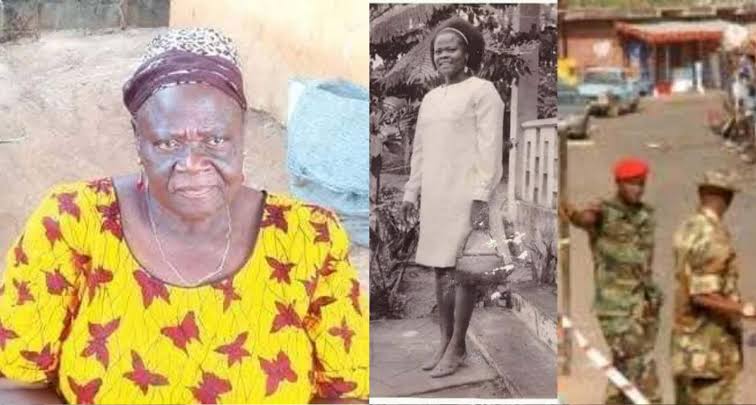
The story of Mammy Market began in 1959 with Mammy Ode Ochefu, a young woman from Benue State. She had recently married Anthony Aboki Ochefu, a non-commissioned officer in the Nigerian Army who was posted from Abeokuta to Enugu. The couple resided in the Army Barracks in Abakpa, Enugu.
At the time, Mammy Ochefu sought a way to support her household financially while keeping herself engaged. She began selling soft drinks to soldiers within the barracks. Demonstrating creativity and cultural awareness, she also prepared and sold a traditional millet-based drink known as kunu, which is popular in northern Nigeria.
Growth of the Business
Mammy Ochefu’s kunu quickly gained popularity among soldiers due to its freshness, affordability, and nutritional value. As demand increased, soldiers regularly visited her home to purchase the drink, turning her modest operation into a thriving small business.

However, this success soon attracted negative attention. The Regiment Sergeant Major (RSM), raised concerns that her activities were attracting flies into the barracks environment. As a result, he ordered her to stop producing and selling kunu.
Challenges and Resistance
The order significantly affected Mammy Ochefu’s livelihood. Her husband, being a junior officer at the time, lacked the authority to challenge the RSM’s decision. For several weeks, she faced uncertainty about the future of her business.
Meanwhile, soldiers who had grown accustomed to her drink expressed dissatisfaction with the ban. Many of them appealed to the RSM, emphasizing the value of her products and the positive role she played within the barracks community.
Resolution and Establishment of a Market Space
Eventually, due to persistent appeals and pressure from soldiers, the RSM reconsidered his decision. He granted Mammy Ochefu permission to continue her business but directed that she be allocated a designated space within the barracks.
With this opportunity, she constructed a small shop and resumed production. Her business flourished even more in this structured setting. She often sold out her daily supply of kunu by noon, reflecting high demand.
Emergence of Mammy Market
Mammy Ochefu’s success inspired other women in the barracks to start their own small businesses. They began selling a variety of goods, including food, beverages, and household items, in the same area.
Over time, this cluster of informal businesses developed into a vibrant marketplace. In recognition of Mammy Ochefu’s pioneering role, the area became known as Mammy Market.
Expansion and Cultural Significance
The concept of Mammy Market spread beyond the Abakpa Barracks to military barracks across Nigeria.
Today, Mammy Markets are standard features in military environments, providing not only goods and services but also a space for social interaction and community bonding.
Their influence has extended further into civilian life:
-
In NYSC camps, Mammy Markets serve as central hubs for corps members.
-
In some universities, areas where food vendors operate are informally referred to as Mammy Markets.
Mammy Markets have thus become an important part of Nigerian social and economic culture, representing grassroots entrepreneurship and community development.
Conclusion
The origin of Mammy Market highlights the power of individual initiative and resilience. What began as a small-scale effort by Mammy Ode Ochefu to support her household evolved into a nationwide institution.
Her story underscores the impact of entrepreneurship, community support, and adaptability in overcoming challenges and creating lasting societal change.
