


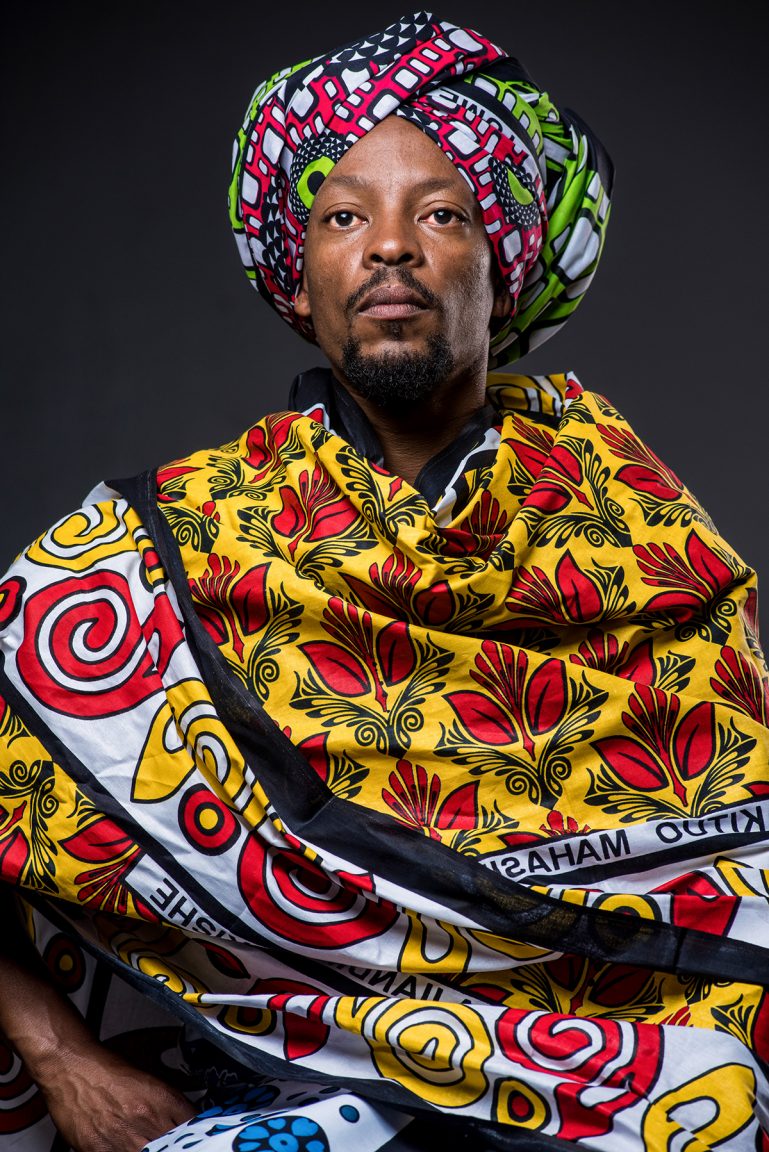
Many countries in Africa have regional unique ways of dressing.
These styles are known to be the products of long-lasting textile craft in weaving (hand weaving), dyeing, and printing. This is because African traditional clothing is diverse and differs from country to country.
Overtime, the westernised style of dressing has all been incorporated into African traditional clothing. Yet, Africans have retained dressings that speak of ancient cultural traditions, heritage, and pride.
ASO-OKE
Aso-Oke fabric is a hand-woven cloth created by the Yoruba people of West Africa. Aso-Oke is more than just a fabric. It is one of the cultural vehicles through which tangible aspects of Yoruba clothing tradition can be experienced.

The fabric has four components which are; a blouse known as a “buba,” a wrapped skirt referred to as an “iro,” a head tie called a “gele,” and a shoulder sash called an “iborun” or “ipele”. It has successfully held its own as the special occasion fabric of the Yoruba people.
KENTE
Kente is native to the Akan tribe in Ghana and it’s a type of silk and cotton fabric that is made of interwoven cloth strips. It is an Akan royal and sacred cloth traditionally worn only in times of extreme importance and was the cloth of kings. The cloth is woven in a narrow strip called ntomaban or bankuo, and is about 3-5 inches wide and about 5-6 feet long.
Kente is made up of meaningful aesthetic designs that communicate meanings through its colours. The gold colour symbolises serenity and status, the yellow symbolises fertility, green symbolises renewal, blue – pure spirit and harmony, red – passion, black – a union with ancestors/spiritual awareness. Today, it has received a new layer of significance when adopted by the western and modern world today.
KANGA
The kanga is a colourful fabric worn by women and occasionally by men throughout the African Great Lakes region. The earliest pattern of the kanga was patterned with small dots or speckles that looks like feathers of a guinea hen also known as ‘kanga’. They are often sold in pairs, which can then be cut and hemmed to be used as a set.
The kanga is culturally significant in East Africa. It is often given as a gift for birthdays or other special occasions. In some countries like Tanzania, they are given as part of a michengo (or collection) to mourning families into which many community members put a bit of money to support the family after losing a family member. According to some sources, male slaves wrapped it around their waist and female slaves wrapped it under their armpits. However, in order to make the cloth more feminine, slave women occasionally dyed them black or dark blue, by using locally obtained indigo.
KAFTAN
Kaftan is usually made of cotton brocade, silk, lace, or synthetic fabrics that may be worn with a sash. They are found in several cultures and regions, especially in North and Western Africa. The kaftan is often worn as a coat or as an overdress, usually having long sleeves and reaching to the ankles while it is worn as a light-weight, loose-fitting garment in some regions that have a warm climate.
The uses or names of kaftan vary from culture to culture in a Turkic kaftan, Moroccan kaftan, Algerian kaftan, West African kaftan. Kaftan has been the most important component of the Turkic empire in India (Seljuk and the Ottomans) over the years. In Algeria, the male kaftan is known as the kaftan of honour while the female kaftan is engraved in the intangible cultural heritage of humanity while in West Africa, a kaftan is a pullover robe, worn by both men and women and the women’s robe is called a kaftan, while the men’s garment is referred to as a Senegalese kaftan.
ZULU FASHION
The Zulus are known for their strong fighting spirit and the history of South Africa would not be complete without mentioning the Zulu Tribe because of the vital part they played in the continent’s history. The Zulu clothing is traditionally made with animal skins. Women dress according to their status in marriage. An eligible and single Zulu woman shows pride by wearing skirts made of grass or beaded cotton strings. The married ones cover their bodies in order to show to others that they are taken.
An engaged Zulu woman will naturally grow her hair and cover her chest with a decorative cloth as a sign of respect for her in-laws. Also, the traditional attire for men is called “the umqhele” (warrior’s headband), the amambatha to put over the shoulders, ibheshu (which acts as a trouser) worn around the waist, umcedo (used as an underwear) is used to cover the genitalia while the imbadada is for the foot.
