

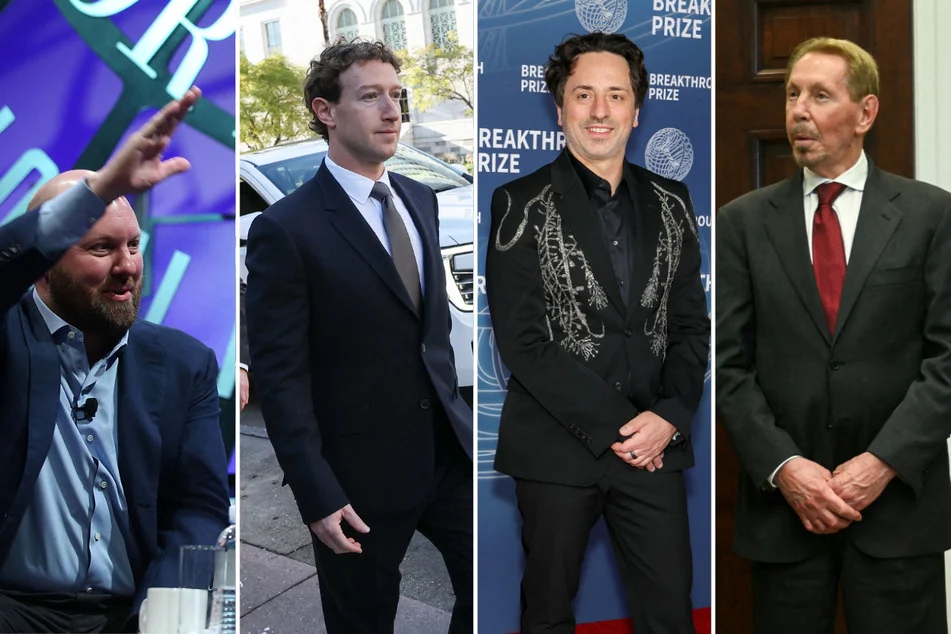
On March 25, 2026, U.S. President, Donald Trump, announced the formation of a revamped President’s Council of Advisors on Science and Technology (PCAST)—a high-level advisory body composed of leading figures from the technology and innovation sectors.
Among the most notable appointees are:
- Mark Zuckerberg (CEO of Meta)
- Sergey Brin (co-founder of Google)
- Jensen Huang (CEO of Nvidia)
These appointments place some of the world’s most influential technology leaders at the center of U.S. science and technology policymaking.
Composition of the Council
The newly formed council initially consists of 13 members, with plans to expand to as many as 24 members.
Other prominent members include:
- Larry Ellison
- Lisa Su
- Marc Andreessen
- Michael Dell
The council is co-chaired by:
- David Sacks
- Michael Kratsios
This composition reflects a strong emphasis on private-sector leadership, particularly from Silicon Valley and the semiconductor industry.

Mandate and Responsibilities
The PCAST is tasked with advising the president on:
- Artificial intelligence (AI), policy
- Emerging technologies
- National security implications of tech
- Economic and workforce impacts of innovation
- Scientific research and education
Its broader mission is to strengthen U.S. leadership in science and technology, particularly in strategic areas such as AI.
According to official statements, the council will provide recommendations to ensure that Americans “thrive in the Golden Age of Innovation.”
Strategic Focus on Artificial Intelligence
A central driver behind the appointments is the administration’s priority on artificial intelligence.
- Trump has framed AI as a key battleground in global competition, especially with China.
- Early in his second term, he directed federal agencies to develop an AI Action Plan aimed at reducing regulatory barriers and accelerating innovation.
By appointing leaders like Zuckerberg, Brin, and Huang—who are deeply involved in AI development—the administration is aligning policy formation with industry expertise and investment trends.
Significance of Key Appointees
Mark Zuckerberg (Meta)
Zuckerberg leads one of the world’s largest social media and AI-driven platforms. His inclusion signals the importance of data, social platforms, and AI governance in national policy.
Sergey Brin (Google)
As a co-founder of Google, Brin represents the search, data, and AI research ecosystem, particularly through Alphabet’s investments in advanced AI systems.
Jensen Huang (Nvidia)
Huang heads Nvidia, a company central to AI hardware (GPUs). His role highlights the importance of semiconductor dominance in global tech competition.
Political and Industry Implications
a. Government–Tech Alignment
The appointments suggest a closer collaboration between the U.S. government and major tech companies, a shift from earlier tensions between Big Tech and political leadership.
b. Policy Influence
With industry leaders directly advising the White House, the council is expected to have significant influence on:
- AI regulation
- Antitrust considerations
- Data governance
- Innovation funding
c. National Security Dimension
The council will also address how emerging technologies affect defense and homeland security, reinforcing the link between tech leadership and geopolitical strategy.
Historical Context
Presidential science advisory councils have existed since the era of Franklin D. Roosevelt, who established an early version in 1933.
While previous administrations have included academics and scientists, Trump’s 2026 council stands out for its heavy concentration of corporate technology executives, reflecting a more industry-driven approach to policymaking.
Broader Implications
Economic Impact
The council is expected to shape policies that could drive trillions of dollars in AI and tech investment in the coming years.
Global Competition
The move is widely seen as part of a broader effort to counter China’s technological rise and maintain U.S. dominance in innovation.
Regulatory Direction
The administration’s approach suggests a pro-innovation, less restrictive regulatory environment, aimed at accelerating private-sector growth.
Conclusion
The appointment of Mark Zuckerberg, Sergey Brin, and Jensen Huang to the President’s Council of Advisors on Science and Technology marks a significant development in U.S. tech policy.
It reflects a strategic pivot toward:
- Deep integration of industry expertise into government
- Aggressive pursuit of AI leadership
- Strengthened alignment between national policy and technological innovation
As the council begins its work, it is likely to play a central role in shaping the future of AI, economic competitiveness, and global technological leadership in the United States.
