


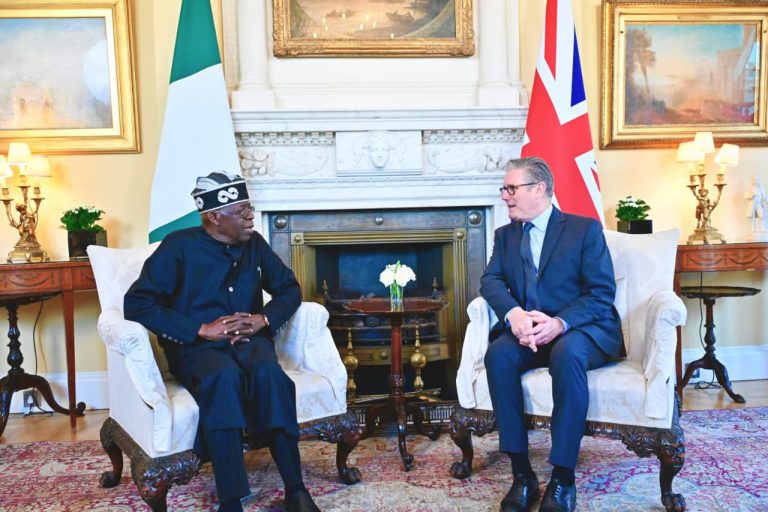
President Bola Ahmed Tinubu has called for a renewed and strengthened economic partnership between Nigeria and the United Kingdom, emphasizing the importance of trade, investment, and strategic cooperation in addressing shared global and domestic challenges.
This call was made during his official state visit to the UK on the invitation of King Charles—an event described as historic, being the first such visit by a Nigerian president in 37 years. The visit marks a significant milestone in bilateral relations and reflects a mutual commitment to reinvigorate long-standing diplomatic and economic ties.
High-Level Talks at Downing Street
During a bilateral meeting at 10 Downing Street, President Tinubu held discussions with UK Prime Minister Keir Starmer. Both leaders explored opportunities to expand cooperation across key sectors including trade, economic development, climate change, defence, and counter-terrorism.
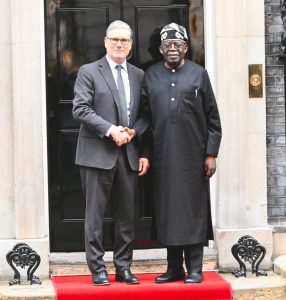

President Tinubu highlighted Nigeria’s ongoing economic reforms, noting that Nigeria is actively restructuring its economy to improve productivity, stabilise key sectors, and enhance the welfare of its citizens. He stressed that global economic uncertainties—ranging from inflationary pressures to geopolitical tensions—require collaborative responses.
“Nigeria is currently going through strong reforms of its economy… The entire world is challenged, and Nigeria is not immune,” Tinubu stated, underscoring the urgency of international partnerships.
£746 Million Port Modernisation Agreement
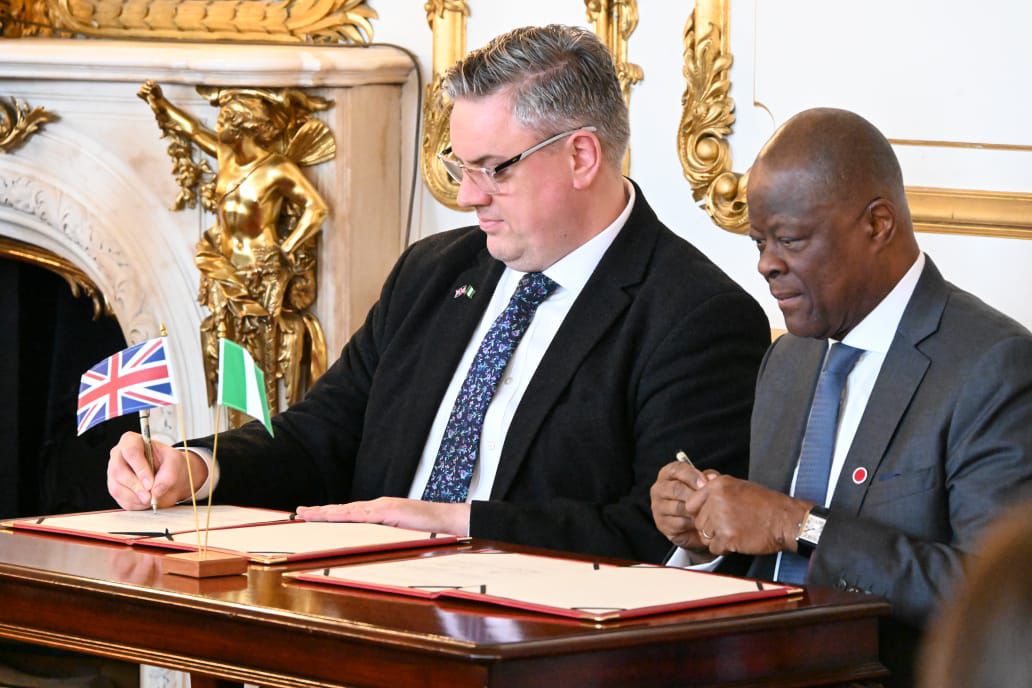
A major outcome of the visit was the signing of a £746 million agreement aimed at modernising two of Nigeria’s busiest maritime gateways—Apapa Port and Tin Can Island Port.
The agreement was formalised at Lancaster House in the presence of President Tinubu and First Lady Oluremi Tinubu. Representing Nigeria was the Minister of Finance and Coordinating Minister of the Economy, Wale Edun, while Blair McDougall signed on behalf of the British government.
The project is expected to significantly upgrade port infrastructure, enhance cargo handling capacity, reduce congestion, and improve overall efficiency in our maritime sector. These improvements are critical for facilitating trade, lowering the cost of imports and exports, and positioning Nigeria as a more competitive hub for regional and global commerce.
Economic Impact and Strategic Importance
The modernisation of Apapa and Tin Can Island ports is aligned with the government’s broader economic agenda, particularly its focus on infrastructure development, industrial growth, and job creation.
According to Wale Edun, the agreement reflects Nigeria’s commitment to attracting large-scale investments through strategic international partnerships.
He noted that improved port infrastructure will:
-
Boost trade volumes and revenue generation
-
Enhance supply chain efficiency
-
Create employment opportunities
-
Support poverty reduction efforts
The deal also signals increasing investor confidence in Nigeria’s reform agenda and economic direction under the current administration.
UK’s Perspective and Broader Cooperation
Prime Minister Keir Starmer described the visit as a landmark moment in UK-Nigeria relations. He emphasized the strong people-to-people ties between both nations, including a large Nigerian diaspora in the UK, which continues to contribute to economic and cultural exchange.
Starmer reaffirmed the UK’s commitment to deepening collaboration in areas such as:
-
Trade and investment
-
Defence and security cooperation
-
Climate action
-
Business and export partnerships
He also referenced the State Banquet hosted in honour of the Nigeria’s delegation as a symbol of the enduring relationship between the two countries.
Looking Ahead
Both leaders expressed optimism that the agreements reached during the visit would serve as a foundation for expanded cooperation in the years ahead. The strengthening of Nigeria-UK relations is expected to play a key role in addressing shared global challenges while delivering tangible economic benefits for both nations.
As Nigeria continues to implement structural reforms and pursue the “Renewed Hope Agenda,” partnerships like this are essential to driving sustainable growth, improving infrastructure, and enhancing the quality of life for its citizens.
