


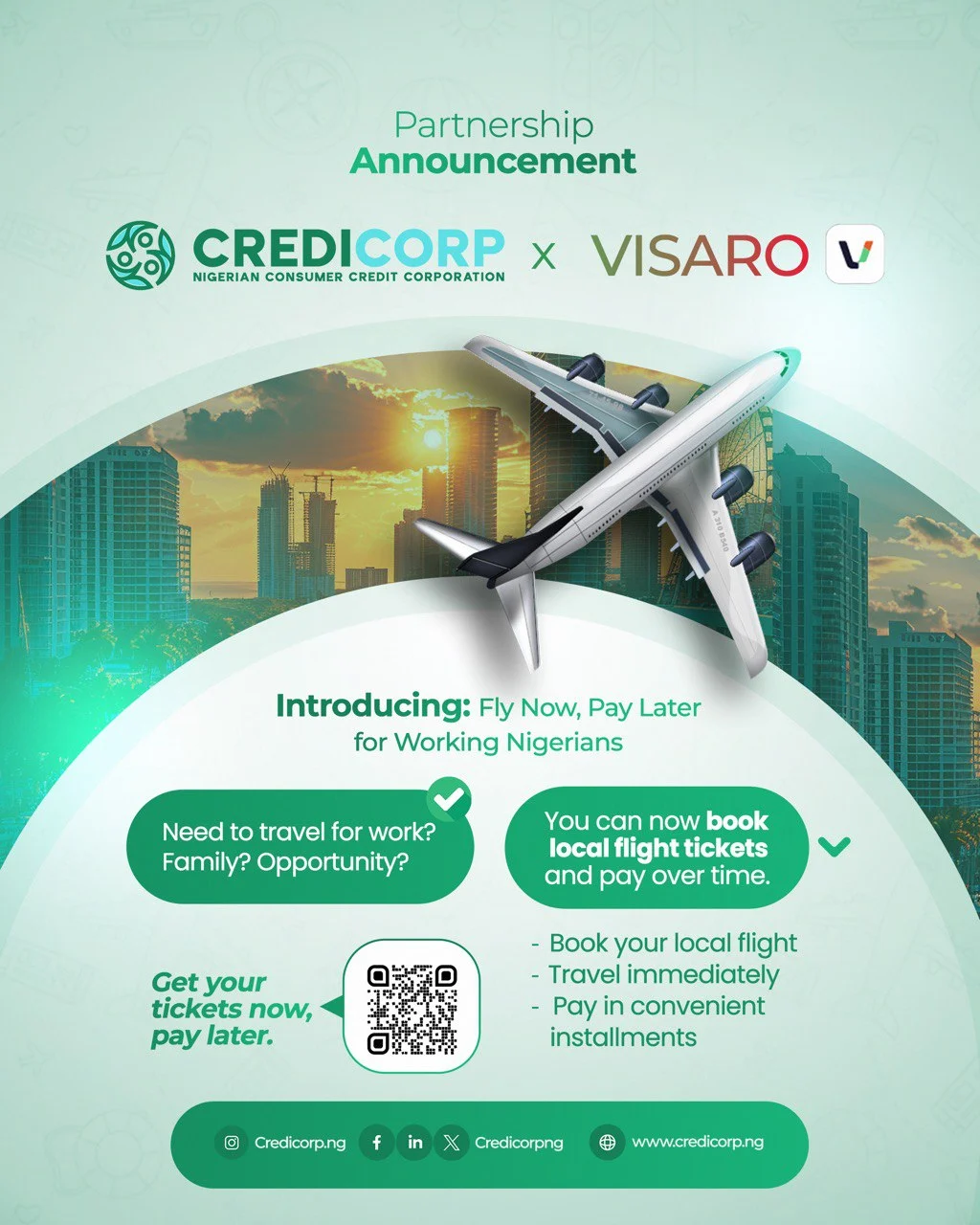
The Federal Government of Nigeria has launched a “Fly Now, Pay Later” (FNPL), consumer credit scheme to improve access to domestic air travel. The initiative, spearheaded by the Nigerian Consumer Credit Corporation (CREDICORP), is designed to enable Nigerians to book flights immediately and repay the cost over time through structured financing.
The announcement, made via CREDICORP’s official communication channels, reflects a broader government effort to expand consumer credit access and address affordability challenges in key sectors such as aviation.
Key Features of the Scheme
a. Immediate Travel, Deferred Payment
Under the FNPL scheme:
-
Eligible customers can book domestic flights instantly

-
Payment is made in instalments over time
This model removes the traditional requirement for full upfront payment, which has often prevented or delayed travel for many Nigerians.
b. Structured Financing Model
The scheme operates through a structured credit system that:
-
Spreads payments across a defined timeline
-
Applies credit assessment mechanisms
-
Aligns with global Buy Now, Pay Later (BNPL), frameworks
c. Access and Application Process
Interested users can apply by booking flights through the partner platform:
-
Visit the Visaro platform (visaro.ng)
-
Select a domestic destination
-
Complete eligibility and credit checks
Institutional Framework and Key Partners
a. Lead Agency: CREDICORP
The Nigerian Consumer Credit Corporation is the primary driver of the initiative. Its mandate includes:
-
Expanding access to responsible consumer credit
-
Promoting financial inclusion
-
Enabling Nigerians to access essential services through financing
CREDICORP emphasizes that the FNPL scheme is part of its mission to help citizens “live better now.”
b. Private Sector Partners
The scheme is being implemented through strategic partnerships with:
-
MyVisaro – Provides the digital platform for booking and credit processing
-
Alert Microfinance Bank – Supports financing and credit delivery
These partnerships highlight a public–private collaboration model aimed at scaling consumer credit solutions efficiently.
Economic Context and Rationale
a. Rising Cost of Domestic Air Travel
The scheme comes amid significant increases in airfare prices across Nigeria. During the 2025 Yuletide period, for example:
-
One-way domestic tickets rose by up to 150%
-
Some fares exceeded ₦300,000
Airlines attribute these increases to:
-
High aviation fuel costs
-
Foreign exchange constraints
-
Rising operational expenses
b. Addressing Affordability Barriers
Many Nigerians face liquidity constraints, even when travel is necessary. The FNPL initiative addresses this by:
-
Eliminating upfront payment burdens
-
Enabling urgent or essential trips (business, medical, family)
c. Boosting Aviation Demand
By making flights more financially accessible, the scheme is expected to:
-
Increase passenger traffic
-
Improve airline seat occupancy (load factors)
-
Support sustainability of domestic routes
Benefits of the Scheme
For Consumers
-
Improved affordability: No need for lump-sum payments
-
Flexibility: Pay over time through structured plans
-
Accessibility: Travel when needed without delay
For Airlines
-
Increased ticket sales
-
More consistent passenger demand
-
Revenue stability through financing-backed payments
For the Economy
-
Strengthens the aviation sector
-
Encourages business and regional mobility
-
Expands Nigeria’s consumer credit ecosystem
Alignment with National Policy Goals
The FNPL scheme aligns with broader government objectives to:
-
Deepen financial inclusion
-
Expand access to consumer credit systems
-
Encourage responsible borrowing and lending practices
It also reflects a shift toward credit-enabled consumption as a driver of economic growth.
Risks and Challenges
a. Credit Default Risk
There is a risk that some borrowers may fail to meet repayment obligations, which could:
-
Affect lenders and financial institutions
-
Lead to stricter eligibility criteria over time
b. Cost of Credit
Depending on the financing terms, users may face:
-
Interest charges
-
Late payment penalties
Transparency will be critical to maintaining trust.
c. Financial Literacy
Limited understanding of credit systems could result in:
-
Over-borrowing
-
Debt accumulation
d. Operational and Systemic Issues
-
Integration across airlines and booking platforms
-
Fraud prevention and identity verification
-
Efficient approval processes
Policy Significance
The “Fly Now, Pay Later” initiative represents a significant innovation in Nigeria’s aviation and financial sectors.
It demonstrates:
-
The growing role of fintech in public policy delivery
-
Increased reliance on public–private partnerships
-
Recognition of aviation as a key enabler of economic connectivity
Conclusion
The FG’s “Fly Now, Pay Later” scheme marks a major step toward democratizing access to domestic air travel in Nigeria. By removing upfront financial barriers and leveraging structured credit systems, the initiative has the potential to:
-
Expand travel opportunities for millions of Nigerians
-
Strengthen the aviation industry
-
Accelerate financial inclusion
However, its long-term success will depend on effective regulation, responsible lending practices, and strong consumer education to ensure that expanded credit access remains sustainable and beneficial.
