


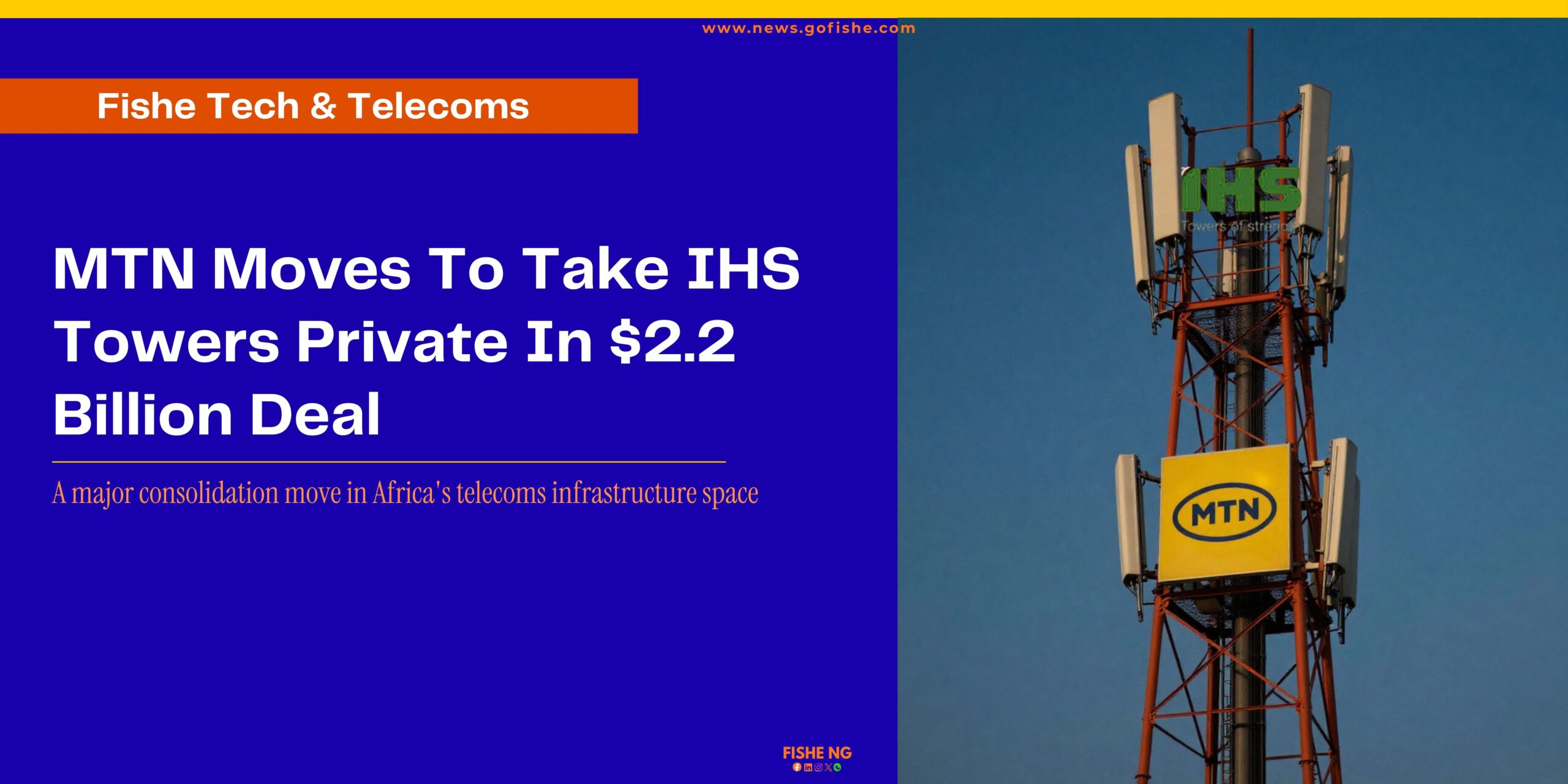
Africa’s telecom infrastructure is on the brink of a significant change as MTN Group plans to take full control of IHS Holding Limited in a proposed buyout deal worth $2.2 billion.
The acquisition proposal, which puts a price tag of $8.50 per share on IHS, would allow MTN to buy up all the outstanding shares of IHS Holding. This move would take the company off the New York Stock Exchange (NYSE), and turn it into a privately held subsidiary under MTN’s umbrella.
But this transaction is more than just a simple corporate takeover. It signals a significant strategic shift happening in Africa’s telecommunications landscape, where operators are increasingly looking to take direct control of infrastructure assets that were once managed by independent tower companies.
If shareholders give the green light, this deal could dramatically alter ownership structures, competitive dynamics, and investment strategies in Africa’s digital economy.

Background: The Rise of IHS Towers
From Infrastructure Specialist to Global Tower Giant
IHS Holding Limited has earned a solid reputation as one of the biggest independent telecommunications tower operators in emerging markets.
The company has crafted its business model around the ownership, operation, and leasing of telecom towers to various mobile network operators. This strategy of sharing infrastructure has gained traction throughout Africa, as it helps to minimize asset duplication and cut down on capital expenditure for telecom companies.
Over the years, IHS expanded aggressively across:
- Nigeria
- South Africa
- Cameroon
- Côte d’Ivoire
- Rwanda
- Zambia
- Latin America
- The Middle East
IHS’s portfolio expanded to include tens of thousands of towers, catering to major mobile operators in emerging markets. In Nigeria, it became particularly significant, establishing itself as a key infrastructure provider that bolstered mobile connectivity, internet access, and data growth.
MTN and IHS: A Relationship Years in the Making
Strategic Dependence Between Both Companies
While IHS has tried to present itself as an “independent” tower company, its ties with MTN Group have always been surprisingly strong.
MTN has historically been:
- One of IHS’s largest shareholders
- One of its largest customers
- A key long-term tenant across thousands of telecom sites
This close operational partnership has made MTN a key player in ensuring IHS’s revenue stability and driving its infrastructure growth.
So, rather than looking like a hostile takeover, this proposed acquisition seems more like the natural outcome of a long-term strategic partnership.
By taking IHS private, MTN would essentially bring a vital piece of its infrastructure supply chain in-house.
Key Details of the Buyout Proposal
Offer Structure
According to the regulatory documents filed with the U.S. Securities and Exchange Commission (SEC), MTN is planning to buy up all the remaining shares of IHS Holding.
- $8.50 per share
- Total valuation of approximately $2.2 billion
Once completed, the transaction would:
- Delist IHS from the NYSE
- End its status as a publicly traded company
- Convert it into a wholly owned MTN subsidiary
The board of IHS has reportedly unanimously approved the deal, describing it as fair and aligned with shareholder interests.
Shareholder Voting Dynamics
MTN Already Holds Strong Voting Influence
One of the most significant aspects of the proposed merger is MTN’s existing voting power within IHS.
MTN subsidiaries reportedly already control more than:
- 21% of IHS voting rights
In addition, another major shareholder associated with French investment firm, Wendel, has agreed to support the transaction.
Combined, these blocs account for more than:
- 40% of total voting power
This gives MTN a solid boost as they gear up for the extraordinary general meeting set to happen in London later this year.
While they still need the green light from shareholders, the current support indicates that the proposal is likely to pass unless some serious pushback comes from minority investors.
Why MTN Wants Full Control of IHS
1. Infrastructure Control
Telecom infrastructure is increasingly becoming a strategic asset rather than a utility service.
By acquiring IHS outright, MTN would gain:
- Direct control over tower deployment
- Greater influence over network expansion
- Faster infrastructure decision-making
- Improved coordination between operations and infrastructure planning
This could become particularly important as African markets experience rising data consumption and rapid mobile broadband growth.
2. Cost Optimisation
Tower leasing agreements often expose telecom operators to:
- Foreign exchange volatility
- Escalating lease payments
- Power and diesel cost fluctuations
- Long-term contractual obligations
Owning the infrastructure directly could help MTN better manage operational costs over time.
This is especially relevant in African markets where currency depreciation has heavily impacted telecom profitability in recent years.
3. Competitive Positioning
Control over infrastructure can create strategic advantages, including:
- Faster rollout of 5G infrastructure
- Improved rural network expansion
- Better energy management at tower sites
- More efficient maintenance operations
MTN may also see tower ownership as critical for maintaining market leadership against competitors such as:
- Airtel Africa
- Safaricom
- Orange
- Vodacom
A Broader Industry Shift Across Africa
Telecom Operators Are Reclaiming Infrastructure
The proposed acquisition reflects a wider strategic shift underway across Africa’s telecom sector.
Over the past decade, telecom companies largely embraced infrastructure outsourcing by selling towers to independent operators. This allowed them to reduce debt and focus on customer services.
However, industry dynamics are changing.
Key Drivers Behind the Shift
Rising Data Demand
Africa’s internet economy is expanding rapidly due to:
- Smartphone adoption
- Streaming services
- Mobile banking
- Cloud applications
- Artificial intelligence workloads
Telecom operators now view infrastructure ownership as strategically essential for supporting long-term growth.
Currency Volatility
Many operators in Africa make their money in local currencies, but they often have to cover infrastructure costs that are linked to dollars or agreements that adjust with inflation. This situation has really tightened profit margins, especially in countries like Nigeria and Ghana. Having direct ownership allows these operators to enjoy more financial flexibility.
Energy Challenges
Power costs remain one of the largest expenses for telecom infrastructure across Africa.
Operators increasingly want direct control over:
- Diesel procurement
- Solar deployment
- Battery systems
- Hybrid energy solutions
This explains why infrastructure management is becoming strategically important again.
Examples of Industry Re-Integration
Airtel Africa’s Fibre Expansion
In 2024, Airtel Africa took a significant step by launching its own fibre infrastructure business, aiming to gain better control over its broadband delivery systems. This move represents a clear shift away from depending on third-party infrastructure providers.
Safaricom’s Infrastructure Management Push
In a notable shift, Safaricom has taken steps to directly manage the power systems for its telecom sites, aiming to lessen its reliance on outside tower operators. This move reflects a larger trend towards becoming more self-sufficient in infrastructure.
Implications for Africa’s Digital Economy
Potential Benefits
If MTN successfully acquires IHS, several benefits may emerge:
Faster Network Expansion
Integrated infrastructure ownership may accelerate:
- Rural connectivity projects
- 5G deployment
- Fibre backhaul expansion
Improved Operational Efficiency
Closer coordination between infrastructure and network operations could reduce:
- Downtime
- Deployment delays
- Vendor conflicts
Stronger Long-Term Investment Planning
Private ownership could give IHS the freedom to concentrate on long-term infrastructure projects without the constant pressure of meeting quarterly earnings expectations that come with being in the public markets.
Potential Risks and Concerns
Reduced Infrastructure Neutrality
One worry is whether IHS will still function as a neutral host infrastructure provider after being completely owned by MTN.
Competitors may fear:
- Preferential treatment for MTN
- Unequal tower access
- Pricing disadvantages
Maintaining infrastructure neutrality could become a key regulatory issue.
Reduced Market Competition
Independent tower companies have long played a vital role in fostering competition by ensuring that various operators have equal access to their infrastructure. However, the current trend of consolidation could undermine that independence, potentially altering the competitive landscape of telecom markets across Africa.
Regulatory Scrutiny
Given IHS’s strategic role in telecommunications infrastructure, regulators in multiple jurisdictions may closely examine:
- Competition implications
- National infrastructure concerns
- Foreign ownership structures
- Consumer impact
Approval processes could therefore become lengthy and complex.
The End of IHS Towers as a Public Company?
A Short NYSE Journey
IHS’s possible departure from the public markets is especially significant since the company just made its debut on the NYSE in 2021, right when there was a strong demand from investors for digital infrastructure assets.
At the time, tower companies were viewed globally as:
- Stable cash-flow businesses
- Long-term infrastructure plays
- Critical enablers of digital transformation
The landscape of investment has changed due to evolving macroeconomic conditions, increasing interest rates, currency challenges, and new strategies in the telecom sector. Now, just a few years after going public, IHS might be on the verge of going private again.
Strategic Significance of the Deal
The MTN-IHS transaction represents more than a merger between two companies.
It signals:
- A rethinking of infrastructure ownership models in Africa
- A shift toward vertical integration in telecom operations
- Increased strategic importance of digital infrastructure assets
- Growing pressure on telecom operators to optimize costs and control networks directly
As Africa’s digital economy continues to grow, owning towers, fiber networks, power systems, and data infrastructure is becoming crucial for gaining a competitive edge. This proposed acquisition shows that telecom operators are increasingly viewing infrastructure not just as a support function, but as a vital strategic asset.
Conclusion
The potential acquisition of IHS Holding Limited by MTN Group could turn out to be one of the most significant telecom infrastructure deals we’ve seen in Africa in recent years.
With shareholders already showing strong support for MTN, this transaction seems to be gaining serious momentum as we approach the extraordinary general meeting.
But this deal is about more than just the numbers; it highlights a broader shift happening in Africa’s telecom sector — where operators are increasingly taking back control of the infrastructure that supports the continent’s digital future.
If this deal goes through, it might signal the end of IHS Towers as an independent public entity, but it could also usher in a new chapter in how telecom infrastructure is owned, managed, and strategically utilised across Africa.
