


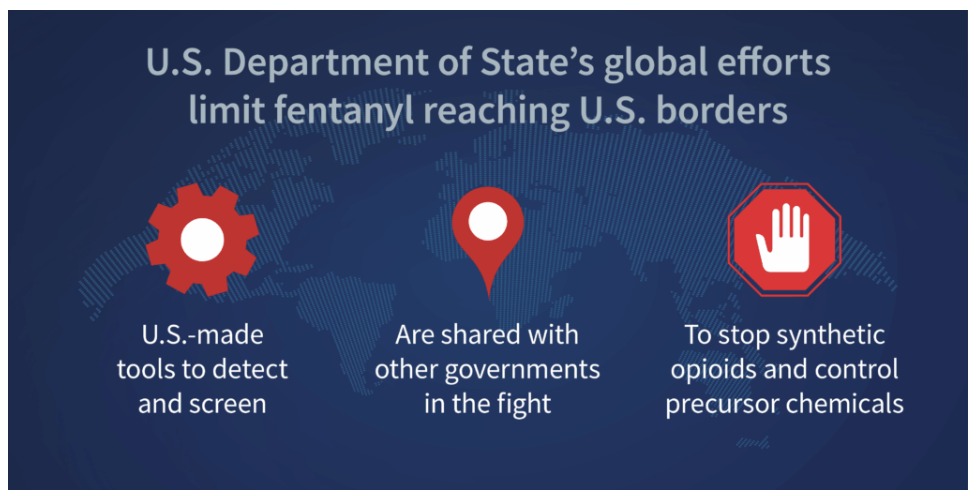
The United States government has announced a significant escalation in its efforts to combat the illicit fentanyl crisis by targeting a complex transnational criminal network. According to a press statement delivered by Thomas “Tommy” Pigotton April 23, 2026, the strategy centers on disrupting the global supply chain that enables fentanyl production and distribution.
This initiative reflects a broader national security approach that treats the fentanyl epidemic not only as a public health emergency but also as a transnational criminal and terrorist threat.
Background: The Fentanyl Crisis
Fentanyl is a synthetic opioid significantly more potent than heroin and morphine. Its widespread availability in illicit drug markets has contributed to a sharp rise in overdose deaths in the United States over the past decade. The crisis is fueled by international supply chains that provide precursor chemicals and logistical support for production and trafficking.
Structure of the Transnational Network
The network described in the statement operates across multiple regions:
- Asia (India): Suppliers of precursor chemicals used to manufacture fentanyl.
- Central America (Guatemala): Logistics brokers facilitating transportation and coordination.
- North America (Mexico): Production and distribution led by cartel organisations, particularly the Sinaloa Cartel.
This multi-layered structure allows criminal actors to obscure accountability, evade law enforcement, and maintain a resilient supply chain.

Role of the Sinaloa Cartel
The Sinaloa Cartel is identified as a central actor in this network. The U.S. government has designated it as a Foreign Terrorist Organisation, underscoring its perceived threat level.
The cartel’s involvement includes:
- Manufacturing fentanyl using imported precursor chemicals
- Distributing the drug across U.S. borders
- Leveraging global networks to sustain operations
The statement characterizes the cartel as a destabilising force not only in the United States but across the Western Hemisphere.
U.S. Government Response
Targeted Economic Sanctions
The U.S. is deploying economic sanctions aimed at dismantling the network at every stage of the supply chain.
These sanctions are designed to:
- Restrict access to financial systems
- Freeze assets of involved individuals and entities
- Disrupt procurement of precursor chemicals
- Impede logistics and distribution channels
Legal Authorities
The actions are being implemented under several executive orders:
- Executive Order 14059: Targets the global proliferation of illicit drugs and production networks
- Executive Order 13224: Focuses on terrorists and their supporters
- Executive Order 14367: Classifies illicit fentanyl and key precursor chemicals as Weapons of Mass Destruction (WMD)
These legal frameworks provide broad authority to impose sanctions and coordinate international enforcement efforts.
Strategic Approach
The approach outlined in the statement emphasizes a supply chain disruption model, targeting:
- Chemical production (upstream)
- Logistics and trafficking (midstream)
- Cartel operations (downstream)
By addressing all components simultaneously, the strategy aims to reduce the adaptability and resilience of criminal networks.
Implications
National Security
The framing of fentanyl as a WMD-related threat signals a shift toward more aggressive countermeasures, potentially involving intelligence and counterterrorism resources.
International Relations
The involvement of multiple countries highlights the need for:
- Enhanced international cooperation
- Diplomatic engagement with source and transit countries
- Joint enforcement operations
Regional Stability
The statement emphasizes that these networks undermine governance and security across the Americas, suggesting broader geopolitical implications.
Conclusion
The U.S. government’s latest actions represent a comprehensive effort to combat the fentanyl crisis by dismantling the transnational networks that sustain it. By leveraging economic sanctions and counterterrorism authorities, the strategy aims to disrupt the entire supply chain—from chemical production to final distribution.
This approach reflects an evolving understanding of the fentanyl epidemic as both a public health crisis and a complex global security challenge requiring coordinated, multi-sector responses.
