


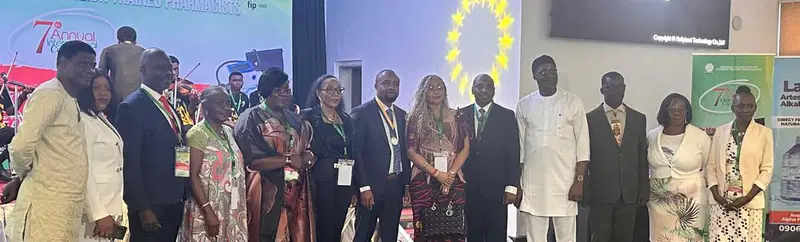
Health professionals from Nigeria and the diaspora have called on the Federal Government to urgently implement a national strategy to combat the fast-growing burden of non-communicable diseases (NCDs) across the country.
They warned that Nigeria faces a potential health disaster if decisive measures are not taken soon.
The appeal was made during the opening of the 7th Annual International Conference of the Nigerian Association of Foreign Trained Pharmacists (NAFTRAPH) held in Lagos. Themed “Non-Communicable Diseases in a Post-Pandemic World: Nigeria’s Perspective and How to Mitigate Disease Ramifications,” the three-day event brought together pharmacists, doctors, researchers, and policymakers to assess Nigeria’s readiness to address the rising tide of conditions such as diabetes, hypertension, and heart disease.
Delivering the keynote address, Dr Nelson Aluya, Chief Executive Officer of Eralmed Medical Group and Assistant Professor at Rutgers New Jersey Medical School, described diabetes as “the pandemic before the pandemic.” He warned that NCDs have become one of the biggest threats to Nigeria’s healthcare system and called for urgent government intervention. “Non-communicable diseases are silently killing our people,” he said. “The government must act fast and build a coordinated response that unites public and private sectors with the diaspora and research institutions.”

Dr Aluya emphasised the need for accurate data collection and digital health systems to drive planning and prevent medical errors. He explained, “Without data, there is no problem; without a problem, there is no funding; and without funding, there is no solution.” He urged the government to adopt an electronic medical records system nationwide, saying it would strengthen efficiency and transparency across health facilities.
In his remarks, NAFTRAPH President, Dr John Ejezie, said tackling NCDs requires collaboration among all healthcare professionals. “Pharmacists are trusted and accessible,” he said. “They play a key role in identifying early symptoms, providing counselling, and referring serious cases to hospitals. Working together is how we save lives.” He reaffirmed NAFTRAPH’s dedication to training, research, and global partnerships aimed at improving public health outcomes.
Another participant, Dr Violet Bumah of Stephen F. Austin State University, Texas, urged Nigerians to adopt healthier lifestyles and return to natural diets. “Our ancestors lived longer because they ate organic foods and stayed active,” she noted. “We should be civilised, not westernised — embracing technology but rejecting unhealthy eating habits.” The conference concluded with experts calling on the government to prioritise preventive healthcare, strengthen policy direction, and integrate digital tools into national health planning.
