


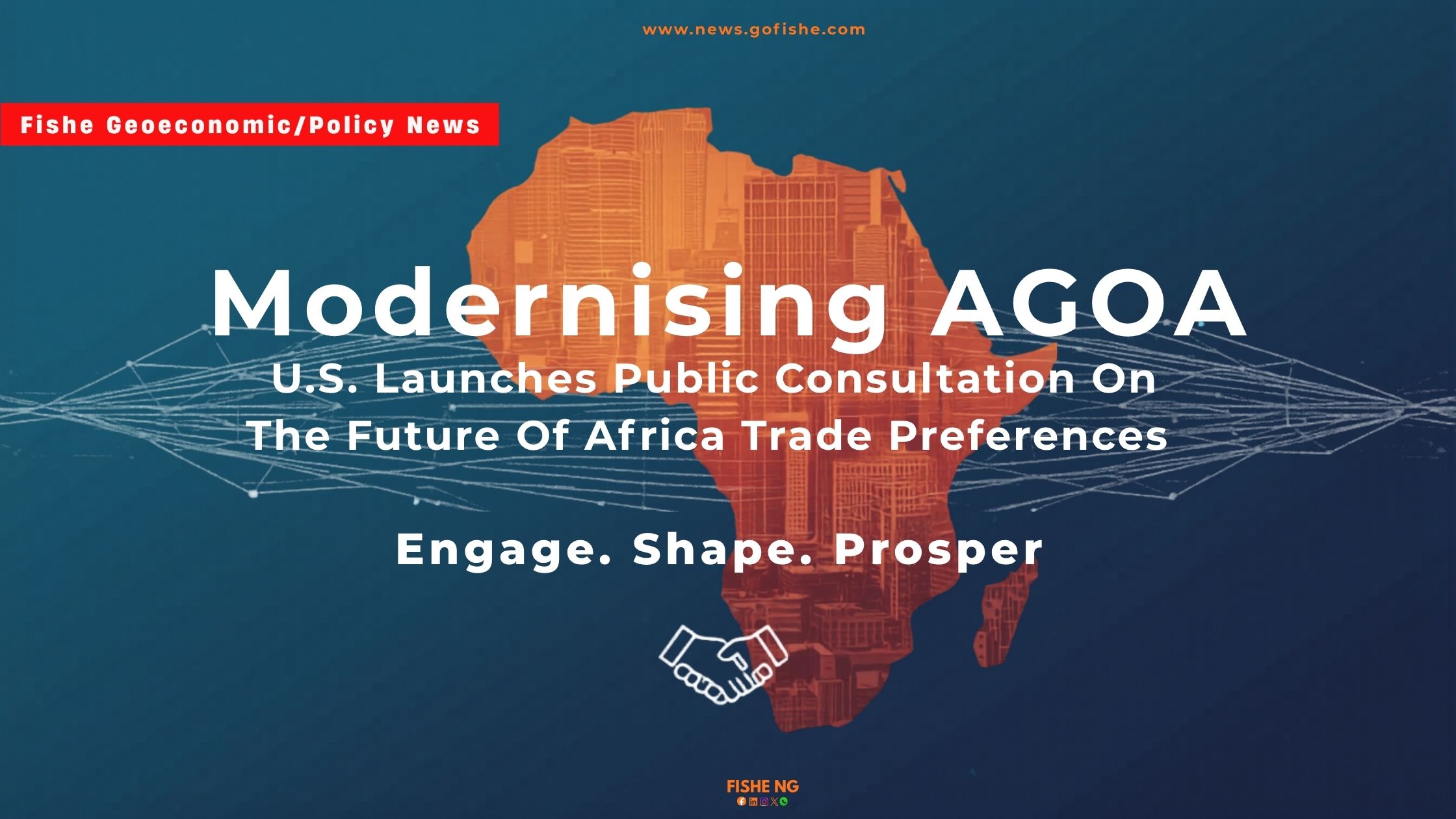
On April 28, 2026, the Office of the United States Trade Representative (USTR), announced a public request for comments on the modernisation of the African Growth and Opportunity Act (AGOA), a major U.S. trade preference program for sub-Saharan African countries. The program is currently authorised through December 31, 2026, and the consultation process signals a possible redesign or renewal framework beyond its current structure.
The USTR emphasizes that modernisation aims to strengthen economic ties between the United States and sub-Saharan Africa while improving reciprocity, reducing trade barriers, and expanding opportunities for U.S. businesses.
Background on AGOA
The African Growth and Opportunity Act (AGOA), is a U.S. trade policy initiative that provides eligible sub-Saharan African countries with duty-free access to the U.S. market for thousands of products. Since its enactment in 2000, AGOA has been a cornerstone of U.S.–Africa economic relations.
Key features include:
- Preferential access to the U.S. market for qualifying African exports
- Eligibility requirements tied to governance, human rights, and economic reforms
- Sector coverage including textiles, agriculture, manufactured goods, and energy-related products
AGOA has been periodically renewed by the U.S. Congress, with its current authorisation set to expire at the end of 2026.

Purpose of the Modernisation Initiative
According to the USTR statement, the modernisation effort is intended to reassess AGOA’s effectiveness after more than 25 years of operation.
The core policy goals include:
Strengthening Economic Reciprocity
The USTR highlights a shift toward “more reciprocal trade,” meaning a stronger emphasis on:
- Balanced market access between the U.S. and African partners
- Reduction of non-tariff barriers in African markets
- Encouraging African countries to open sectors where U.S. firms face restrictions
Enhancing U.S. Competitiveness
A key stated goal is to ensure the program benefits American workers and businesses by:
- Expanding export opportunities for U.S. firms in African markets
- Supporting supply chain integration with African economies
- Encouraging investment partnerships that favor U.S. industries
Updating Eligibility and Compliance Standards
While not explicitly detailed in the announcement, modernisation efforts typically consider:
- Revising eligibility criteria for participating countries
- Strengthening labor, governance, and transparency requirements
- Adjusting rules of origin to reflect current global supply chains
Stakeholder Participation and Public Input
The USTR has opened a formal comment period, with a submission deadline of May 15, 2026.
This process allows a wide range of stakeholders to contribute, including:
- U.S. businesses and industry groups
- African exporters and governments
- Trade associations and policy organisations
- Civil society and labor groups
The consultation is intended to shape the U.S. negotiating position ahead of AGOA’s expiration and potential reauthorisation.
Policy Context and Strategic Importance
AGOA is widely regarded as one of the most significant U.S. trade frameworks with Africa.
However, it has faced criticism and debate in recent years regarding:
- Limited diversification of African exports beyond raw materials and textiles
- Uneven utilization across eligible countries
- Competition from other global trade partners (notably China and the EU)
- Administrative complexity and restrictive compliance rules
The modernisation process reflects broader U.S. strategic interests in:
- Expanding influence in sub-Saharan Africa
- Strengthening supply chain resilience
- Competing in emerging African markets, which are projected to grow significantly over the next decade
Implications for Sub-Saharan Africa
For African economies, including major participants such as Nigeria, Kenya, and South Africa, modernisation could have mixed impacts:
Potential Benefits:
- Improved access to the U.S. market if coverage is expanded
- Increased investment incentives tied to trade eligibility
- Greater integration into global value chains
Potential Risks or Challenges:
- Stricter eligibility requirements could exclude some countries or sectors
- Greater emphasis on reciprocity may reduce preferential advantages
- Possible restructuring of tariff benefits that currently support exports
Implications for the United States
For the U.S., AGOA modernisation could:
- Expand export markets for American goods and services
- Strengthen geopolitical ties in a strategically important region
- Support domestic industries involved in trade, logistics, and manufacturing
- Align trade policy more closely with national competitiveness objectives
However, it may also require balancing competing priorities between economic interests and development goals in Africa.
Timeline and Next Steps
- April 28, 2026: USTR announces request for public comments
- May 15, 2026: Deadline for submissions
- Post-May 2026: Review of submissions and policy formulation
- Late 2026: AGOA expiration date; potential renewal or replacement framework under consideration
Conclusion
The USTR’s call for public comment marks a critical stage in the evolution of AGOA as it approaches its 2026 expiration. The modernisation process signals a likely shift toward a more reciprocal and strategically aligned trade framework, reflecting both economic and geopolitical priorities.
The outcome of this process will significantly shape U.S.–Africa trade relations for the next decade, influencing market access, investment flows, and development trajectories across sub-Saharan Africa.
