


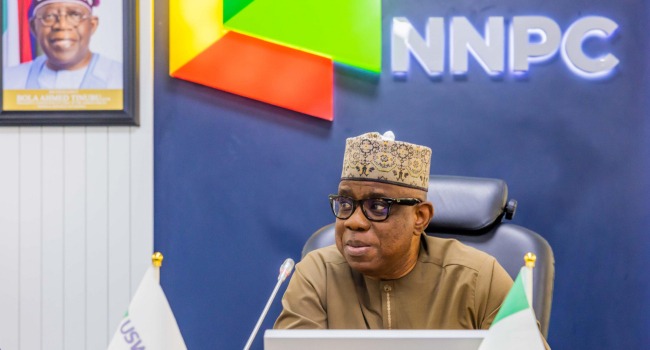
The Nigerian National Petroleum Company Limited (NNPC LTD), has entered into a new Memorandum of Understanding (MoU), with two Chinese firms aimed at speeding up the rehabilitation, restart, and expansion of Nigeria’s refining facilities.
The agreement focuses on the Port Harcourt and Warri refineries and introduces a Technical Equity Partnership (TEP), model designed to resolve long-standing operational inefficiencies.
Signed on April 30, 2026, in Jiaxing City, China, the deal represents a major strategic shift in Nigeria’s downstream petroleum sector—from government-funded rehabilitation to performance-driven partnerships with shared risks and returns.
Key Parties and Signatories
The agreement was executed by senior representatives of the participating organisations:
- Bashir Bayo Ojulari – Group Chief Executive Officer, NNPC Ltd
- Guan Jianzhong – Chairman, Sanjiang Chemical Company Limited
- Bill Bi – Chairman, Xingcheng (Fuzhou), Industrial Park Operation and Management Co. Ltd
The announcement was formally communicated by Andy Odeh, Chief Corporate Communications Officer of NNPC Ltd.

Scope and Structure of the MoU
The MoU establishes a framework for collaboration through a potential Technical Equity Partnership, covering:
- Completion of ongoing rehabilitation works
- Commercial restart of the refineries
- Long-term operation and maintenance
- Expansion into modern refining and petrochemical production
NNPC emphasized that the partnership will go beyond repairs to deliver “best-in-class, sustainable performance.”
Importantly, the MoU is non-binding, with final agreements subject to:
- Regulatory approvals
- Detailed commercial negotiations
Strategic Shift: From Contractors to Equity Partners
A central feature of the agreement is the transition from traditional contractor-led turnaround maintenance to a performance-based equity model.
According to Ojulari:
The goal is to bring in partners “with skin in the game” who will operate, optimise, and guarantee performance.
Key Differences from Past Models
| Old Approach | New Technical Equity Model |
|---|---|
| Government-funded repairs | Shared investment |
| Contractors exit after work | Long-term operators |
| Limited accountability | Performance-linked returns |
| Repeated failures | Incentivized efficiency |
This shift addresses a major historical issue: billions spent on refinery rehabilitation without sustainable output.
Operational and Technical Objectives
Refinery Restart and Efficiency
The partnership aims to:
- Restore consistent operations at:
- Port Harcourt Refinery (210,000 bpd capacity)
- Warri Refinery (125,000 bpd capacity)
- Improve utilisation rates
- Ensure operational reliability
Expansion and Modernisation
Plans include:
- Production of cleaner fuels (aligned with global standards)
- Increased output of high-value petroleum products
- Integration of advanced refining technologies
Development of Energy and Industrial Hubs
A major innovation in the agreement is the plan to develop:
- Co-located petrochemical plants
- Gas-based industrial hubs
These hubs are expected to transform refinery sites into integrated energy complexes, supporting:
- Fertiliser production
- Gas monetisation
- Export-oriented manufacturing
Background: Nigeria’s Refinery Crisis
Nigeria’s state-owned refineries—located in Port Harcourt, Warri, and Kaduna—have struggled for decades due to:
- Chronic underinvestment
- Poor maintenance practices
- Operational inefficiencies
- Governance and transparency concerns
Despite multiple turnaround maintenance efforts, the facilities have:
- Operated far below capacity
- Experienced frequent shutdowns
- Failed to meet domestic fuel demand
This has forced Nigeria to rely heavily on imported petroleum products, placing pressure on foreign exchange reserves.
Policy Context and Reform Agenda
The MoU aligns with broader reforms under Nigeria’s energy strategy, including:
- Commercialisation of NNPC Ltd
- Increased reliance on public-private partnerships
- Push for energy security and self-sufficiency
At the Nigeria International Energy Summit 2026, Ojulari had already signaled this direction, stating that Nigeria’s refining challenges are:
- Not just financial
- But technical and operational
He emphasized the need for experienced global partners with proven track records.
Economic and Strategic Implications
Energy Security
Successful implementation could:
- Reduce fuel imports
- Stabilise domestic supply
- Lower exposure to global price shocks
Foreign Exchange Savings
Domestic refining would:
- Cut import bills
- Ease pressure on Nigeria’s currency reserves
Industrial Growth
Integrated refinery hubs could:
- Drive manufacturing growth
- Support petrochemical industries
- Create jobs across value chains
Investment Attraction
The deal signals:
- Openness to foreign direct investment
- Improved investor confidence in Nigeria’s energy sector
Role of Chinese Partners
The Chinese firms are expected to contribute:
- Engineering and technical expertise
- Operational discipline
- Capital investment
- Experience in managing large-scale industrial complexes
Their involvement reflects China’s growing role in global energy infrastructure development, particularly in emerging markets.
Relationship to Private Sector Developments
The agreement comes amid the rise of private refining capacity, notably the Dangote Refinery.
Together, these developments signal a dual-track approach:
- Reviving state-owned assets
- Supporting large private investments
This combination could reshape Nigeria into a net exporter of refined petroleum products.
Risks and Challenges
While promising, the initiative faces several risks:
Execution Risks
- Delays in project completion
- Bureaucratic bottlenecks
Governance Concerns
- Transparency in contract terms
- Regulatory oversight
Operational Risks
- Dependence on foreign technical partners
- Integration challenges with existing infrastructure
Critical Success Factors
For the MoU to translate into tangible results, the following will be essential:
- Clear and enforceable contractual frameworks
- Strong regulatory supervision
- Alignment of incentives among partners
- Timely execution of rehabilitation and expansion phases
Conclusion
The NNPC-China MoU represents a turning point in refinery strategy efforts. By adopting a technical equity partnership model, NNPC is attempting to finally resolve decades of inefficiency in the Nigeria’s refining sector.
If successfully implemented, the initiative could:
- Restore Nigeria’s refining capacity
- Strengthen energy security
- Unlock industrial and petrochemical growth
- Reduce reliance on imports
However, its success will depend heavily on execution discipline, transparency, and sustained collaboration between NNPC and its international partners.
